Inspiring Impact Beyond the Finish Line
On a drizzly Thursday morning, right around midterms, one would expect college students
to be in class, in the library cramming for their exams or still sleeping soundly.
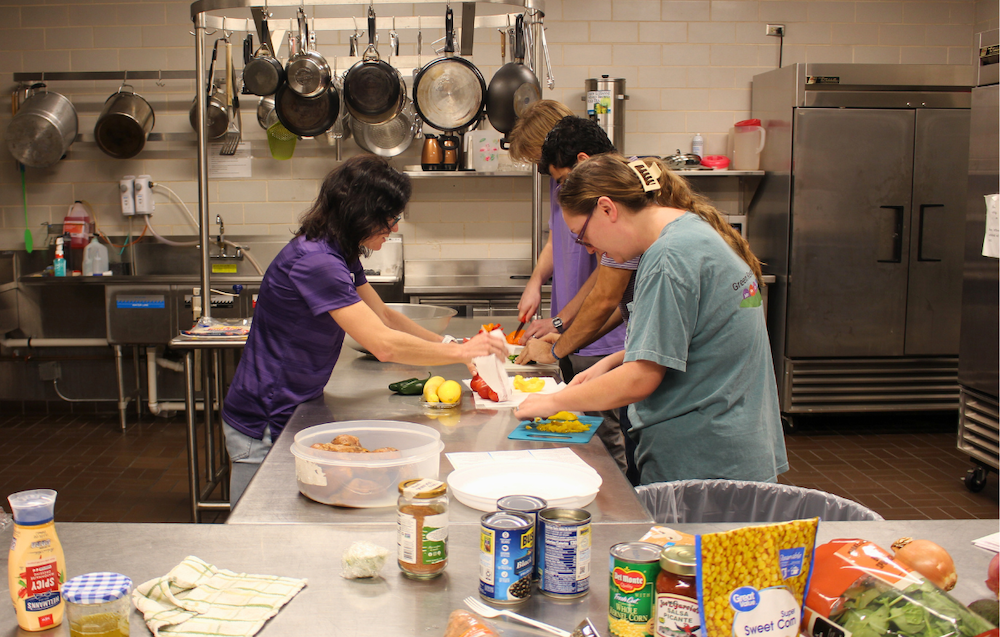
Instead, a group of students stand chopping vegetables in a church kitchen, chatting
about classes.
Kate Evans, DTR, CCMS, nutritional sciences lab coordinator, guides the group through meal preparation.
The students are preparing for a cooking class at Southside Church of Christ, down
the street from TCU. McKale Montgomery, nutritional sciences assistant professor, has set up cooking classes like these
around the community, geared toward individuals living in long-term care. Local nursing
homes partner with Montgomery to educate the residents on easy ways to fuel their
bodies through nutrition.
The residents start to flow into the kitchen as the students and Evans finish setting
up stations for everyone to practice cooking. Greek yogurt parfaits are being assembled,
sweet potatoes are steaming and conversations are starting. Montgomery leads the class
while building a sense of community among the group.
“A strong body supports a strong mind,” Montgomery says as the class begins.
She follows her own wisdom.
Going the Extra Mile
While Montgomery isn’t teaching classes on campus or cooking classes out in the Fort
Worth community, she is likely on a run. With an impressive roster of accolades, she
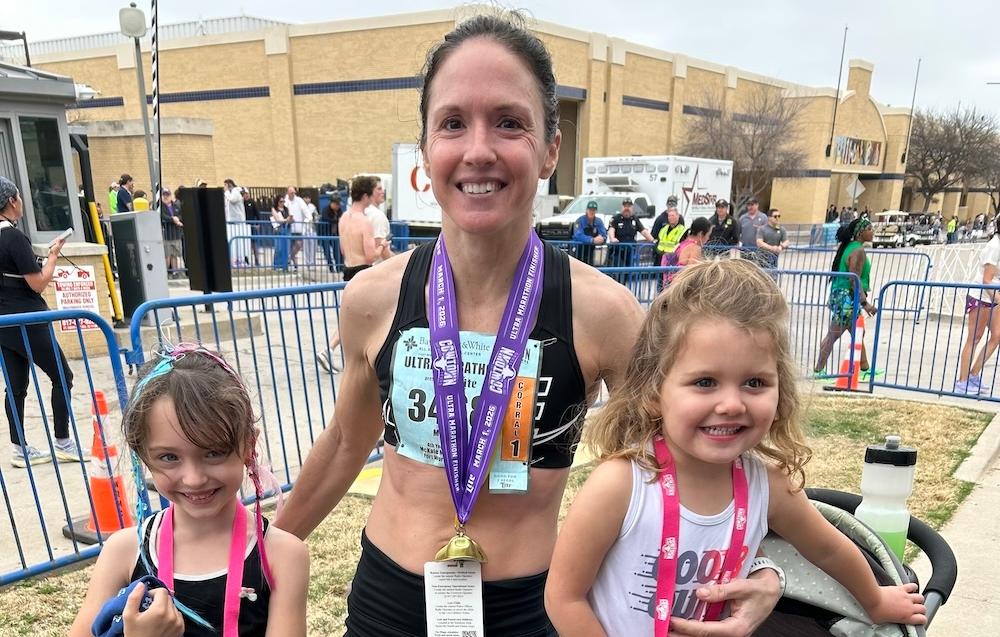
is a phenom in the running community. Most recently, Montgomery finished first in
the Ultra Marathon at the 2026 Cowtown Marathon, beating every man and woman in the race. She is also the first woman to win the
event in its 18-year history.
Whether it’s a Monday class in the Annie Richardson Bass Building, a Thursday morning
cooking class or a casual Sunday marathon win, Montgomery is inspiring the community
around her, particularly the next generation of nutritional scientists and athletes.
Montgomery recently shared how she manages to run 50K on the weekend, then teach nutritional
sciences to eager students the next morning.
How long have you been running, and how did you get started?
When I was a kid, I wanted to be a basketball player. Just before high school, we
moved to the country, and I spent a decent part of my freshman year running 4 miles
to the gym to practice basketball. I never really improved as a basketball player,
but I ended up being all-state in cross-country my freshman year, and went on to win
state in the 1600-meter and 3200-meter runs my sophomore through senior year. This
also landed me a scholarship to run track here at TCU. I ran for TCU from 2003 to
2007. I just kept running after that and have had a lot of success since then. I ran
in the 2020 Olympic Trials for the marathon, and I hold the state records for the
marathon in Kansas and Oklahoma.
What inspired you to take on the Cowtown 50K this year?
I have been struggling with a condition called runner’s dystonia for more than three
years now. It significantly impacts my balance, and it makes it hard to run as fast
as I used to. I love running, though, and can still handle a lot of distance, so I
wanted to sign up for a distance that was more a test of my endurance than my speed.
What does your training typically look like when preparing for an ultramarathon?
I’m pretty crazy. I run A LOT. Since Christmas, I’ve averaged over 90 miles per week,
including four 100-mile weeks in a row and a couple of long runs up to 26 miles.
How does your professional background in nutritional sciences influence the way you
train or prepare for a race?
It’s obviously a huge advantage to know what and how to eat when training as much
as I do. So many people focus on fueling on race day, but the real advantage is knowing
how to eat for recovery so that I can wake up the day after a 26-mile training run
and be ready to go again.
What advice would you give to someone interested in training for a long-distance race,
such as a 50K?
Be realistic and honest with yourself. I have been averaging 70 to 90 miles per week
of running over the last seven years, so stepping up from marathons to 50K was not
a big jump. If you’re beginning, planning to race a really long distance is great,
but make sure your training plan is tailored to where you are now, not where you want
to be.
Is there a moment from the race or from your training that stands out as especially
memorable?
At the final turnaround point for the ultra (~27 miles in), the folks handing out
water and Gatorade were cheering so loudly, saying, “You can totally catch the lead
guy.” That was really inspiring and helpful in pushing through those final miles.
And then, right after I crossed the line, I saw a student I taught in my first semester
here at TCU. She was finishing her race about that time as well. She congratulated
me, then told me that having me in class was what had inspired her to sign up for
the race this year, which was really the icing on the cake for someone who loves both
running and teaching.
-McKenzie Lane