Awards
WHO IS BEING RECOGNIZED?
CORPORATE INNOVATORS - Small businesses and other emerging startups who have been identified as a high impact Texas innovator contributing to innovation and economic growth in Texas.
UNIVERSITY INNOVATORS - Faculty, staff, or students who demonstrate leadership and measurable progress in translating research into real-world impact through commercialization, start up formation, or industry collaboration. These innovators have been nominated by the Provost or Vice Provost of Research on their campus.
CORPORATE AWARDEES

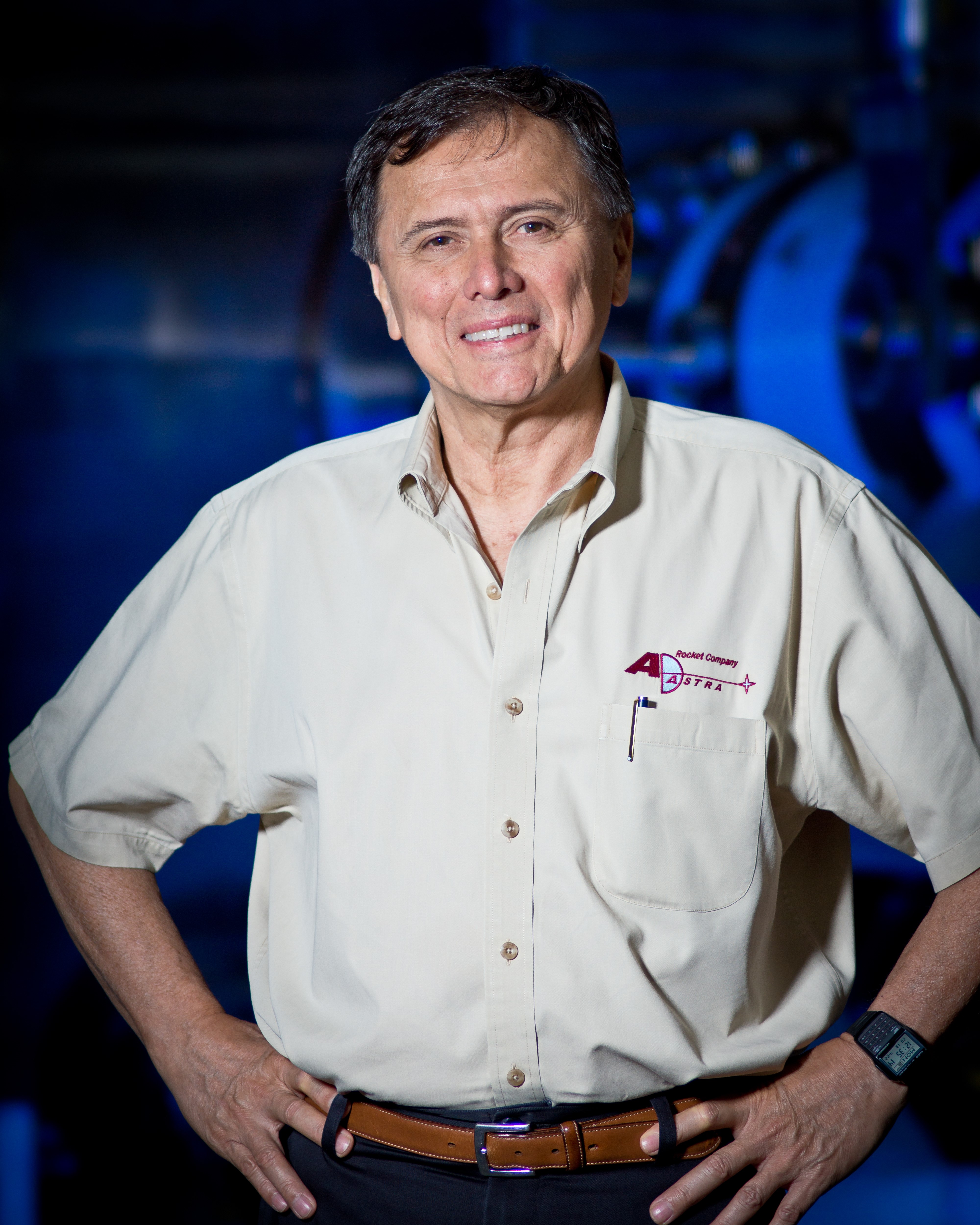
Ad Astra Rocket Company, a US Delaware Corporation domiciled in Webster, Texas, is developing the VASIMR® rocket engine — a high-power in-space electric propulsion technology based on high temperature plasma. Ad Astra also owns and operates a subsidiary in Guanacaste, Costa Rica that focuses on green hydrogen for energy storage and fuel-cell electric power for transportation and stationary applications.


AirMettle delivers a cost-effective, passive aerial object detection system using commodity cameras and cloud-based analytics to provide precise 3D positioning and tracking of anything flying, from small birds and drones to airplanes. It addresses critical gaps in situational awareness for airports and critical infrastructure where radar is prohibitively expensive or ineffective. The solution was developed during participation in the US Space Force’s SDA TAP Lab and demonstrated in the field to the Defense Innovation Unit. It is powered by a patented exploratory analytics platform that processes large objects (even compressed) 100x faster than commercial solutions. This analytics solution has been commercially licensed by a National Laboratory and is in trials on Azure with pay-per-query billing. Seeking venture capital to scale go-to-market.


AMPeers is a Houston-based deep tech company specializing in the development and manufacturing of REBCO high-temperature superconductors (HTS). These materials exhibit zero electrical resistance when cooled and can carry orders of magnitude more current than conventional copper or aluminum conductors. As a result, HTS technology has transformative potential across the energy sector, as well as in transportation, defense, industrial, and medical applications.
Founded by Dr. Venkat Selvamanickam, a leading researcher in superconductor technology, AMPeers has developed a proprietary advanced Metal Organic Chemical Vapor Deposition (MOCVD) process to fabricate HTS with three times the current-carrying capacity of industry-standard products while maintaining high throughput and low cost. Leveraging this platform, the company produces its STAR® (Symmetric Tape Round) wire technology, which delivers exceptional current density in compact, small-diameter conductors. AMPeers has secured more than $10.6 million in SBIR funding from the U.S. Department of Energy and the U.S. Navy, validating both the technical strength and strategic importance of its innovations.
AMPeers bridges academic research and commercial applications by translating materials science breakthroughs into scalable, manufacturable products. The HTS industry is experiencing renewed momentum, driven by advances in fusion energy, grid modernization initiatives, and the global transition toward more efficient energy infrastructure. Located in Houston, AMPeers is strategically positioned at the intersection of traditional energy expertise and emerging clean energy markets.
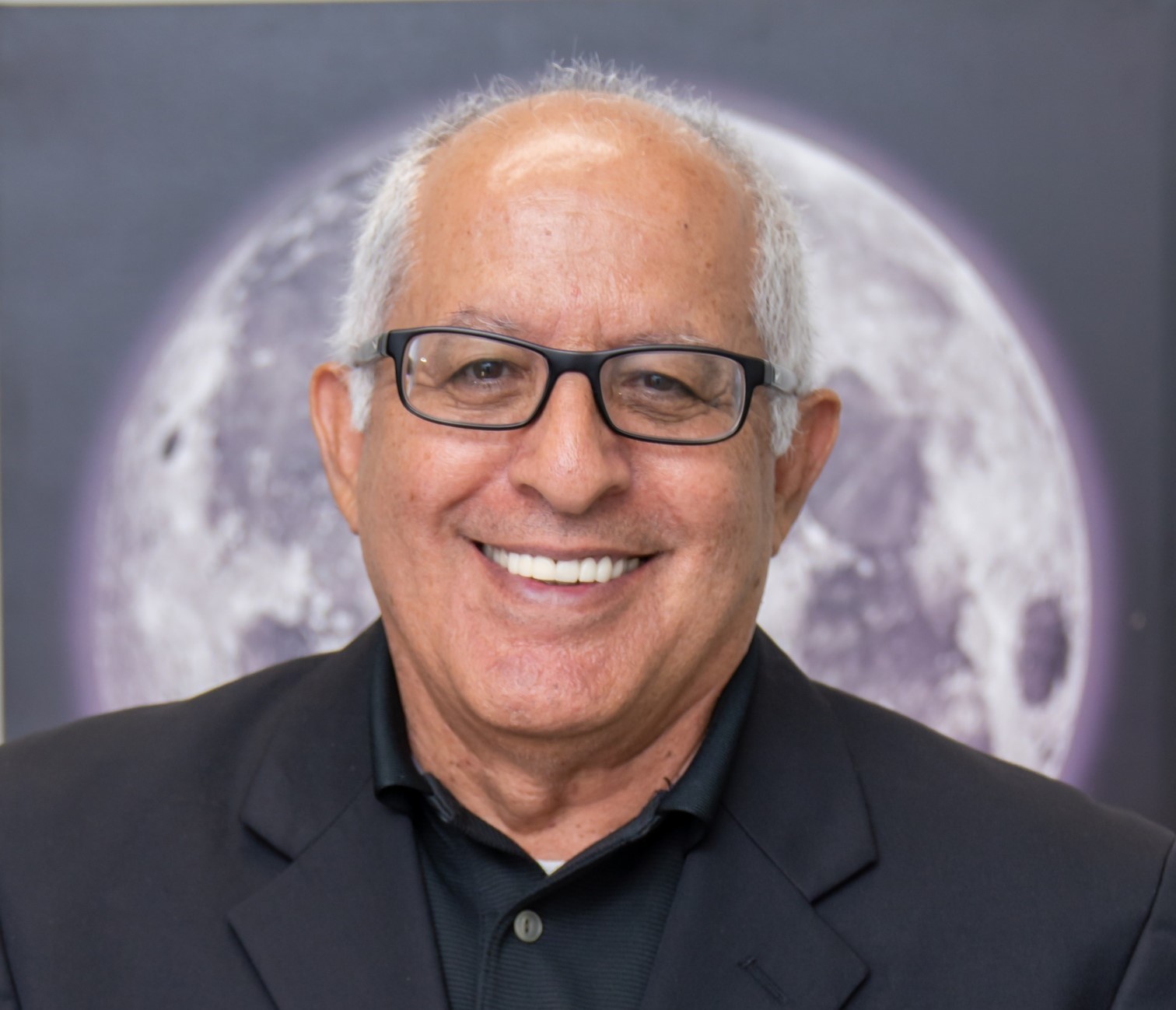
ASTROPORT is a space construction and materials manufacturing company headquartered in San Antonio, Texas, with strategic branches in Luxembourg, and Adelaide (Australia). The company is a leading international provider of advanced space exploration solutions for lunar architecture, construction, and materials manufacturing using native lunar resources to build sustainable space infrastructure for the Cislunar economy. Astroport develops civil-engineering solutions and robotic technologies to transform lunar regolith into critical infrastructure to deploy and operate high-value assets on the Moon. Astroport is a leader in astronautical civil engineering and space architecture. The company was founded in 2020 with the vision to design, deploy, and operate planetary landing ports for safe, reliable, and efficient spaceflights to the Moon, Mars and beyond.


AvaWatz, a Texas Incorporation, was founded in response to a simple yet urgent challenge: Artificial Intelligence (AI) applications are being deployed in high-stakes environments far faster than we know how to keep them accurate and trustworthy. In aviation security, infrastructure inspection, autonomous defense systems, and medical imaging, all environments where a missed defect or a degraded model has real consequences, most AI platforms are built to perform to specification at launch time, not to stay reliable over time.
AvaWatz Trusted AI Platform, called AvaAI, is designed from the ground up to do something most AI tools don't: continuously monitor their own performance, diagnose when and why accuracy is slipping, and automatically restore reliability as real-world conditions shift and evolve. The result is AI that doesn't just work; it stays working. AvaWatz's solutions are active today in airport security screening, physical security, infrastructure inspection, and autonomous systems and robotics, and the company continues to expand its R&D into imaging diagnostics for medical and dental applications.
As an early-stage business rooted in the Dallas–Fort Worth innovation ecosystem, AvaWatz represents what happens when deep technical research meets the discipline of building real products for demanding customers. The company's journey, from fundamental research to government validation to commercial expansion, is a case study in translating hard science into systems that people's safety and security can depend on.


AyuVis Research, Inc. is a Fort Worth, Texas–based biopharmaceutical company developing a new generation of small-molecule immunotherapies to prevent and treat life-threatening inflammatory and infectious diseases with significant unmet medical need. The company’s patented platform modulates innate immune responses—carefully balancing immune activation and suppression without causing immunosuppression or contributing to multidrug resistance, a common limitation of current therapies such as steroids and antibiotics.
AyuVis’ lead drug candidate, AVR-48, targets bronchopulmonary dysplasia (BPD), a debilitating lung disease affecting at-risk preterm infants for which no therapies are currently approved. AVR-48 has received Orphan Drug and Rare Pediatric Disease designations from the U.S. Food and Drug Administration, as well as Fast Track designation, supporting accelerated clinical development. The drug candidate is currently being evaluated in a Phase 1 clinical trial to assess safety in humans.
The company’s approach promotes tissue protection and regeneration while reducing inflammation and infection and has demonstrated strong preclinical efficacy. AyuVis’ broader pipeline includes potential applications in acute respiratory distress syndrome, ventilator-associated pneumonia, and other critical care conditions.
In addition, AyuVis has entered into a collaboration and option-to-license agreement with a major multinational pharmaceutical company to co-develop assets from its platform, highlighting growing industry recognition of its technology and expanding opportunities for global development.
Founded in 2014 by Dr. Suchismita Acharya, PhD, with 20+ years drug development experience AyuVis combines scientific innovation with strategic partnerships and funding support, including multiple NIH preclinical and clinical grants, private/Angel investors, and participation in leading Accelerator programs including TechFW, JLABS, BlueKnight, Ignite, and MassChallenge.


Located in Grapevine, TX near the DFW airport, BILT is an award-winning best in class dual-use/commercial, SaaS mobile app that provides 3D interactive and XR Immersive instructions for end users. Rather than deal with the entire paper manual, BILT brings to life in an interactive way the most essential parts of the manual for the technicians, maintainers, engineers, and other end users. Over the past decade, BILT has created over 275,000 unique instructional data sequences supporting such brands as Weber, Siemens, The Home Depot, Walmart and many others. BILT is used in 180 countries and territories by over 13 million people and is currently available in twelve languages. In 2019, BILT was awarded its first contract with the USAF and later started work with the US Navy. Today the company is working on an AFWERX STRATFI contract for a USAF major command.
You can use the QR Code included below to download the app. On the app you will see all the public facing instructions; some instructions are behind secure access keys.


BioPROVAR Corporation is a private, preclinical-stage biopharmaceutical company committed to developing innovative therapies for autoimmune diseases caused by an overactive primary immune response. Located in Houston, Texas, the company was founded by Dr. Marie-Claude Gingras, a professor at the Texas Medical Center and the company's Chief Operating Officer, and Dr. Eugene Roussel, who serves as CEO and Chief Scientific Officer.
Core Technology and Mission
BioPROVAR's mission is to restore immune balance with its leading biological candidate, BioTremvar™. Unlike traditional medications that aim to neutralize inflammatory mediators after they are released, BioPROVAR's technology targets the primary responder immune cells to prevent excessive release of inflammatory mediators at their source. BioTremvar™ will be the first medication to regulate the innate immune response.
Therapeutic Focus
The company focuses on high-mortality and chronic conditions caused by a deregulated innate immune response, with significant unmet medical needs, including:
- Sepsis and Acute Respiratory Distress Syndrome (ARDS): life-threatening conditions with no FDA-approved treatments.
- Inflammatory Bowel Disease (IBD): to provide relief for thelarge percentageof patients who do not benefit from current therapies.
- Multiple Sclerosis (MS): to prevent progression to the disease's advanced stages.
Awards
BioPROVAR has received two NIH research and development awards: a U44 Fast-Track award of $1.2 million and an R43 SBIR award of $400,000.
Strategic Partnerships
BioPROVAR operates under a lean business model, collaborating with academic institutions and select CROs to accelerate the clinical development of BioTremvar™. Supported by strong proof-of-concept data and a patent portfolio, the company is raising a Series A funding round to further its mission of helping patients regain their health.


BlinkThermal is an early-stage, Dallas-founded health technology company developing a contactless infrared innovation for temperature and wellness monitoring. Its flagship product, XTEMP, is designed to turn tablets, phones, and wearable tech into touch-free thermal imaging devices that can assess body temperature, identify unusual heat patterns, and support general health monitoring without physical contact. BlinkThermal’s core innovation uses infrared measurements around the eye to determine core body temperature more accurately than standard surface-temperature approaches.
BlinkThermal is focused on both consumer and professional use cases, including family care, occupational safety, infectious disease screening, and other high-impact settings where rapid, reliable temperature assessment is critical. As a software-based, hardware-agnostic platform, BlinkThermal can integrate with existing devices and infrastructure, helping reduce deployment barriers and improve scalability.
By turning temperature into a more accessible and reliable diagnostic signal, BlinkThermal is building a scalable platform for earlier detection, proactive monitoring, and more informed health decisions. Through XTEMP, the company aims to expand access to meaningful health insights across both everyday and high-impact care settings.

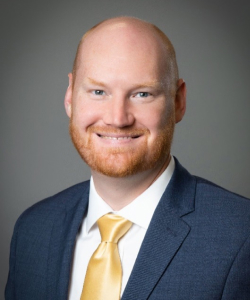
Bondwell Technologies is a biotechnology company based in College Station focused on solving one of the most expensive and persistent bottlenecks in biologic drug manufacturing: purification. Biologic medicines, used to treat cancer, autoimmune diseases, rare genetic disorders, and emerging advanced therapies, are transforming modern healthcare. However, the downstream purification step remains slow, complex, and costly, accounting for a significant portion of manufacturing expenses and limiting scalability.
We have developed a novel affinity purification platform that re-engineers how purification devices are built. Instead of chemically attaching functional proteins to a separate structural support in multiple manufacturing steps, Bondwell integrates the purification function directly into a proprietary protein-based matrix in a single streamlined process. The result is a high-capacity, high-flow, single-use purification device that reduces complexity while improving performance and cost efficiency.
The company is initially targeting antibody manufacturing within the $4.9 billion global affinity purification market, which is projected to exceed $10 billion in the coming years as biologic modalities continue to expand. Independent validation from leading manufacturers, including Fujifilm Diosynth and Matica Biotechnologies, has confirmed our performance advantages.
Bondwell BioPure’s mission is to remove the manufacturing barriers that limit access to life-saving biologic therapies. By modernizing purification technology, the company aims to help define the future of scalable biologic production and accelerate global access to advanced medicines.

ChannelScience is developing an AI-enabled, multiformat magnetic tape reader that unlocks access to rare and deteriorating data stored on legacy media. Supported by U.S. Department of Energy SBIR awards (DE-SC0021850 and DE-SC0021879), the company is advancing a high-resolution magnetic scanning system that recovers data from obsolete and damaged tape formats for which no working playback machines remain. Rather than relying on legacy hardware, ChannelScience captures raw magnetic signals and reconstructs the original data using advanced signal processing and format-specific decoding software.
A key application area is nuclear nonproliferation, where decades-old magnetic tapes contain irreproducible seismic and test-monitoring data that can enhance modern AI models for detecting and analyzing nuclear events. More broadly, ChannelScience enables “digital archaeology,” preserving irreplaceable scientific, medical, and cultural datasets for future research and innovation, including support for sovereign AI initiatives.
ChannelScience also brings deep expertise in semiconductor memory and storage R&D, providing advanced signal processing, error correction architectures, and chiplet pathfinding consulting to accelerate next-generation system design. By combining expertise in storage physics, AI, and semiconductor architecture, ChannelScience is creating a new pathway to recover, preserve, and activate legacy data for the next era of machine learning and scientific discovery.


We deliver a situational awareness platform and tools using advanced yet affordable technology that promotes healthy active aging, chronic disease management and support for caregivers to increase quality of life (QoL) for all. We do this by improving care and communication, lowering costs and risks, reducing caregiver burnout as well as lowering fears so independence, mobility and social interactions are accessible and achievable.
We are the first to Apply UWB Indoor Radar with UWB-enabled Smartwatches for Situational Awareness:
- Provides 360 degree indoor/outdoor, highly precise visibility and situational awareness for multiple market segments
- Use AI / Neural Networking for location, movement and activity monitoring of people, processes and equipment.
- Deliver situational awareness to multiple markets – healthcare (hospitals, home healthcare, health insurers, healthcare providers), home care (family or professional caregivers) or any market where optimizing people, processes and equipment with AI gives competitive advantage.
- Complete suite of enterprise deployment tools for management of millions of devices
Theora 360 provides extremely accurate, actionable information for care teams. Caregiving staff for older persons have the ability to more confidently maintain their quality of life by monitoring, evaluating, and predicting fall risks. In the event of a fall, or increased risk of a fall, our system will communicate with both the older person and alert appropriate resources that a fall has occurred or fall risk has increased. We provide coverage both indoors and outdoors, removing the two biggest fears of older adults – falling and wandering – that negatively impact their quality of life.


Constantiam Biosciences is a biotech company that is currently raising seed funding to support IND filing for a novel chemical entity that addresses an high unmet need within a genetic condition and has the potential to treat a common neurodegenerative disease with no disease-modifying treatments currently available.
More broadly, we are dedicated to accelerating the development of life-saving precision medicine by elucidating the consequences of human genetic variation. We are building the cornerstone of future medical care, where nearly everyone’s genome informs their diagnosis and treatment. Our core offerings are the RareScan and MAVEvidence platforms. MAVEvidence has generated real-world impact through engagements with a top 5 pharma company where it is being applied to analyze cancer patient genomes and aid in identifying novel cancer driver variants. The RareScan offering is specifically designed to resolve variants of uncertain significance, which is a critical business need for our pharma partners. Through an engagement with a top rare disease company, we have demonstrated a successful proof-of-concept for RareScan.
Our strong financial position and technical validation are highlighted by our federal grant funding, including the successful award of a Phase II SBIR from NHGRI, which, along with other grants and growing revenue, supports our plans to advance our internal drug pipeline. We are currently engaged with investors ahead of our planned seed round in 2026 to fund the preclinical development of our drug candidate. Constantiam Biosciences is poised for a step change in potential upside for our investors as we advance these key initiatives.

DroneSense by Versaterm is a public safety technology platform advancing the future of integrated aerial intelligence. We enable agencies to deploy, manage, and scale drone operations with precision, speed, and confidence. By connecting drones, sensors, and personnel in real time, DroneSense transforms how first responders gather critical information, make decisions, and protect their communities.
Built specifically for law enforcement, fire, and emergency response, DroneSense simplifies complex workflows—from mission planning and live video streaming to evidence capture and post-incident analysis. Our platform ensures that vital data moves seamlessly between air and ground teams, enhancing situational awareness when every second counts.
As part of the Versaterm ecosystem, DroneSense extends beyond drone operations to integrate with broader public safety workflows, helping agencies unify their technology stack and operate more efficiently. Our hardware-agnostic approach allows teams to leverage best-in-class tools while maintaining a single, connected operational picture.
Trusted by agencies nationwide, DroneSense by Versaterm empowers teams to respond faster, operate safer, and achieve better outcomes. Our mission is to equip public safety professionals with the tools they need to act decisively in high-stakes environments - bringing clarity, coordination, and control to every mission.
DroneSense by Versaterm is redefining how modern public safety operates in a connected world.


Electroninks Incorporated is a world-leader in the development of particle-free conductive inks. We have developed a full suite of proprietary metal complex conductive ink solutions, thus accelerating time to market for new innovations and manufacturing breakthroughs.
Electroninks’ metal complex inks – include silver, gold, platinum, nickel and copper – our inks deliver higher conductivity, flexibility and cost-effectiveness. We are the only domestic U.S. supplier of this full suite line of particle-free inks. The company’s conductive inks provide costeffective, highly stable, and reliable solutions for applications in semiconductor packaging, printed circuit board (PCB) manufacturing, consumer electronics, wearables, medical devices and more. We also partner closely with best-in-class equipment and integration partners to provide customers a total ink and process solution with the ultimate goal to reduce the manufacturing costs and complexity.
Our goal is to successfully implement our conductive inks into our customers products and close the gap of commercialization. We have a world-class talented and professional team, with expertise in electronics, semiconductor, advanced materials, chemistry, and production. We are backed by strong strategic partners and some of the most prominent global technology investors.
We are headquartered and located in Austin, Texas.


Founded by Maricela and Scott Gray in 2012, Elevate Systems (Elevan LLC) is a cutting-edge engineering and technology firm specializing in reverse engineering and digital modernization of data for legacy weapon systems. By bridging the gap between analog history and advanced manufacturing, Elevate ensures the joint force remains mission-ready through the development of needed technical data generation leading to the identification and qualification of new sources of manufacture.
SBIR Innovation: The OPTIX Digital Ecosystem
Elevate is currently advancing SBIR Phase I, II, TACFI, and Phase III efforts centered on its innovative engineering design and OPTIX (Optimized Technical Information Extraction) technology. This solution addresses critical supply chain delays by using AI, Machine Learning, and Computer Vision to convert non-machine-readable data (Mylar, Sepia, PDF) into structured, vectorized 2D files. This "2D-to-2D" transformation creates a searchable digital replica enabling automated part-number cross-referencing and material specification searches.
From Digital Data to Advanced Manufacturing
Beyond data conversion, Elevate provides comprehensive reverse engineering, 3D simulation, and Finite Element Analysis (FEA). These services provide the engineering substantiation required for Advanced Manufacturing, utilizing both subtractive and additive manufacturing to produce parts faster than traditional methods.
Proven Mission Impact
Elevate’s expertise is currently deployed across the Department of War:
- U.S. Air Force: Supporting the B-52, B-1, B-2, C-5, WC-135, KC-135, E-3, F-16 and F-4
- U.S. Army: Supporting the CH-47 Chinook, UH-60 Blackhawk and the AH-64 Apache.
- US Navy: Supported the HH-60H and the MQ-8B UAS
- NASA: Supporting the WB-57 and the T-38


Firehawk is an end-to-end energetics company, revolutionizing the supply chain to fuel the future of defense to deter and win tomorrow’s wars. Firehawk builds munitions, rockets and motors powered by its 3D printed propellant – faster and more cost effectively with the ability to manufacture and distribute almost anywhere in the world. The company is headquartered in Dallas, Texas; is building a 340-acre propellant and motor production facility in Lawton, Oklahoma; and operates a 636-acre DCMA-rated rocket system integration facility in Mississippi. Firehawk conducts static fire and flight testing at two West Texas sites, including a 30-square-mile launch range.


FlexRadio is a U.S. small business and long-recognized pioneer in software-defined radio technology, delivering high-performance HF systems for demanding consumer, commercial, government, and defense applications. Our transceivers and high-power systems combine state-of-the-art RF engineering with open, modular architectures that accelerate integration, reduce lifecycle cost, and ensure long-term adaptability.
Built on fully digital signal chains, wideband RF front-ends, and flexible FPGA/DSP processing, FlexRadio platforms enable secure, reliable, and scalable communications with support for both modern and legacy waveforms. Open APIs, VITA-49 streaming interfaces, and standards-based control frameworks give integrators unmatched freedom to customize, automate, and deploy communications solutions tailored to their mission needs.
From emergency management and maritime services to tactical aviation programs and strategic long-range HF networks, FlexRadio provides real-time awareness across multiple channels, resilient beyond-line-of-sight connectivity, and exceptional RF performance in contested, remote, or infrastructure-denied environments.
With a proven track record across U.S. and international government programs, commercial operators, and critical-infrastructure organizations, FlexRadio delivers adaptable, future-ready HF solutions engineered to meet the operational challenges of today—and ready for the missions of tomorrow.

Founded in 2020, Forward Edge-AI is a deep technology focused delivering compelling mass market solutions to enhance the safety and security of the free world. Forward Edge-AI’s expertise spans AI-driven Post-Quantum Cryptography (PQC), Biological and Chemical Weapons of Mass Destruction Detection, and Electronic Warfare. We develop solutions for contested environments where traditional communications fail, including GPS-denied operations and SATCOM-limited scenarios.
Forward Edge-AI is led by a Small Business Innovation Research (SBIR) Tibbetts Award winning inventor. Key technology areas include low probability of detection/interception communications, adaptive beamforming, Radio Frequency deception, and Agentic AI. Forward Edge-AI’s flagship product is Isidore Quantum®, a drop-in PQC solution to secure military and financial networks, and terrestrial and space critical infrastructure.
Forward Edge-AI is headquartered in San Antonio, Texas, with offices in Maryland, New Delhi, Singapore, Taipei, and Tokyo.

GetChkd is a cybersecurity and data governance company focused on persistent trust and enforcement across connected, disconnected, and air-gapped environments. The platform secures how data, software, and identities are accessed, shared, and controlled when traditional perimeter and cloud-only security models break down.
At its core, GetChkd provides a permissioned blockchain-backed enforcement layer that anchors policy capsules, smart contracts or chaincode, and immutable audit trails directly to systems and data. These policies are enforced at runtime, not just checked after the fact, and continue to operate even when systems are offline or operating in degraded or contested conditions.
GetChkd integrates with both legacy and modern infrastructure through REST APIs and containerized components, allowing organizations to add strong enforcement and auditability without replacing existing systems. The platform supports role- and rule-based access control, offline enforcement, tamper-evident logging, hardware-backed trust, and post-quantum cryptographic readiness.
GetChkd is built for organizations that require provable control, resilience, and transparency across complex environments, including defense, healthcare, and critical infrastructure.

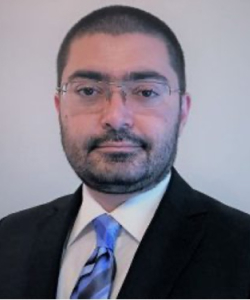
Health Discovery Labs is developing a muscle stimulation system designed to reduce the impact of ICU Acquired Weakness in critically ill patients. The system provides a non volitional exercise strategy through electrical muscle stimulation, helping reduce disability, preserve muscle strength, shorten hospital stays, and decrease healthcare costs.

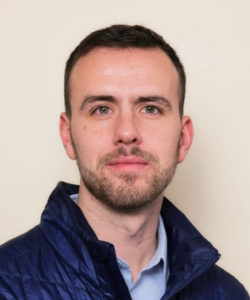
Helix Earth is a clean technology company commercializing technology developed by CEO Dr. Rawand Rasheed while at NASA to solve one of the most pressing problems in commercial air conditioning, humidity. Air conditioning accounts for nearly 8% of global CO2 emissions, and more than half of the energy used goes to waste due to humidity. Standard systems overcool spaces just to pull moisture from the air, driving up energy costs while still leaving buildings too humid, too cold, or both. The consequences show up as mold growth, damaged products, uncomfortable occupants, foggy display cases, and high energy bills.
Helix Earth is developing retrofit add-on systems that bolt onto virtually any commercial air conditioner to remove moisture before it reaches existing HVAC equipment, letting the cooling system focus on temperature instead of fighting humidity. The result is better humidity control, lower energy costs, and more comfortable, healthier spaces. Spun out of Rice University and NASA in 2022 and incubated at Greentown Labs in Houston, Helix Earth holds a worldwide exclusive NASA license for its core Helix MICRA™ technology, backed by 6 additional company-owned patents and extensive trade secrets. The company is at commercial scale, field testing with customers, and has secured $200MM+ in signed LOIs across a $150B global air conditioning market with more than $11B serviceable in the US.
Mission: Transforming the built environment to manage comfort, humidity, and energy efficiency by delivering the world's most effective HVAC retrofit technology.

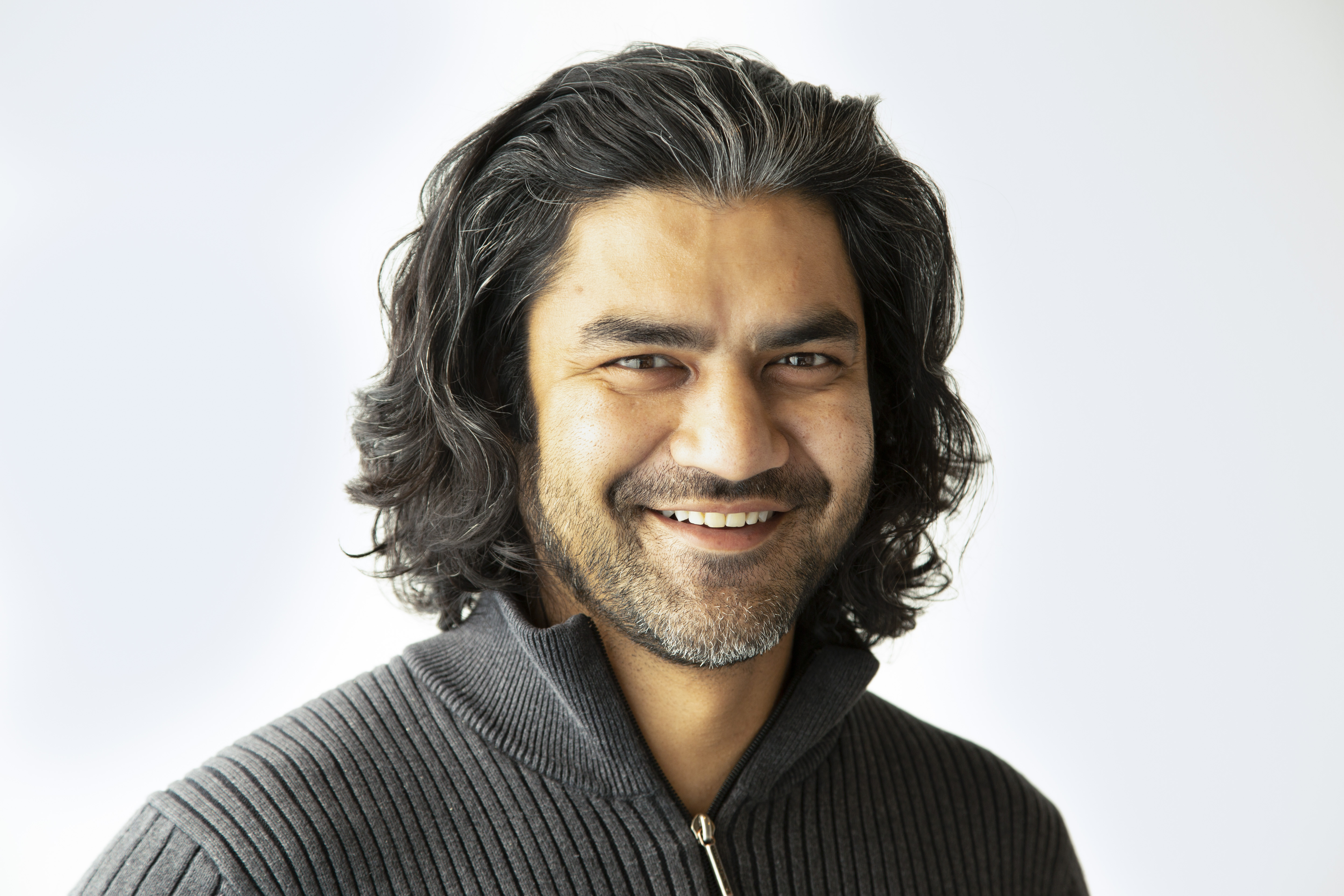
HermTac is a Government Systems Integrator that originated from winning three Challenge.gov national innovation awards from the Department of Veterans Affairs (VA) for rapid-prototyping COVID-19 hardware and a grand challenge award for suicide reduction. Our services span the entire internet vertical, including program management, support, installations, RDT&E, batch manufacturing, OEM hardware, and managed wireless space and terrestrial internet.
We support the Federal Government, VA, Defense Health Agency (DHA), and Department of the Air Force. Currently, we are a Prime on the VA’s $40M LEO program, a Subcontractor on Telehealth initiatives, and a participant in the USAF D2P2 SBIR for Combat Communications, titled “All The Internets.” Having bootstrapped to over $3M in revenue in 2025, we recently supported the nation’s largest in-home VR mental wellness initiative for Veterans through specialized kitting and delivery services.


Hyliion is committed to creating innovative solutions that enable clean, flexible and affordable electricity production. The company’s primary focus is to provide distributed power generators that can operate on various fuel sources to future-proof against an ever-changing energy economy.
Headquartered in Austin and with research and development in Cincinnati, Hyliion is initially targeting the commercial and waste management industries with a locally deployable generator that can offer prime power as well as energy arbitrage opportunities. Beyond stationary power, Hyliion will address mobile applications such as vehicles and marine. The KARNO generator is a fuel-agnostic solution, enabled by additive manufacturing, that leverages a linear heat generator architecture. Hyliion aims to offer innovative, yet practical solutions that contribute positively to the environment in the energy economy.

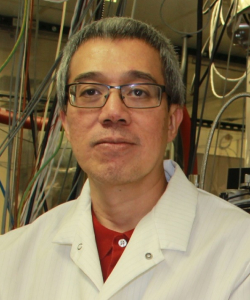
La Luce Cristallina, Inc., is a company that manufactures specialty semiconductor wafers for silicon photonics and other fields. The company was formed out of the University of Texas at Austin to commercialize technology developed there to integrate various functional crystalline oxide materials onto semiconductor wafers, particularly on silicon, but also on germanium and gallium arsenide. Their main product is a 200-mm commercial-size wafer of the strongly electro-optic material, barium titanate, integrated onto silicon or silicon-on-insulator platforms. This material can significantly reduce the footprint and power consumption of optical modulators that are used in datacenters and optical communications networks, while at the same time pushing up the data transmission rates beyond what one can physically achieve using pure silicon. The company hopes to expand its operations to meet the growing demand in high-speed, low power optical transducers for various fields, including optical AI, on-chip LIDAR, and photonic quantum computing.

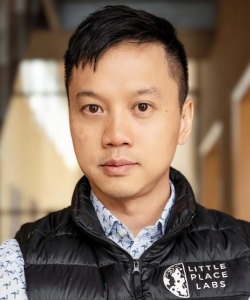
Little Place Labs (LPL) builds and deploys edge AI/ML software across a distributed network of satellites to deliver real-time insight products from space for national security and commercial sectors. Through its platform, ORBITFY, LPL enables on-orbit data processing that reduces latency, lowers bandwidth requirements, and accelerates decision-making.

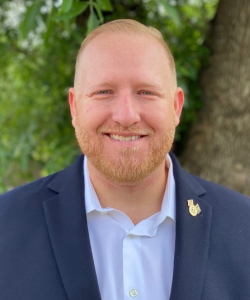
LOCOAL is a Texas-based waste conversion technology company founded in 2019 by Miles Murray (CEO) and Petey Peterson (Chief Revenue Officer / Co-Founder), both alumni of the University of Texas McCombs Master of Science in Technology Commercialization program. Headquartered in Texas (with operations rooted in Austin and now Boerne), LOCOAL engineers decentralized, onsite solutions to transform organic biomass waste—primarily residual wood from pallet manufacturing, repair, and recycling—into valuable, revenue-generating products.
The company's core innovation is the Rainmaker™ platform: a modular, containerized induction pyrolysis system that processes waste directly at the source. Using proprietary induction heating for precise control and near-zero emissions, it converts biomass into premium co-products, including:
- Biochar (high-carbon soil enhancer for agriculture, sequestration, and other uses),
- Bioliquids (wood vinegar for biostimulants/pesticides and pyrolysis oil as biofuel/chemical feedstock),
- Syngas (refined for clean energy, onsite power, and industrial applications).
The platform is supported by IMPCT.AI™, which provides real-time carbon tracking and verification, enabling the generation of verified, durable carbon removal credits.
LOCOAL targets the fragmented North American pallet industry (~600 million pallets produced annually, generating millions of tons of residuals), eliminating transportation, disposal costs, and landfill dependency while creating economic value from waste. Its first commercial deployment is in Houston, Texas, integrated onsite at 48Forty Solutions—a leading pallet recycler—serving as the flagship demonstration and validation installation.
With expansion potential to other clean biomass streams, LOCOAL delivers efficient, scalable waste-to-value conversion for industries seeking sustainable, profitable alternatives to traditional disposal.

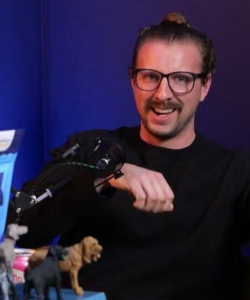
LYX is a performance-driven pet wellness company pioneering the emerging category of functional hydration for dogs. Inspired by the rapid growth of human hydration brands, LYX addresses a critical but overlooked need: most dogs are chronically under-hydrated, impacting their energy, recovery, and long-term health.
Our flagship product is a powdered hydration mix made with real broth, electrolytes, and essential vitamins that transforms plain water into a highly palatable, functional solution dogs actively want to drink. LYX is designed for everyday use as well as high-need moments such as heat exposure, travel, illness, aging, and physical activity.
In less than a year since launch, LYX has demonstrated early product-market fit, achieving strong customer adoption, repeat purchase behavior, and growing demand across digital channels. The brand has generated thousands of customers on Amazon while maintaining improving retention metrics, signaling its transition from trial to daily-use habit. At the same time, LYX is expanding into 495 retail doors this summer through partnerships with national distributors and brokers, positioning the brand for scalable, omnichannel growth.
Beyond product, LYX is building a broader platform around canine performance, wellness, and community. Through strategic partnerships, content, and experiential concepts such as dog-focused events and training ecosystems, the company aims to become the category-defining brand in canine hydration.
LYX represents a unique opportunity at the intersection of pet health, consumer packaged goods, and performance lifestyle, with the potential to scale into a nationally recognized brand while improving the everyday lives of dogs and their owners.

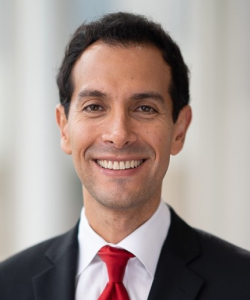
Marker Therapeutics, Inc. (Nasdaq: MRKR) is a clinical-stage immuno-oncology company focused on the development of next-generation T cell-based immunotherapies for patients with blood cancers and solid tumors. Marker Therapeutics holds the worldwide exclusive license to Multi-Antigen Recognizing T cells (MAR-T cells), a technology developed at Baylor College of Medicine.
Marker’s unique MAR-T cell platform differs significantly from today’s leading cell therapies. By using a non-genetically modified cell therapy approach that selectively expands naturally occurring tumor-reactive T cells present in the patient’s blood, MAR-T cells harness the patient’s own immune system to target and combat cancer. Compared to other cell therapy approaches, MAR-T cells recognize hundreds of different portions (known as epitopes) across multiple tumor-associated antigens for a broad, potent, and durable anti-tumor response. Marker’s MAR-T cell technology was tested in >200 patients across seven clinical indications showing a favorable safety profile and sustained anti-tumor activity in hematologic malignancies and solid tumors.
Marker’s lead product candidate, MT-601, targets six tumor-specific antigens (Survivin, PRAME, NY-ESO-1, MAGE-A4, SSX2, WT-1) and is currently being evaluated in the Phase 1 APOLLO study for patients with lymphoma who have relapsed after, or are ineligible for, anti-CD19 CAR-T cell therapy (clinicaltrials.gov ID: NCT05798897).


NetRise is the software supply chain security company that exists to eliminate blind trust in software forever. By identifying every component in each binary image across firmware, kernels, operating systems, containers, and applications, NetRise exposes the full stack of inherited risk that source-based tools, vendor SBOMs, and questionnaires cannot see. Non-code related risk uncovered includes hidden dependencies, cryptographic artifacts, misconfigurations, secrets, among others. Global enterprises that produce and consume software, including government agencies, rely on NetRise to validate what they ship and what they run. When unforeseen software vulnerabilities are exploited by bad actors, NetRise answers the question, “where am I exposed?” enabling rapid identification, prioritization, mitigation, and policy updates, reducing material risk to the business.


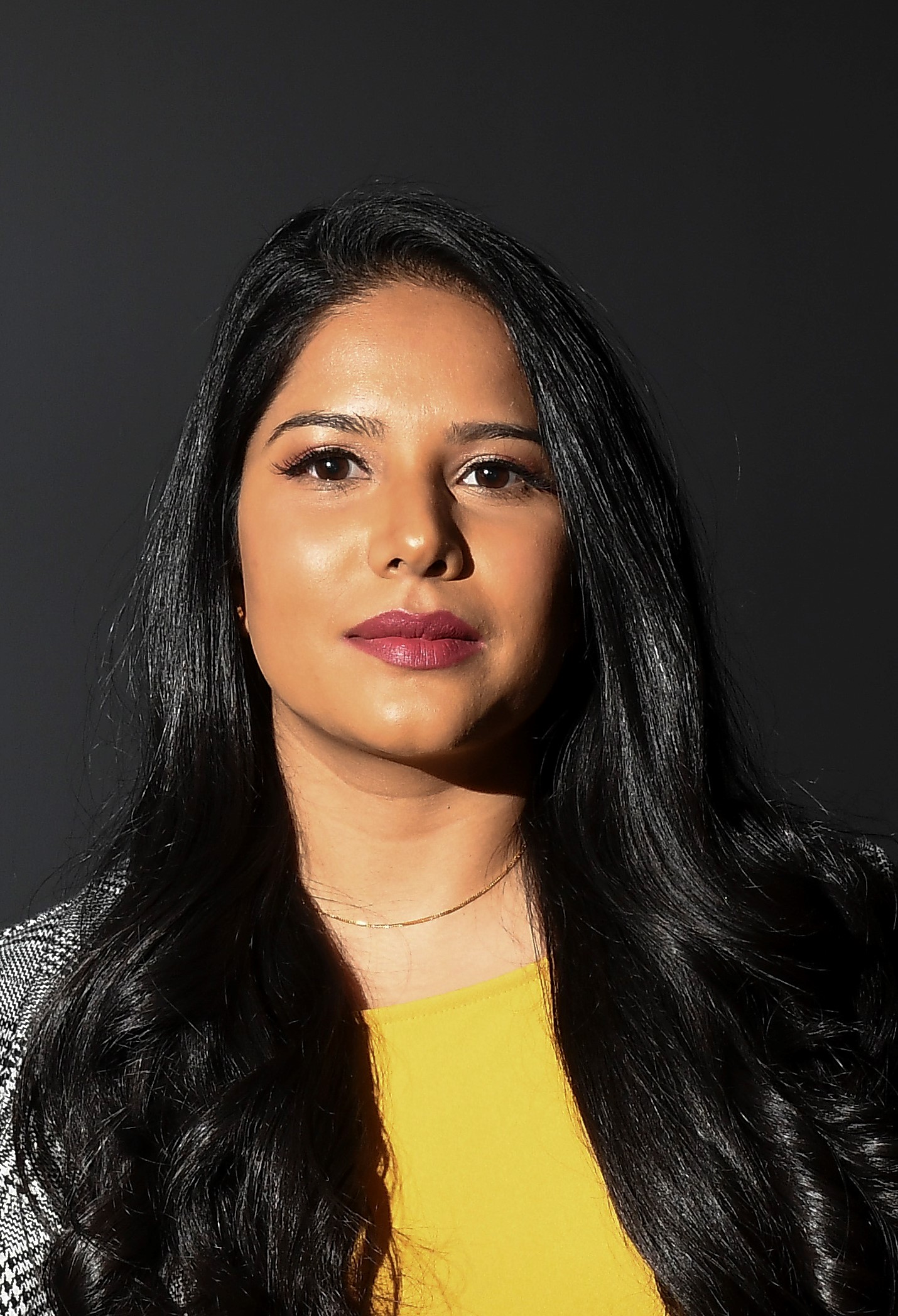
Neuro Rehab VR is a digital health scale-up leveraging AI and immersive therapeutic experiences to reinvent patient engagement, streamline clinician workflows, and elevate operational performance. Its flagship Smart Therapy™ Complete Solution—an FDA-registered, HIPAA-compliant therapy solution—automates documentation, surfaces objective clinical insights, and personalizes treatment across neurological and physical rehabilitation.


Nirubi isn’t another cybersecurity company—we’re a refusal to accept that compromise is inevitable. While the industry keeps reacting to attacks, we’re building systems where they don’t land in the first place. Rooted in years of deep research, Nirubi engineers security directly into the fabric of computing—delivering mathematically grounded protection for mission-critical software and infrastructure.
Our approach is simple, but brutal in its implications: if the execution path is provably trusted, entire classes of attacks—0-days, polymorphic threats, and everything in between—stop being a problem. No chasing signatures. No guessing intent. No patch-and-pray cycles. Just systems that hold their ground under pressure.
From autonomous systems to critical platforms, Nirubi enables organizations to run what matters most with confidence—not because we say it’s secure, but because it’s built that way. Around here, security isn’t layered on. It’s engineered in—and proven.

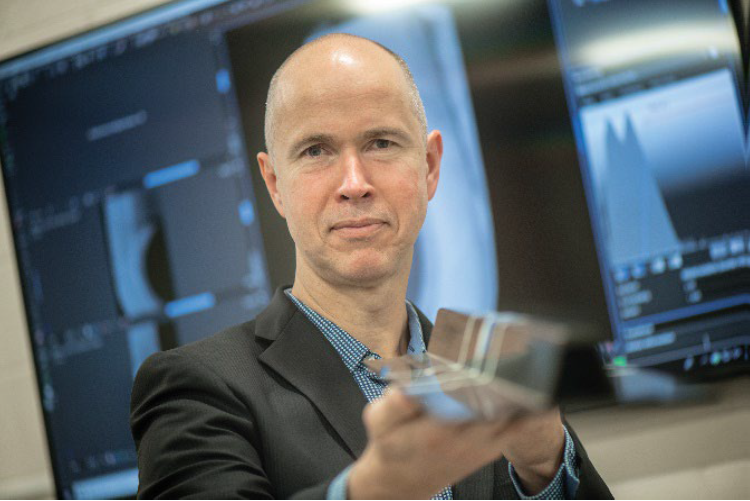
Numerical Technology Company, LLC (NTC) develops advanced methods and software tools for high-resolution nondestructive inspection, and integrated Digital Engineering and AI technologies that enable efficient quality control and automated disposition of aerospace flight-critical structures during production and sustainment. NTC has successfully completed multiple Phase II SBIR Projects that resulted in operational software products supporting U.S. Department of War programs. These include U.S. Air Force, Certification Modeling for Composites with Voids and Wrinkles for Engines and Structures; U.S. Army, Modeling of Microstructural Irregularities in Additively Manufactured Materials; and U.S. Navy, Software Toolset for Rapid Finite Element Mesh Generation of As-Built Large Laminated Composite Structural Components. Among NTC’s key products is Lamiteco, a novel CT reconstruction (imaging) software built based on more than 15 years of practical experience and algorithm development for X-ray CT inspection of composite materials and structures. Lamiteco provides unique capabilities for advanced CT scanning setup and arbitrary scanning trajectories, making it particularly well suited for robotic CT systems enabling high-resolution imaging of large and complex structures. Lamiteco applications have recently been expanded beyond aerospace to improve nondestructive inspection fidelity in automotive and microelectronics manufacturing. NTC is currently developing AI-based technologies aimed at dramatically improving robotic CT imaging quality for large structures through novel approaches that enable rapid automated generation of large, physically informed training datasets for AI models.

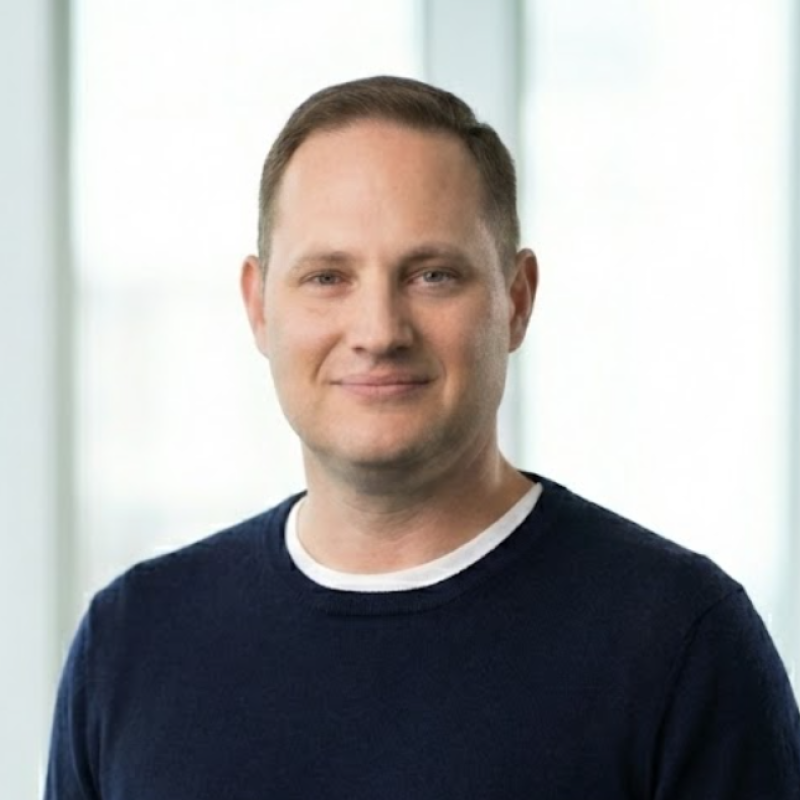
Prius Intelli is redefining how the world understands and manages critical infrastructure. In an industry flooded with data but starved for clarity, we deliver what operators actually need: ground-truth intelligence—insights that are accurate, verified, and ready for action.
We operate at the intersection of aerial precision, advanced AI, and real-world operations—transforming high-resolution data (2.5–15 cm) into decisions that protect assets, reduce risk, and accelerate outcomes. From monitoring thousands of miles of pipeline and
transmission corridors to enabling rapid response after major storm events, our work directly impacts safety, compliance, and operational performance across Oil & Gas and Power & Utilities.
What sets Prius Intelli apart is not just what we see—it’s what we prove. While satellites can signal that something changed, and drones can capture fragments, we provide the ground-truth validation that organizations rely on when decisions carry financial, regulatory, and human consequences.
We’ve grown rapidly by focusing on one mission: turning complex geospatial data into trusted, decision-grade intelligence. Today, we are evolving beyond projects into a scalable platform—embedding our insights directly into the workflows that run critical infrastructure.
We believe the future of Earth Intelligence isn’t about more data—it’s about better decisions. And we’re building the system that makes those decisions possible.


Prometheus Security Group Global (PSG) is an Austin–based security technology firm and GSA-certified small business operating at the highest levels of critical infrastructure protection and national security.
As the OEM of a unified security platform—intrusion detection, access control, video surveillance, and cyber—PSG delivers mission-critical protection for the most sensitive critical infrastructure environments in the world.
PSG engineers, manufactures, and deploys advanced physical and cyber security solutions that defend America’s most critical assets, missions, and personnel including two-thirds of DoD’s nuclear triad and a growing share of DOE’s nuclear enterprise. In short, if it really matters, PSG protects it.

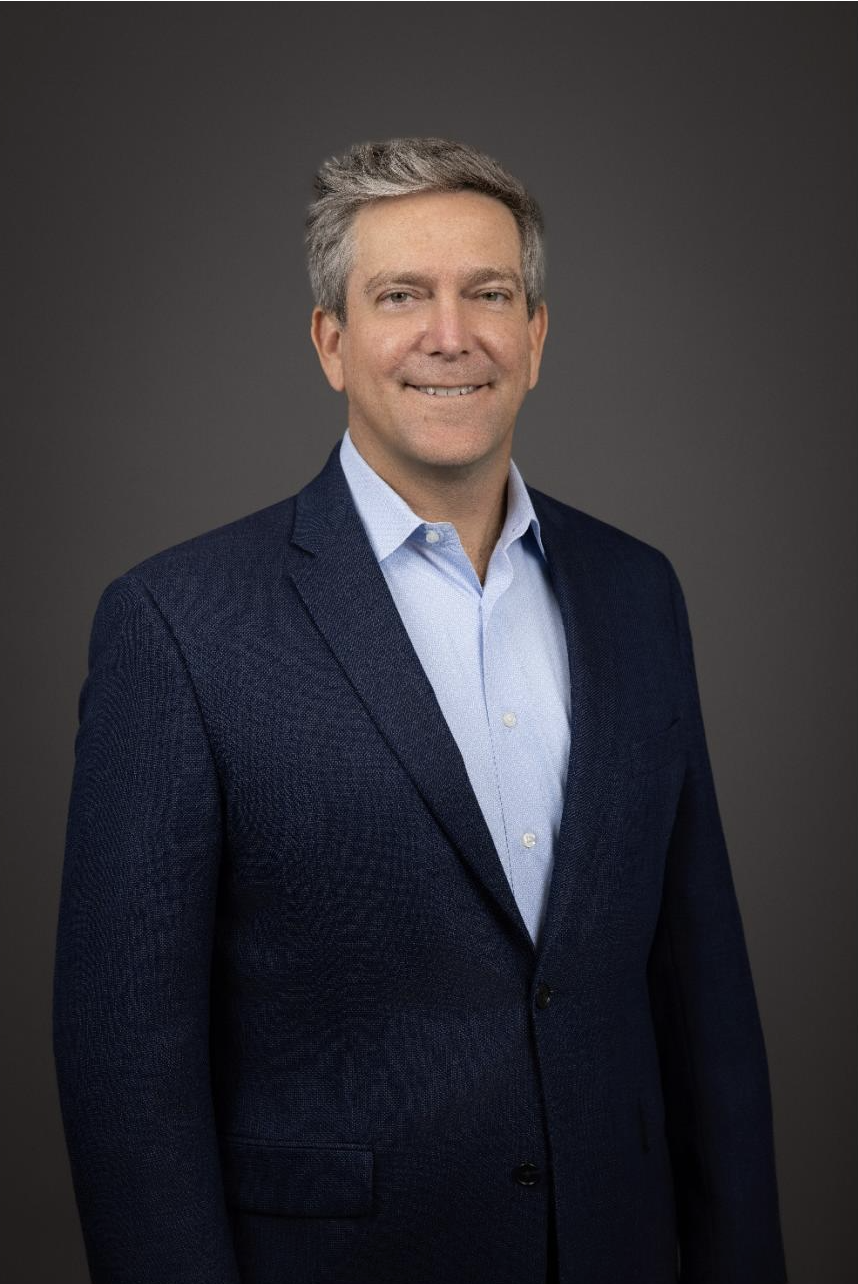
Protopia AI enables production AI on sensitive data with Stained Glass Transform, an inference privacy layer that eliminates plaintext exposure during inference while retaining accuracy to within 99% of the base model.
Organizations run AI on high-value data across shared, cloud, or hybrid infrastructure. The result: consolidated infrastructure, stronger data protection, and more AI use cases moving from pilot to production.
Teams in financial services, healthcare, the public sector, and enterprise AI use Stained Glass Transform to run inference on regulated data today.


PURioLABS is an emerging leader in infection control, tackling one of healthcare’s most urgent and costly challenges: ineffective, unsustainable disinfection methodologies. The global high-level disinfection market is projected to reach $58B by 2031, yet current protocols fall short. Nearly 20% of reprocessed endoscopes in the U.S. remain contaminated, contributing to over $50B annually in hospital-acquired infection (HAI) costs.
PURioLABS is designing the new standard with the first flexible endoscope sterilizer designed specifically for U.S. hospitals and positioned to replace outdated high-level disinfection (HLD) methods. As regulatory and clinical momentum shifts toward sterilization for semi-critical devices, the company is well positioned to lead this transition.
The PURitALL platform is built on proprietary science and technology that does not currently exist in the market. This innovation evolved from a prior proven success: the PURitALL HLD Mobile Cabinet which demonstrated rapid, 15-minute elimination of highly resilient pathogens in real-world healthcare settings. PURioLABS is now advancing this breakthrough into a next-generation sterilization solution that is faster, more effective, eco-friendly, and cost-efficient—reducing both clinical risk and operational burden.
Backed by a team with 60+ years of experience across medical sales, clinical practice, and FDA processes—and guided by leading U.S. epidemiologists—PURioLABS is preparing PURitALL Sterilizer for rapid adoption. With infection threats rising and hospitals under pressure to improve outcomes while lowering costs, the company is poised to set a new standard in infection prevention.
LOGO
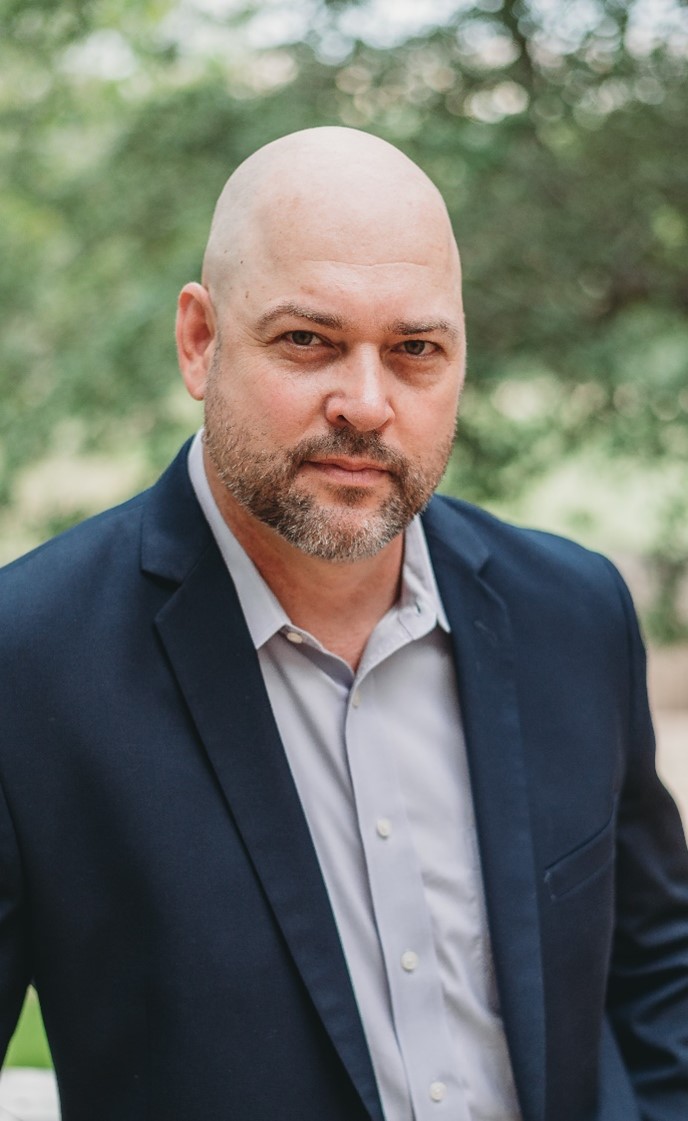
RAEKOR is a U.S. veteran-owned technology company dedicated to engineering next-generation, ultra-portable evaporative cooling solutions for austere military, commercial, and recreational environments. We specialize in delivering powerful cooling with a minimal footprint and energy requirements, providing relief whether in the field, at a demanding job site, or enjoying the outdoors.
At the core of our portfolio is our TRECS (Tactical, Rapid, Expeditionary, Cooling Systems) technology which is protected by multiple patents with more pending. Our lightweight evaporative coolers were designed to explicitly tackle the rigorous physical and thermal problems seen by warfighters in actual combat conditions. Recognizing that warfighters aren't the only ones operating in extreme climates, we were also recently funded by U.S. Special Operations to translate our technology into an advanced canine cooling solution for front-line working animals.
By partnering with the Department of Defense, we are directly leveraging the U.S. military's non-dilutive funding to finalize our technology and thoroughly prove our products in the harshest conditions on earth. This rigorous, real-world testing allows us to transition into the commercial space not just with highly refined, proven products, but with a highly authentic and compelling marketing story.
To execute our vision, we are strategically transitioning our operations and intellectual property to our newly formed C-Corporation, ChillPack, Inc. We are actively seeking strategic investors who wish to capitalize on receiving matching 1:1 non-dilutive investment from the military. Together, we can leverage this unique funding mechanism to rapidly bring our battle-tested products into the broader commercial market. Please reach out to Rex Eiserer at rex@raekor.com for further information.

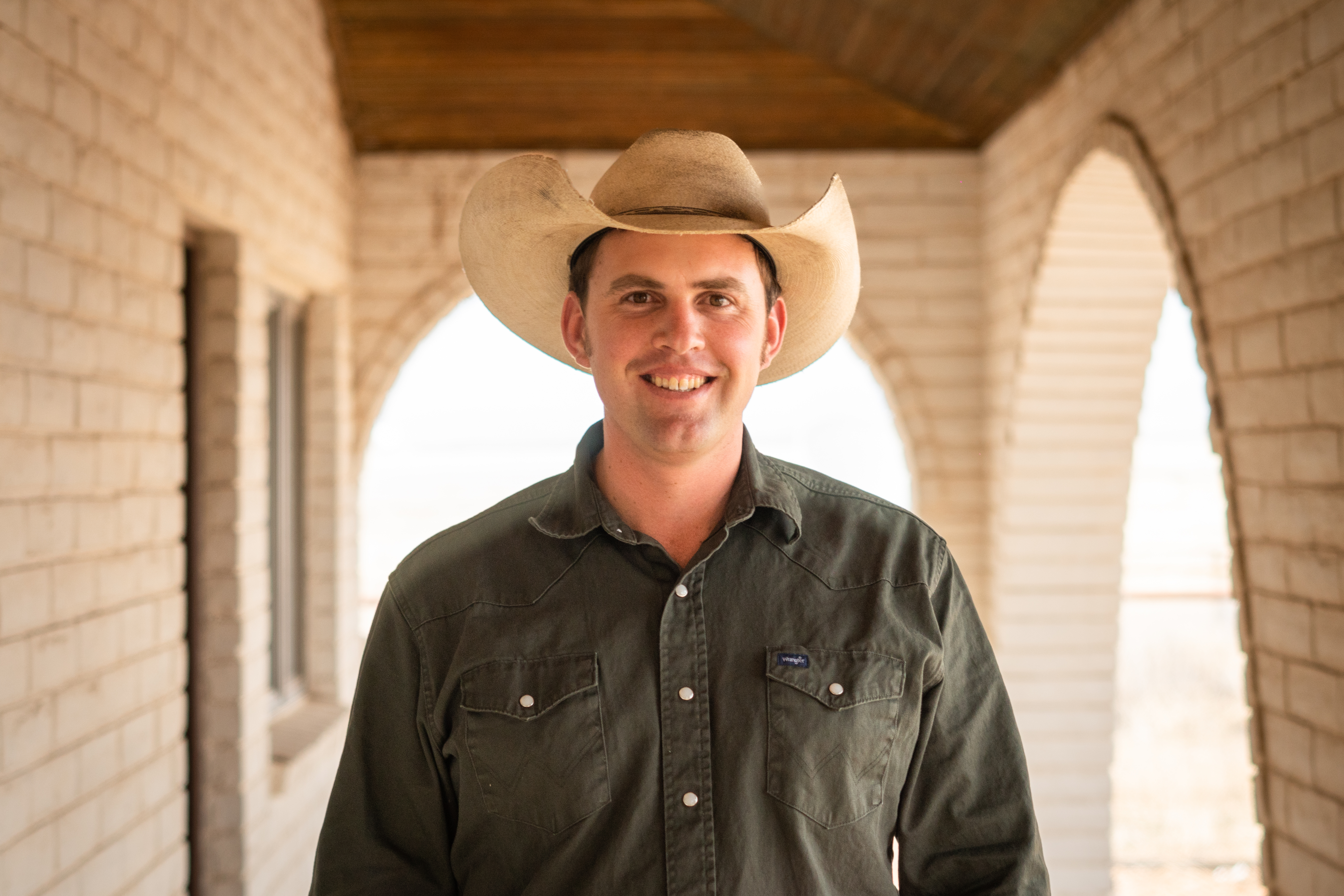
RanchCheck is founded on the principle that people ranch to stay connected with land, animals, and family. Therefore, products are designed to uphold this ranching tradition. RanchCheck's first product was the AguaCheck tank level sensor, the first water level sensor built with the specific needs of ranchers in mind. Today, hundreds of ranches across the United States rely on these sensors to help provide a reliable water supply to livestock and avoid wasting this precious resource. With the help of SBIR awards, RanchCheck is currently developing and testing ear tags that stimulate the natural herd instinct of cattle. Early results indicate that these GoGraze tags will help cattle to form free-ranging yet compact herds similar to bison herds of the past, and bring profound ecological benefits to the land. Fewer fences, healthier grasslands and increased profitability are a few of the benefits expected from the implementation of this herd instinct stimulation technology.
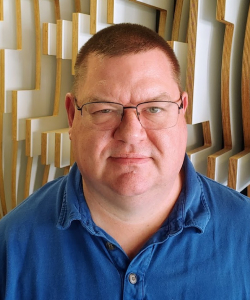
Founded in 2013 as a spin-off of Engineers Without Borders / NASA – Johnson Space Center, re:3D Inc is a domestic additive manufacturing equipment manufacturer and service provider headquartered in Austin, Texas. The company is proudly bootstrapped and profitable since its inception with business revenue derived equally from worldwide commercial hardware sales and services and R&D contracts and awards.
re:3D owns a 11,000+ sq-ft facility located in a HUB Zone with a machine shop, assembly and testing bay, contract printing bay, and a research & development bay, with individual rooms reserved for mechanical and materials testing and ESD-safe electrical assembly. The facility sits on a six-acre property, purchased to support the continued development and commercialization of additive manufacturing solutions.
The company’s commercial hardware and software are open source, designed and built to prevent obsolescence with the ability to upgrade as the technology advances over a lifetime warranty. These offerings currently satisfy the “Buy American Act” guidelines for federal procurement, and re:3D is tracking towards 95%+ domestically-sourced hardware for all commercial product lines.
re:3D’s team technical and operational professionals provides domain expertise in material extrusion hardware, control software, 3D printer fleet management, and print preparation and toolpath generation. An active research and development program focuses on high-speed FFF printing, the use of recycled materials as FGF feedstock, point-of-need manufacturing in austere or contested environments, in-space/off-planet manufacturing, and multi-axis Direct Ink Write (DIW) printing systems.

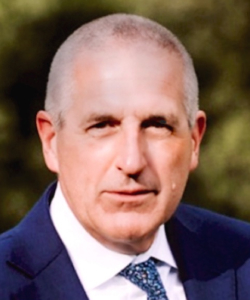
Ridgeline Therapeutics is an innovative biotech company working at the convergence of aging biology and chronic disease, one of the most transformative frontiers in medicine. Its mission is to eliminate health declines associated with aging, fundamentally improving the way we age.
Based in the Texas Medical Center. Ridgeline is currently focused on developing oral drugs target NNMT (nicotinamide N-methyltransferase), a master regulator of cellular energetics and epigenetics implicated in multiple prevalent chronic diseases. Founded by serial inventor Stan Watowich, PhD, and built by a leadership team with deep pharmaceutical and biotech experience, the company has earned extraordinary scientific validation, including over $13M in NIH and DoD funding, a Global Longevity Innovator Award from the National Academy of Medicine, and a top-100 scientific discovery award.
A lead asset, RT-002, is a once-daily pill with a compelling preclinical profile across multiple disease areas. RT-002 restores muscle stem cell activity, enabling rapid muscle repair that increases muscle strength by 75% in injured aged animals. In older animals, RT-002 prevents age-related strength decline, resulting in 40% greater muscle strength. In chronic kidney disease models, RT-002 reduces renal fibrosis by more than 50% and dramatically increases markers of kidney function. Ridgeline’s lead drug has been reviewed by the FDA and is advancing into first-in-human trials.
With its multi-pathway mechanism of action, Ridgeline’s platform drugs target a broad set of indications, including age-related muscle weakness, chronic kidney disease, metabolic obesity, fatty liver disease, and muscular dystrophies, representing global markets that exceed $75B.

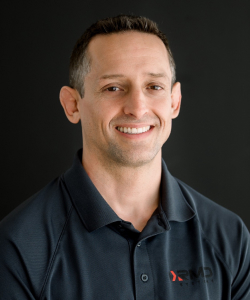
RMD Systems LLC is an engineering company based in Fort Worth, Texas, specializing in the design and development of advanced robotic and autonomous systems for commercial and defense applications. Founded with a focus on innovative legged architectures and modular autonomy kits, the company addresses complex challenges in military logistics, environmental management, and infrastructure repair. RMD has delivered over 60 aerospace mechanisms and unmanned vehicles for its customers since 2018.
Key projects include the Autonomous Resupply Vehicle for Field Artillery (US Army, 2020), a legged robot which delivers munitions over unstructured terrain; the Robotic Autonomous Airfield Repair Swarm (RAARS, Air Force, 2024), a containerized robotic swarm for rapid airfield restoration and repair; the Invasive Vegetation Eradicator Robot (IVE, Air Force, 2024), using EUV radiation for chemical-free vegetation control; the Robotic Bridge Autonomy Kit (R-BAK, US Army, 2024), enabling self-assembling unmanned bridges to support wet gap crossing operations; and the Maritime Expeditionary Response Crawler (MERC, Navy, 2025), a lightweight underwater legged crawler for subsea operations. These initiatives demonstrate RMD's expertise in delivering robust systems and mechanisms for extreme environments.
In 2026, RMD continues to grow and expand its manufacturing footprint in Fort Worth. RMD is focused on contributing to advancements in autonomous technologies for national security.

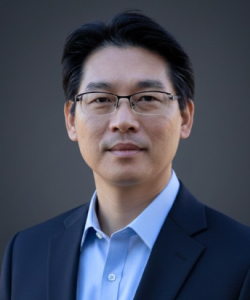
Roboligent is an Austin, TX-based robotics startup developing AI-powered semi-humanoid robots — ROBIN and ROGEN — for manufacturing, logistics, and medical rehabilitation. Built on compliant control and AI foundation models, our robots automate complex, delicate tasks safely and efficiently, advancing a future where humans and robots work side by side.

SecureFoundry Inc. is a U.S.-based semiconductor company advancing a new model for how microelectronics are designed and manufactured. Its primary focus is the Hyper-Beam Array (HBA) lithography system—a breakthrough platform that replaces traditional mask-based processes with a fully digital, direct-write approach. Using tens of thousands of parallel electron beams, HBA enables rapid patterning of semiconductor wafers without the need for costly photomasks, significantly reducing barriers to innovation and accelerating time from design to production.
The HBA system is built for flexibility and scalability, supporting multiple wafer sizes and a range of production volumes—from prototype development to specialized manufacturing. By eliminating key constraints of conventional lithography, it opens the door to on-demand fabrication, faster iteration cycles, and more accessible semiconductor manufacturing.
While HBA is the company’s core focus, SecureFoundry also works to bridge the gap between research and real-world deployment. The company actively commercializes emerging technologies from leading research institutions and supports the restoration of obsolete microelectronics to domestic production for the Department of War. These efforts reinforce a broader mission: strengthening U.S. microelectronics capability through innovation, resilience, and practical execution.


Semergytech Inc is a Texas-based technology company specializing in advanced photonic and optoelectronic solutions. Founded in 2014, the company focuses on developing innovative semiconductor laser technologies using nanophotonic design. Its work centers on improving the performance, efficiency, and scalability of photonic devices for next-generation applications.
Semergytech is best known for its development of Photonic Crystal Surface-Emitting Lasers (PCSEL™) and related photonic crystal technologies. These devices are designed to deliver high power, single-mode operation, and improved beam quality compared to conventional laser systems. The company’s technology can be integrated into silicon and other semiconductor platforms, enabling compatibility with modern manufacturing processes.
The company’s solutions have potential applications across several industries, including automotive LiDAR systems for autonomous vehicles, high-speed optical communications, industrial sensing, medical devices, and defense technologies. By combining semiconductor engineering with advanced light-control techniques, Semergytech aims to provide scalable and cost-effective photonic components.


Silotech Group Inc.is a proven leader in delivering secure, scalable IT, cybersecurity, and cloud solutions supporting both federal and commercial missions. Headquartered in San Antonio, TX, Cyber City USA, maintain certifications including ISO 9001, ISO 27001, ISO 20000-1, CMMI Level 3, and CMMC Level 2 (C3PAO certified). Silotech Group supports national security missions requiring secure, compliant environments and leverages a highly cleared workforce with experience across DoD and Intelligence Community programs. Silotech is a SBA-certified Veteran-Owned, SDVOSB, and VetHub-designated business. With over 20 years of experience, we are a prime on eight major IDIQs and are trusted by federal agencies across defense, intelligence, and civilian sectors to deliver complex, mission-critical technology solutions. We support high-impact missions with cyber-resilient teams who deliver secure, scalable solutions with speed, precision, and trust. Our SBIR Phase II work focuses on AI-powered system architecture and data interoperability. These innovations are delivered through XC3, a Silotech Group Websitedecision-focused execution platform, and GLASS, the human-centered workspace that drives workflow orchestration and mission acceleration.


Skylark Wireless builds last-mile 5G/6G hardware and software infrastructure that lays the foundation for connected intelligence applications including AI-RAN, Industrial Automation, Smart Vehicles / UAVs, and Dynamic Spectrum Sharing. Our flexible software-defined Massive MIMO Open-RAN platform has applications for communication service providers, private 5G/6G and enterprise, as well as government and military markets.


Smarter Reality builds simulation and synthetic training environments, wargames and artificial intelligence software for the Department of War (DoW). The company's core products include machine-vision technology that finds and models contingency airfields for the Department of the Air Force, AI-enabled wargames and simulations of future Pacific conflict and virtual reality environments with AI-powered avatars for practicing difficult conversations and supporting de-escalation for law enforcement. Defense end users include the US Air Force Academy, Air Combat Command and the Agile Battle Lab among many others. Over the past five years, the company has won three DoW technology challenges for machine vision, simulation and wargame software along with multiple Phase I and II SBIR awards. In 2025, the company was named one of the top 100 small businesses in America by the US Chamber of Commerce. Other awards include being named to the Inc. 5000, Austin Fast 50 and Financial Times 500 as well as Round Rock Chamber's small business of the year and the Association for Corporate Growth Technology Spotlight award.

Spectral AI, Inc. is a Dallas-based predictive AI company focused on medical diagnostics for faster and more accurate treatment decisions in wound care, with initial applications involving patients with burns. The Company is working to revolutionize the management of wound care by “Seeing the Unknown®” with its DeepView® System. DeepView® is a predictive diagnostic device that offers clinicians an objective and immediate assessment of a wound’s healing potential prior to treatment or other medical intervention. With algorithm-driven results and a goal of changing the current standard of care in the future, DeepView is expected to provide faster and accurate treatment insight towards value care by improving patient outcomes and reducing healthcare costs.


Stingray is activating innate immunity to take on some of the most difficult cancers to conquer, with our potentially revolutionary novel best-in-class therapy, Vizenpistat (SR-8541A).
From a science perspective, we have a first and best in class drug that enhances innate immunity, one of the two major arms of immunity. Marketed already, we have great adaptive immunity enhancers. But they work poorly if innate immunity is on off switch. Having great therapies in both major arms of immunity allows our immune system to take on some of the very toughest cancers and make a potentially big difference in outcomes for cancer patients. We have started with colorectal cancer, where standard of care is only 10% response to current therapies.
Already, in the early phase 1b combination dose escalation cohorts of Vizenpistat, PD-1 inhibitor, and CTLA-4 inhibitor, our regimen has delivered partial responses and shrunk liver metastases. And liver lesions have never shrunk with any previous immunotherapy regimen, suggesting we may establish a new standard of care. So now is a great time to invest and potentially realize a strong inflection in Stingray's stock price.
And Stingray is supported by incredible grant and award validation, with $20M (about $8M still ahead) from two National Cancer Institute awards and one CPRIT (State of Texas) award.
Stingray is raising its $20M Series A having just competed a $37M post round, $15M raised to date, and looking to enhance its clinical trial portfolio for a sale to big pharma with its Series A.


Sustainment is transforming the way U.S. manufacturers connect, collaborate, and grow through modern software and AI. Designed specifically for manufacturing supply chains, Sustainment’s dual-use technology platform helps commercial and DoD teams streamline sourcing, procurement, and supplier management by organizing key data, automating key workflows, and providing real-time visibility into supplier performance. Our mission is to strengthen American manufacturing by making it easier for manufacturers to work together, compete effectively, and build resilient supply chains.


Texas Biochemicals Inc. is a privately held advanced materials company based in College
Station, Texas, founded in 2006. The company specializes in the development and manufacturing
of custom inorganic nanoparticles, transparent ceramics, infrared
window materials, laser materials, copper nano inks, MXenes, and sol-gel coatings.
Texas Biochemicals positions itself as a provider of advanced material solutions for
next-generation technologies, with a stated mission to become a world leader in high-performance
transparent ceramics and nanomaterials production.
A major focus of the company is advanced ceramics, especially sulfide-based transparent
ceramic materials used in demanding optical and infrared applications. Texas Biochemicals
emphasizes its ability to solve complex ceramic engineering challenges through
materials formulation, process-microstructure-properties optimization, design for
manufacturability, process scale-up, and low-rate prototype production. This suggests
the company operates not only as a manufacturer, but also as a technical development
partner capable of helping move specialized materials from concept to production.
Its listed product portfolio includes hot-pressed zinc sulfide for long-wave infrared use, multispectral ZnS, CVD ZnS, zinc selenide windows and domes, and YAG:Ce scintillators. These products indicate a strong alignment with optical, infrared, and likely defense- related applications where transparency, durability, and precision performance are critical. The company also highlights a portfolio of U.S. patents involving nano-grain optical windows, densification of ZnS ceramics, and sulfide material synthesis, reinforcing its image as an innovation-driven company with proprietary expertise in advanced materials manufacturing and commercialization.
Texas Biochemicals Inc. Website


Tietronix Software is an advanced software research and development company located in Houston, Texas next to NASA's Johnson Space Center. Specializing in software for Aerospace and Medical Devices, Tietronix has developed and patented numerous Artificial Intelligence technologies utilizing edge-only computing for operation in deep space or austere terrestrial environments. The Life Sciences Division is led by William R Buras MSc., who has generated long standing software development contracts with some of the largest medical device companies and has secured over $8 Million dollars in R&D funding from NASA, NIH, NSF and DoD agencies. Tietronix has also spun out two technology companies, Galen Data and Tienovix (Vulcan Healthcare Technologies) to commercialize universal cloud infrastructure for medical device data management and for Intelligent Procedure Systems.

UTSI International Corporation has been a trusted leader in OT Cybersecurity, Pipeline Applications, Industrial Control Systems (ICS), SCADA modernization and Leak Detection for the past 40 years. The company’s elite engineering team collaborates closely with clients to craft customized strategies that maximize efficiency and minimize risk in industrial automation. UTSI’s comprehensive expertise spans all applications and technologies that comprise modern real-time industrial control systems, ensuring cutting-edge and reliable solutions.


Valkim Technologies, LLC is a San Antonio, Texas-based robotics company developing intrinsically safe inspection systems for hazardous and explosive environments. Our patented and patent-pending, non-electric, ATEX/IECEx Zone 0 robotic platform enables inspection of confined spaces such as aboveground storage tanks and aircraft fuel systems—eliminating the need for human entry into high-risk environments requiring breathing apparatus and complex safety protocols.
With nearly three decades of industry expertise, Valkim is advancing a new category of inspection technology that delivers faster, safer, and repeatable results in sectors historically dependent on manual processes. Our systems are designed to support critical infrastructure across energy, defense, and industrial markets, improving safety outcomes while enhancing data quality and operational efficiency.
Valkim’s innovation has been recognized by the U.S. Department of Defense through AFWERX, where we have been awarded both a Phase I STTR and a Direct-to-Phase II contract to advance robotic solutions for fleet readiness and fuel system inspections. Our development approach follows a structured path from use-case identification to system validation and full operational deployment.
By integrating robotics into inspection workflows, Valkim Technologies is unlocking transformative capabilities that strengthen infrastructure resilience, improve environmental compliance, and support national security objectives.

Venus Aerospace has built the first generational improvement in rocket engine technology since the Apollo missions. Delivering historic efficiency and performance, Venus’s rotating detonation rocket engines will power the future of long-range and hypersonic munitions, space propulsion, and military and commercial high-speed aircraft.

WATTER is pioneering a new era in water heating - where a traditional utility becomes a smart, self-sustaining investment. By combining advanced technology with everyday infrastructure, WATTER transforms water heating from a passive expense into an active, value-generating system.
Designed for both commercial and residential use, WATTER delivers reliable, high-efficiency hot water while unlocking previously untapped financial value. From single-family homes to hotels and multi-unit properties, the system scales to meet demand - turning one of the most energy-intensive functions in a building into a more intelligent, economically productive asset.
WATTER is built for forward-thinking developers, operators, and homeowners who expect more from the systems they rely on every day. By merging sustainability with financial return, the company challenges the long-standing assumption that utilities are fixed costs.
Headquartered in Texas, WATTER is redefining the role of water heating in modern infrastructure - shifting it from a necessity you pay for to an investment that works for you.


Yumlish is a tech-enabled provider of the National Diabetes Prevention Program, focused on expanding access for Medicaid and underserved populations. Delivered through a mobile web and text-based platform, Yumlish removes common barriers such as app downloads, device pairing, and high digital literacy requirements.
The program combines culturally affirming nutrition education with behavior change support to drive sustained engagement and clinically meaningful outcomes. Yumlish has achieved CDC Full Recognition (the highest recognition) and has demonstrated strong results, particularly among high-risk and Spanish-speaking populations.
Yumlish has also secured over $1.5 million in competitive SBIR funding from federal agencies including the NIH, CDC, and NIDILRR to support the development and validation of its approach.
Yumlish partners with Medicaid managed care plans, health systems, and federally qualified health centers to improve access to preventive care and support quality outcomes. With active deployments in Texas and California, Yumlish is scaling a cost-effective, community-centered model for chronic disease prevention.
UNIVERSITY AWARDEES
Abilene Christian University ACU.EDU
Associate Professor & Founding Faculty of Digital Entertainment Technology
School of Information Technology and Computing
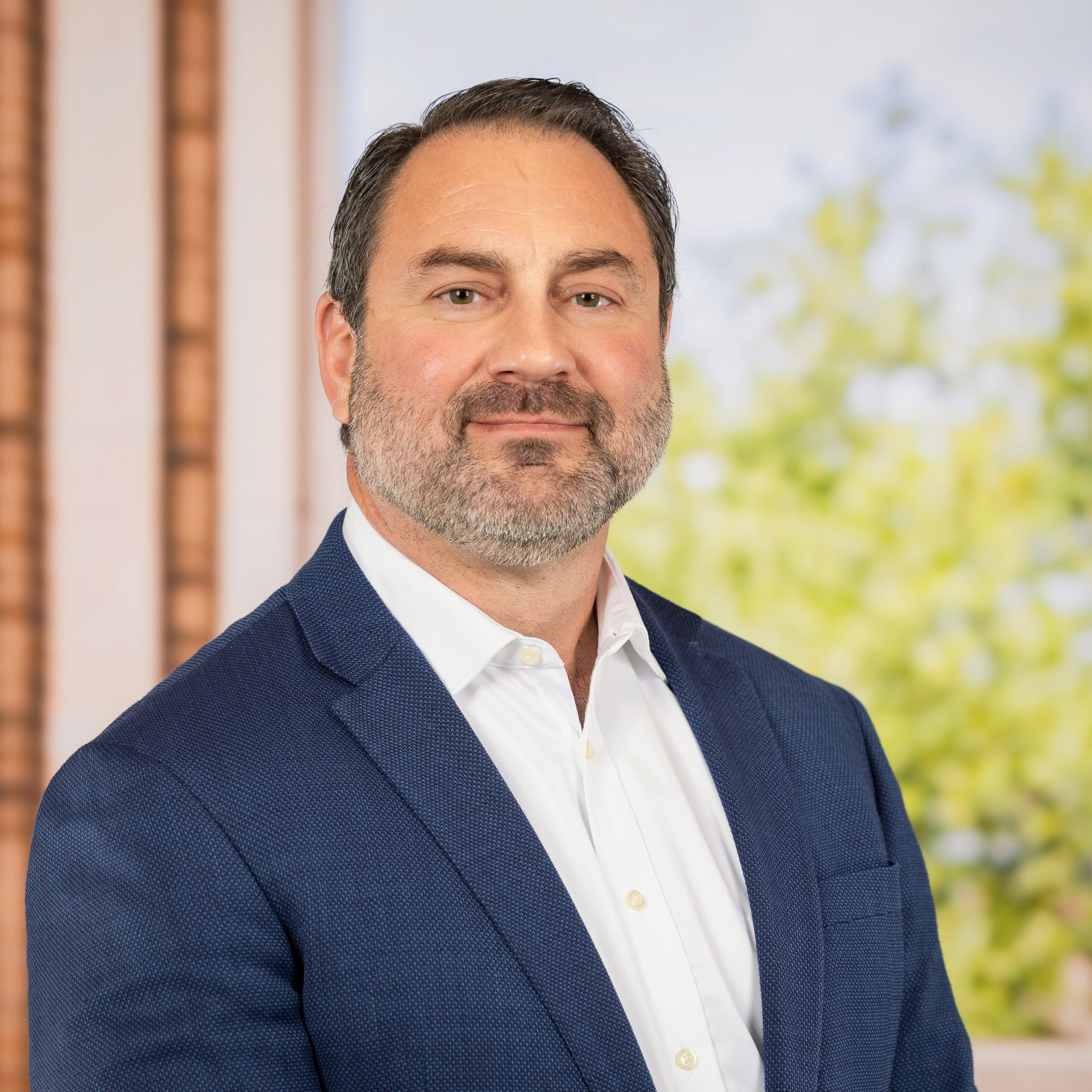
Dr. Brian Burton is an innovative educator, program builder, and thought leader whose work has shaped the integration of game development, digital media, and emerging technologies in higher education. As the founder of the Digital Entertainment Technology program at Abilene Christian University (ACU), he has spent more than three decades creating learning environments that engage students through hands-on, applied experiences.
In 2007, Dr. Burton launched ACU’s Digital Entertainment Technology degree, which was one of the first programs of its kind at a Christian university and an early example of integrating game development, animation, and interactive media into a unified academic discipline. Built on the conviction that students at a faith-based institution should have access to programs that compete at the highest national level, the program has been recognized by The Princeton Review as a top game design program for more than a decade.
Dr. Burton has authored over a dozen textbooks spanning game development, mobile applications, and artificial intelligence. His project-based approach has made complex and rapidly evolving technologies accessible to students worldwide, with his books translated into multiple languages and adopted across diverse institutions.
Throughout his career, he has demonstrated a consistent ability to identify emerging technologies early and translate them into curriculum. He introduced mobile app development coursework well before it became standard in higher education and has more recently advanced the integration of artificial intelligence into creative disciplines.
Dr. Burton holds a Doctor of Education in Educational Leadership from the University of Missouri, with research focused on virtual learning environments. Recognized as a Top 10 Global Thought Leader in both the Metaverse and AR/VR by Thinkers360 and a two-time Teacher of the Year recipient, he continues to build programs and resources that prepare students for the future of digital innovation.
SUMMARY OF INNOVATION OR COMMERCIALIZATION WORK:
Dr. Brian Burton’s innovative contributions are defined by his ability to anticipate emerging technological shifts and translate them into impactful academic programs, curriculum, and resources. His work consistently bridges the gap between rapidly evolving industries and higher education, ensuring that students are prepared not for the present, but for what comes next.
In 2007, Dr. Burton founded the Digital Entertainment Technology program at Abilene Christian University—one of the first programs of its kind within a faith-based institution. At a time when game development, animation, and interactive media were still developing as academic disciplines, he recognized their convergence into a unified creative and technical ecosystem. His early investment in this space positioned students to engage with industries that now span gaming, film, simulation, and virtual production. The program’s sustained national recognition by The Princeton Review for twelve consecutive years reflects both its quality and its forward-looking design.
Dr. Burton’s innovation extends beyond program development into curriculum design and global educational impact. In 2010, he introduced mobile application development coursework before it became standard in higher education and led the creation of The Optimist as the first university newspaper published on the iPad. These efforts demonstrated the transformative potential of mobile technologies in both education and media.
He has further expanded access to emerging technologies through the development of twelve project-based textbooks covering mobile development, game design, and artificial intelligence. These resources, translated into multiple languages and adopted internationally, are built on a hands-on learning model that enables students to develop practical skills while engaging complex concepts.
More recently, Dr. Burton has advanced the integration of artificial intelligence into creative disciplines. His forthcoming book, AI for Game Developers: The 2025 Practical Guide, equips students to engage with AI as a collaborative tool in the creative process.
Through sustained leadership, curricular innovation, and global reach, Dr. Burton has significantly influenced how emerging technologies are taught and applied in higher education, preparing students to lead in rapidly evolving digital industries.
RELEVANT LINKS:
Professor and Director of the Nuclear Energy Experiential Testing (NEXT) Lab
Physics & Engineering
Dr. Rusty Towell is a nationally recognized nuclear physicist, research leader, and innovator serving as the founding director of the Nuclear Energy eXperimental Testing (NEXT) Lab at Abilene Christian University (ACU). He leads one of the most ambitious university-based nuclear research initiatives in the United States, focused on advancing next-generation reactor technologies and addressing global challenges in energy, water, and medical isotope production.
Dr. Towell earned his B.S. in Engineering Physics from ACU and his Ph.D. in Nuclear Physics from The University of Texas at Austin. He served as an instructor at the Naval Nuclear Power School as a Lieutenant in the U.S. Navy before completing a postdoctoral fellowship with Los Alamos National Laboratory, where he contributed to research at Brookhaven National Laboratory. He later joined the ACU faculty, where he has spent more than two decades teaching and conducting research. Over the course of his career, Dr. Towell has contributed to numerous international research collaborations and has authored more than 250 scholarly publications, which have been cited over 51,000 times. His work reflects a sustained commitment to advancing nuclear science while mentoring the next generation of scientists and engineers.
Dr. Towell has positioned ACU at the forefront of advanced nuclear research, leading efforts to develop innovative reactor technologies in collaboration with national laboratories, industry partners, and leading research universities. His leadership continues to expand the university’s role in addressing critical global challenges through scientific innovation and applied research.
SUMMARY OF INNOVATION OR COMMERCIALIZATION WORK:
Dr. Rusty Towell’s innovative contributions are defined by his leadership in advancing next-generation nuclear technology through a unique model of university-based research, industry collaboration, and workforce development. As founding director of the NEXT (Nuclear Energy eXperimental Testing) Lab at Abilene Christian University, he is leading the development of one of the first advanced molten salt research reactors to be built at a U.S. university.
Established in 2016, the NEXT Lab represents a transformative approach to nuclear research. Its mission is to address global challenges in energy, water sustainability, and medical isotope production by advancing molten salt reactor technology, which is an area widely recognized for its potential to provide safer, more efficient, and more sustainable nuclear energy solutions. Under Dr. Towell’s leadership, the lab is working in partnership with industry, Georgia Institute of Technology, Texas A&M University, and The University of Texas at Austin.
A defining feature of Dr. Towell’s work is the integration of research, education, and real-world application. The NEXT Lab is not only advancing reactor technology but also preparing students to enter highly specialized fields in nuclear science and engineering through hands-on involvement in cutting-edge research. This model strengthens the talent pipeline while accelerating innovation.
RELEVANT LINKS:
- https://www.youtube.com/watch?v=WAdXh9XHit4
- https://www.youtube.com/watch?v=NT0Hzm9v7FI
- https://www.texasenergyandpower.com/p/new-nuclear-in-texas-with-doug-robison
- https://www.nrc.gov/public-involve/conference-symposia/ric/bios/rusty-towell
- https://conservativeenergynetwork.org/person/dr-rusty-towell/
- https://www.youtube.com/watch?v=z-k55FMaCDc
Baylor College of Medicine BCM.EDU
Professor, Michael E. DeBakey Department of Surgery
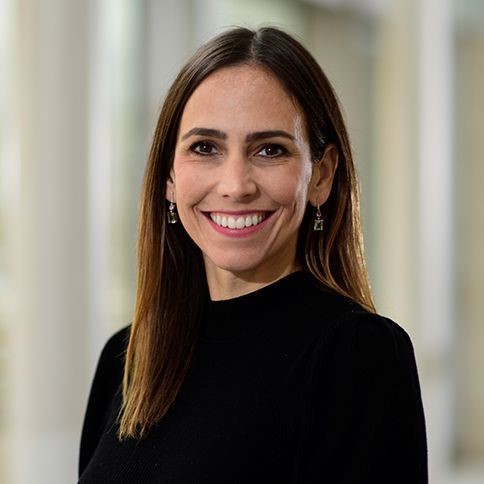
Dr. Eberlin is a chemist passionate about research at the interface of chemistry and medicine. She has a broad background in Chemistry with specific training and expertise in analytical chemistry and mass spectrometry. She has experience designing and leading basic, translational, and clinical research projects through which she has managed collaborative teams of surgeons, pathologists, oncologists, biologists, statisticians, and engineers to develop innovative technologies for tissue analysis and disease diagnosis.
Through Dr. Eberlin's career, she has contributed to advancing the field of mass spectrometry field to its current state: pioneering ambient ionization mass spectrometry for cancer diagnosis, developing novel methods for histologically compatible mass spectrometry imaging, multimodal mass spectrometry imaging, drug distribution imaging, and 3D molecular imaging, identifying and characterizing diagnostic metabolic patterns of cancer, adapting refined statistical tools to evaluate complex and multidimensional metabolic data, and pioneering the development of novel medical devices for intraoperative tissue analyses and diagnosis.
Her major career and research goals are to improve diagnosis, treatment, and outcomes for cancer patients by developing and implementing transformative mass spectrometry technologies in the clinic, and to discover novel molecular markers and disease pathways that can lead to improved understanding of disease development and pinpoint novel therapeutic targets to advance treatment options for patients.
SUMMARY OF INNOVATION OR COMMERCIALIZATION WORK:
Dr. Eberlin is a Professor in the DeBakey Department of Surgery at BCM. A chemist by training, she has dedicated her professional life to practicing at the interface between chemistry and medicine. Her work at BCM is focused on the diagnostic use of mass spectrometry to rapidly analyze small biopsy samples to discern between normal and cancerous tissue. Dr. Eberlin has received extensive research funding from the NIH, the Cancer Prevention and Research Institute of Texas (CPRIT), the Robert Welch Foundation, and she recently received a $3M award from the Marcus Foundation to support the development of the Mass Spec Pen device for breast cancer surgical applications. Dr. Eberlin is an author on 100 scientific publications and many more meeting abstracts, demonstrating her strong track record of productivity as an early career scientist and innovator. Dr. Eberlin has trained (and is training) many post-docs, graduate students, and medical students. She was recently a guest lecturer in BCM’s gradate course, “Commercialization of Biomedical Technologies,” where she shared her commitment and insight to innovate in a unique way that bridges the gaps between two fields of study to positively impact the lives of patients.
Dr. Eberlin invented the Mass Spec Pen, a handheld device enabling real-time tissue analysis in the OR. This innovation led to the formation of MS Pen Technologies, Inc., where she serves as Chief Scientific Officer and Board Member. The company, based in Houston, is actively raising capital and sponsoring research in her lab to refine the device for clinical use. She holds 23 issued U.S. patents, reflecting her groundbreaking work in non-invasive mass spectrometry applications. Her contributions have earned her the 2024 Norman Hackerman Award for Chemical Research and other honors including the Eli Lilly Young Investigator Award and recognition on The Analytical Scientist’s Power Lists.
Dr. Eberlin is Vice Chair for Research in the Department of Surgery and co-directs INSTINCT, BCM’s innovation incubator. She also organizes the department’s popular 'Shark Tank' competition and actively mentors students and trainees.
RELEVANT LINKS:
Professor and Founding Director, Center for Cell & Gene Therapy

From 1998-2014 Dr. Brenner was the Founding Director of the Center for Cell and Gene Therapy, an inter-institutional Center supported jointly by Baylor College of Medicine, The Methodist Hospital and Texas Children's Hospital. Each institution provided space and resources and the Center develops basic discovery research into clinical applications that deliver therapeutic cells and vectors. Since its foundation in 1998, the Center has received over $350M in peer reviewed grant funding, and its 32 research and translational faculty currently receive >$24M/year in grant funding, more than 80% of which comes from the NIH. Investigators in the Center hold 8 multi-investigator programmatic grants and we are a national cellular production Center of the NHLBI-NIH. We hold 30+INDs logged with the FDA which are maintained by our own regulatory affairs staff. Dr. Brenner had overall responsibility for the Center which employs more than 350 individuals in its basic, translational and clinical components and was responsible for oversight of research, manufacturing and clinical care. Dr. Brenner is now focusing on moving cell therapy studies to late phase trials, and he manages his own research group.
SUMMARY OF INNOVATION OR COMMERCIALIZATION WORK:
Dr. Brenner holds 11 issued U.S. patents which recognize the novelty and innovation associated with his work. Notable among these are patent rights associated with the clinical adaptation of the inducible caspase-9 “suicide switch.” This technology is a patented innovation that comprises a molecular safety switch that can be used in genetically modified immune cell products to manage graft-versus-host disease (GVHD) or counteract over-proliferation of a modified immune cell product. These important advances promise to make cell therapies safer for many patients.
As the founding Director of BCM’s Center for Cell and Gene Therapy, Malcolm Brenner played a key role as a visionary leader and developer of genetically modified immune cell therapies for the treatment of cancer and infectious diseases. On the commercial side, he has been a scientific founder or co-founder of many companies with cell therapy products in clinical trials, including:
- March Biosciences, Inc.: March was founded in 2022 and is devoted to the clinical development of CD5 CAR T cells targeting T cell lymphoma. The company was cofounded by Max Mamonkin, Ph.D., (a former trainee in the Brenner laboratory) and Dr. Brenner. The company recently closed a Series A capital raise in excess of $21.5M, and they were awarded a grant from the Cancer Prevention and Research Institute of Texas (CPRIT) for $13.4M to support the company’s planned phase II clinical trial. Dr. Brenner co-invented the company’s patented lead clinical candidate.
- Allovir, Inc: This publicly traded, venture backed company co-founded by Dr. Brenner is devoted to the clinical development of multi-virus specific T cell products that will be used to treat common virus infection events in the post-transplant setting. Allovir recently had three separate pivotal phase III clinical trials in progress to examine the effectiveness of this multi-virus specific CTL approach, following successful completion of phase II trials. AlloVir has raised over $300M.
- Marker Therapeutics, Inc: Marker is a Houston-based, publicly traded company co-founded by Dr. Brenner that is developing multi-tumor antigen specific T cells for oncology indications, and the company is in phase II development of their candidate for treatment of acute myeloid leukemia (AML) and interim clinical data are positive. Marker is currently raising capital to support continued clinical development of its multi-tumor antigen T cell products.
- Tessa Therapeutics Pte, Ltd: Dr. Brenner was a scientific co-founder of this Singapore-based company that was focused on the development of modified virus-specific T cells (VSTs) for treatment of virus-associated malignancies. Tessa had raised over $200M but faced obstacles in the capital markets after interest in cell therapy companies slowed. The Board of Directors voted to voluntarily dissolve the company. BCM successfully re-licensed its IP to another start-up, Tikva Allocell, which is focused on the use of VST for the treatment of solid tumors.
RELEVANT LINKS:
Professor and Chair, Michael E. DeBakey Department of Surgery

Dr. Todd K. Rosengart is professor and DeBakey-Bard chair of the Michael E. DeBakey Department of Surgery, professor of heart and vascular disease at the Texas Heart Institute and vice-president for hospital operations and quality improvement at Baylor College of Medicine (BCM). He is also professor of molecular and cell biology at BCM. He is an NIH-funded scientist with over $25 million in uninterrupted extramural funding over the past thirty years. He is past president of the American College of Surgeons (ACS) Society of Surgical Chairs and recently completed a four-year term as board director of the American Association for Thoracic Surgery, the world’s oldest cardiac surgery society.
Dr. Rosengart and his team at Cornell in 1997 performed the world’s first viral-based cardiac gene transfer procedure, part of an NIH and FDA-approved angiogenesis trial for “no option” patients with end stage coronary artery disease. This work led to the recent completion of a successful Phase 2 trial conducted under FDA Fast Track status conducted by XyloCor Therapeutics, co-founded by Rosengart in 2016. He holds 15 issued U.S. and other patents and is author of nearly 300 peer-reviewed articles and other publications with over 16,000 citations and an h-index of 67 (i10-index: 174).
Dr. Rosengart is past chair of the NIH Bioengineering, Technology and Surgical Sciences Study Section, inaugural chair of the ACS National Surgeon Scientist Study Section, and a member of the American Surgical Association and the Leducq Foundation Scientific Advisory Committee. Amongst other affiliations, he is chair of the ACS Board of Governors Physician Competency and Health Workgroup, in which role he led the publication of new national guidelines on maintaining surgeon competency.
Dr. Rosengart is PI of a recently renewed cardiovascular surgery NIH T32 training grant and is a member of the American College of Surgeons (ACS) Academy of Master Surgeon Educators. He is co-editor of the ACS Surgery Chairs Playbook and past editor of Seminars in Thoracic and Cardiovascular Surgery, serving in this role from 2013 to 2021. He has mentored nearly one hundred research and cardiac surgery trainees over the past thirty years.
Dr. Rosengart currently chairs the Baylor St. Luke’s Medical Center (BSLMC) Hospital Operations Committee and serves on the BCM Executive Leadership Team. He has been a member of the BSLMC Board of Directors since 2017, currently chairing its Marketing Committee and serving on its Quality and Safety and Building Committees and was recently appointed to the Board of Trustees of the Texas Heart Institute. He was national chair of the cardiac surgery service line for CHI (Common Spirit Health), one of largest not-for-profit systems in the U.S. His previous institutional roles include his serving as two-term chair of the BCM Faculty Group Practice Board of Governors and as board chair of the Affiliated Medical Services, a 1000-member BCM and University of Texas consortium staffing Harris Health, one of the largest municipal healthcare organizations in the U.S.
SUMMARY OF INNOVATION OR COMMERCIALIZATION WORK:
Todd Rosengart’s track record of innovation is diverse and goes well beyond cardiovascular medicine. Dr. Rosengart has co-developed groundbreaking gene therapy-based approaches for cardiovascular regeneration that are in the clinic; he has developed a novel approach for assessing gastric aspiration pneumonia risk in the ICU; he has developed methods for determining the quality of medical professionals; and he has developed numerous medical devices. Never content with the status quo, Todd Rosengart always seeks ways to innovate to develop new treatment options for patients and to improve health outcomes in lasting and significant ways.
Dr. Rosengart is an inventor on 15 issued United States patents (and more pending patent applications), many of which are being leveraged by several companies who are translating his innovations in the clinic where their potential to impact the lives of patients will be realized:
- Aspira Medical, Inc (www.aspiramed.co): Aspira is the most recent company founded by Dr. Rosengart at Baylor College of Medicine. Aspira was founded to address a significant unmet need in the ICU setting whereby there is no early warning system to notify clinicians when a patient is at risk of gastric aspiration pneumonia. Gastric aspiration pneumonia impacts 17% of ICU patients and is associated with 30% mortality. Dr. Rosengart proposed the development of a wearable device solution that would measure gastric distension and provide an early warning of aspiration risk to clinicians. This patent-pending approach has been prototyped and is being evaluated prior to conducting a clinical study, which is projected to occur during the next two years. Aspira Medical is led by Zaffer Syed, an experienced medical device entrepreneur and is currently raising capital. The company has assembled a strong team with medical affairs, regulatory and device R&D expertise. They are well-positioned for success.
- Xylocor, Inc (https://xylocor.com): Dr. Rosengart’s groundbreaking patented gene therapy-based approaches to support cardiovascular regeneration are being developed in the clinic by Xylocor, a company that recently raised $67.5M in a Series B financing to support continued development of its clinical pipeline. Xylocor is in phase 2b development to evaluate its gene therapy product candidate XC001 in patients with coronary artery disease and refractory angina (the EXACT-2 trial). XC001 is a patented adenoviral gene therapy-based approach to express vascular endothelial growth factor (VEGF) to stimulate the creation of new blood vessels in the heart, thereby reducing cardiac ischemia and restoring cardiac function. Xylocor is led by a strong leadership team, including CEO Al Gianchetti, who was recently named Entrepreneur of the Year in the greater Philadelphia area by Ernst & Young. In addition to XC001, the company’s pipeline also includes XC002, a gene therapy-based approach to treat patients with impaired cardiac function due to prior ischemic events. This new approach has been shown to restore cardiac cell function to non-functional cells in animal models. XC002 is currently in preclinical optimization. Xylocor sponsors research in Dr. Rosengart’s laboratory at BCM, thereby gaining access to the Rosengart laboratory’s latest innovations in cardiovascular regenerative gene therapy.
- Vitals.com: Dr. Rosengart co-founded Vitals.com, using his patented approach for evaluating the quality of medical professionals. Vitals.com is routinely used by patients as they search to find the right medical specialist to meet their needs. Patients can gain access to reviews and data submitted by prior patients to better inform their decision-making process.
RELEVANT LINKS:
Baylor University BAYLOR.EDU
Professor, Department of Mechanical Engineering
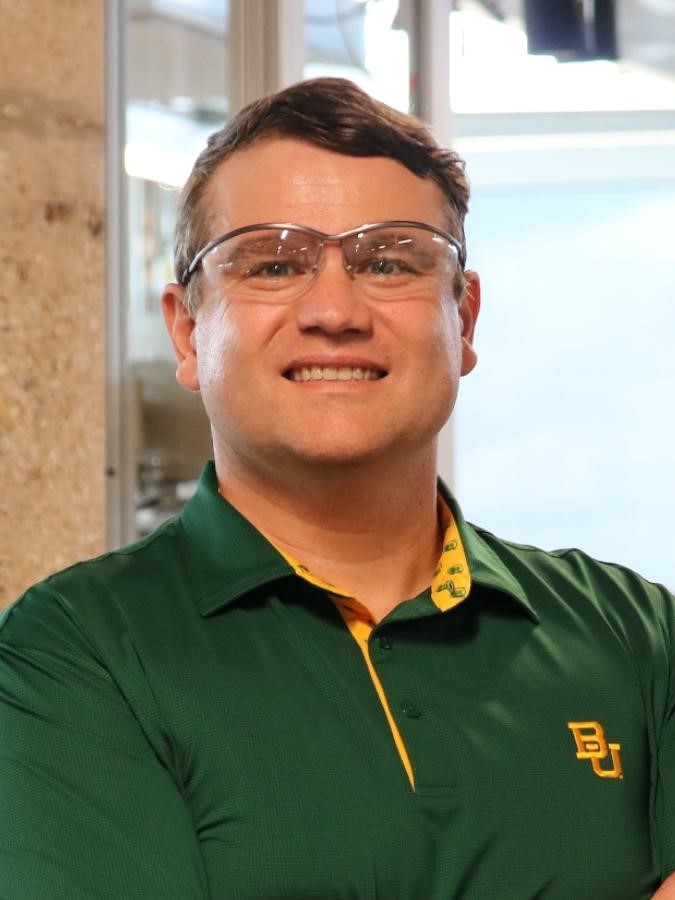
David Jack is a professor of Mechanical Engineering at Baylor University and the inaugural Graduate Program Director for Baylor’s Materials Science and Engineering program. He holds five undergraduate and graduate degrees across the fields of Physics, Mathematics and Mechanical Engineering, each while maintaining a 4.0 GPA. In his career David has been awarded $22.2M ($14.8M as P.I., $7.4M as co-PI, which includes $2.5M in Baylor cost sharing) in research funding, published over 55 peer-reviewed journal articles, over 100 refereed national and international conference articles, twenty-six granted patents from the USPTO, eighteen additional filings in various stages of review within the USPTO, and is the lead author on twelve different FAA 8100-9 Statements of Compliance with Federal Aviation Regulations. This was accomplished in a program that until the fall of 2014 did not offer a doctoral degree. Since he began teaching in 2007, David has successfully defended 28 master’s students, 9 doctoral students, including Baylor’s first PhD Mechanical Engineering student and two PhD students currently in the first cohort of Baylor’s Materials Science and Engineering graduate program. Dr. Jack was instrumental in leading the establishment of Ph.D. programs in both Mechanical Engineering (2014) and Materials Science and Engineering (2023), as well as the M.S. program in Materials Science and Engineering (2024). Dr. Jack established Baylor's ISO 17025 accredited testing and characterization laboratory and served as its inaugural director, a facility that is now a core use facility within Baylor University serving both the university and the central Texas community. Dr. Jack’s expertise crosses physics-based constitutive modeling, experimental polymer characterization, to non-destructive testing and inspection providing him a rare breadth of technical capability.
SUMMARY OF INNOVATION OR COMMERCIALIZATION WORK:
The impact of Dr. Jack’s efforts is directly seen by the students he has mentored; his efforts to lead the transition in the School of Engineering and Computer Science from a 4 year undergraduate program with a brand new MS degree to an internationally recognized R1 research university; to companies that have formed based on his inventions; and the impact on his local community partners through the Aerospace Alliance through the Greater Waco Chamber of Commerce. Dr. Jack has received funding from the NSF, L3 Harris, Ford Motor Corporation, AFOSR, US Army ERDC, Verifi Technologies, NASA, Hess Incorporated, Axion Structural Innovations, NIST, US Army through NCMS, Delta-G Aerospace, SPE, ORNL, LeMond Bicycles, Lockheed Martin, the USDA, the US Army’s Center for the Intrepid, IACMI, ICC Forensics, Tactical Labs, Bell-Flight, ONR, and Sandia National Laboratory. The technology he has led the development for is felt in the aerospace field today, whether it is from his twelve 8100-9’s that have enabled the acceptance of his inspection methods in the aerospace industry, or his awarded patents that were leveraged to form Verifi Technologies, or the recent inspection company begun by his students, Lonestar NDE. His approach to new methods of inspection coupled with advanced methods to analyze the captured waveforms has streamlined the qualification of new parts ranging from railroad ties made with recycled materials by Axion Structural Innovations, to bicycles by LeMond Bicycles, to next generation components for use by Bell-Flight on the FLRAA program, to electrical motors for commercial aviation. In addition to serving the industry by creating new technology, he established Baylor’s ISO 17025 accredited testing laboratory, a facility serving the university, industry, and federal partners. This facility now serves dozens of regional companies by providing their quality control needs. Dr. Jack serves as a leader in innovation and has mapped this inventive mindset to his students and those around him. Holding 26 patents, all but two of which are co-invented by his students, he has helped to establish a new generation of inventors and innovators. His students have gone onto successful careers and become division directors, program managers, lead engineers, and senior scientists at Bridgestone, Honda, Lockheed-Martin, Bell-Flight, SpaceX, Sandia National Laboratory, and many other exceptional companies and federal research labs.
RELEVANT LINKS:
Patents:
| Country of Filing | Intellectual Property Number | Application No. |
| United States | 11,835,484 | 17/525,326 |
|
United States |
11,860,131 | 17/091774 |
|
United States |
11,933,763 | 17/362342 |
| United States | 12,050,204 | 17/899,196 |
| United States | 12,055,519 | 17/396,174 |
| United States | 12,066,405 | 18/196,631 |
| United States | 12146858 | 18/212,516 |
| United States | 12146859 | 18/232,106 |
| United States | 11,835,484 B2 | 17/525,326 |
| United States | 12,460,989 B2 | 18/208595 |
| United States | 12.313,592 | 18/113,895 |
| Canada | CA2868019 C | 2,868,019 |
| Europe | EP2 828 775B1 | EP2828775 |
| Spain | ES2946745T3 | ES13717604T |
| Japan | JP2023520133A | |
| United States | US 10,697,941 B2 | 14/386,449 |
| United States | US 10,761,067 B2 | 14/848,009 |
| United States | US 11,442,045 B2 | 16/915,396 |
| United States | US 11,619,611 B2 | 17/151,499 |
| United States | US 11,630,084 B2 | 17/123,970 |
| United States | US 11,650,182 B2 | 17/148,205 |
| United States | US 11,650,183 B2 | 17/172,723 |
| United States | US 11,686,707 B2 | 17/108,472 |
| United States | US 11,726,065 B2 | 17/122,410 |
| United States | US 11,754,529 B2 | 17/188,559 |
| United States | US 12,050,203 B2 | 17/899,224 |
Prairie View A&M University PVAMU.EDU
Division of Research/Electrical Engineering
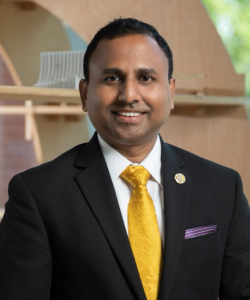
Dr. Magesh Rajan is an electrical engineer, inventor, and professor whose work has advanced plasma-based technologies with applications in medicine, environmental safety, and advanced materials. A member of the Texas A&M University System for more than fifteen years, he currently serves as VP for Research and Innovation and Professor of Electrical Engineering at Prairie View A&M University. Earlier in his career, he was a faculty researcher within the same Texas A&M University System at Texas A&M-CC, where he founded the Plasma Engineering Research and built one of the region’s leading academic research programs in plasma engineering and applied plasma science.
Dr. Rajan’s research focuses on cold plasma technologies—an emerging field that uses ionized gases at near room temperature to create reactive species capable of enabling novel biomedical and industrial processes. His pioneering studies demonstrated that plasma-generated reactive species can selectively induce apoptosis in cancer cells, creating the potential for localized cancer treatments that minimize damage to surrounding healthy tissue. His research has also shown promising applications of plasma systems in wound healing, infection control, and food safety.
Dr. Rajan provides leadership for several national and statewide boards. He was appointed by the Texas Governor to the Texas Semiconductor Innovation Consortium Board. He served on the Texas statewide NASA Texas Space Grant Consortium Board, NASA Technology Collaboration Center Board, American Public and Land Grant Universities APLU Council on Research Executive Board, Center of Excellence for Advanced Multidisciplinary Projects Board, and IEEE Board.
He has received several awards, including the Texas Corpus Christi Person of the Year award and the Texas A&M-CC Excellence in Research and Scholarly Activities, Research Excellence - the Wall of Fame, Outstanding Researcher, and Excellence in Teaching Innovation awards. He has served in several federal and state funding agency panels, including the Texas Governor’s Emerging Technology program.
SUMMARY OF INNOVATION OR COMMERCIALIZATION WORK:
Dr. Magesh Rajan’s innovation portfolio focuses on translating advances in plasma science into practical technologies with biomedical, environmental, and industrial applications. His research and innovation disclosures (patent-pending) has contributed to the development of next-generation plasma systems capable of addressing challenges in healthcare, infection control, and food safety.
One of Dr. Rajan’s most significant contributions is the advancement of cold plasma technologies, which generate reactive oxygen and nitrogen species capable of interacting with biological tissues and microorganisms. His innovations demonstrated that plasma-generated reactive species can selectively induce apoptosis in cancer cells, suggesting a promising approach for localized cancer treatments that reduce damage to surrounding healthy tissue. These findings have contributed to a growing global research effort exploring plasma medicine as a new therapeutic modality.
Dr. Rajan’s work also demonstrated that cold plasma systems can accelerate wound healing and infection control by simultaneously sterilizing bacterial contamination and stimulating biological repair mechanisms. These properties make plasma technologies particularly valuable in environments where rapid sterilization and treatment are needed.
A major engineering breakthrough in his work has been the development of compact plasma systems that operate directly in atmospheric air, eliminating the need for external gas supplies typically required for plasma generation. This innovation significantly improves the practicality and scalability of plasma technologies. With support from the U.S. Department of Defense, Dr. Rajan and his team developed portable plasma devices designed for field medical applications, including infection control and wound treatment in remote or battlefield environments.
In addition to biomedical uses, Dr. Rajan’s research demonstrated the potential of plasma technologies in food safety and surface sterilization, where plasma treatments can rapidly eliminate bacterial contamination without chemical additives or high heat, offering promising applications for agricultural and food processing industries.
Beyond laboratory research, Dr. Rajan has actively pursued technology translation and entrepreneurship. He had previously launched a successful technology-based startup housed within the Coastal Bend Business Innovation Center, where his innovations were advanced toward commercialization and industry partnerships. His entrepreneurial efforts and impact on regional innovation were recognized when he received the 40-Under-40 Person of the Year Award from the City Mayor of Corpus Christi, Texas.
Through interdisciplinary research, startup formation, and collaboration with federal agencies and industry partners, Dr. Rajan’s work exemplifies the pathway from fundamental research to innovative technologies with real-world societal and commercial impact.
RELEVANT LINKS:
- https://www.sigmaxi.org/news/meet-your-fellow-companions/magesh-thiyagarajan#:~:text=Magesh%20Thiyagarajan%20is%20a%20Sigma,Transcript%20from%20Video
- https://www.youtube.com/watch?v=whUZgg6Ih7o&t=2s
- https://www.youtube.com/watch?v=2JHJuSun0R8
- https://www.amazon.com/Laser-Induced-Plasmas-Optical-Diagnostics/dp/384654874X
- https://www.biospace.com/cold-plasma-researchers-see-success-in-new-leukemia-cancer-treatment-method-texas-a-and-m-university-b-corpus-christi-b-study
Rice University RICE.EDU
Ralph S. O’Connor Professor in Entrepreneurship – Finance
Jesse H. Jones Graduate School of Business
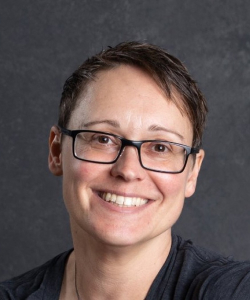
Professor Hochberg's research and teaching interests are focused on entrepreneurship and innovation. Prof. Hochberg serves as the Head of the Entrepreneurship Initiative and the Liu Idea Lab for Innovation and Entrepreneurship at Rice University. In 2015, she was named one of the world's 40 under 40 best business school professors by Poets and Quants. In 2016, she was awarded the Ewing Marion Kauffman Prize Medal for Distinguished Research in Entrepreneurship. In addition to her doctorate in finance from Stanford, she holds a B.Sc. in Industrial Engineering and Management from the Technion-Israel Institute of Technology and an M.A. in Economics from Stanford University. Her research has been published in top-tier journals, including Science Magazine, the Journal of Finance, the Review of Financial Studies, the Journal of Accounting Research, and the Journal of Financial Economics, and has been presented at numerous universities and governmental bodies around the world.
She holds a Research Affiliate position with MIT's Innovation Initiative and is a Research Associate at the National Bureau of Economic Research. Prof. Hochberg is also Managing Director of the Seed Accelerator Rankings Project, which publishes an annual ranking of accelerator programs in the U.S. She previously served as an Associate Editor at the Journal of Banking and Finance, the Journal of Empirical Finance, and the Review of Finance.
Prior to her appointment at Rice, Prof. Hochberg was previously on the (tenure track) faculty at the Kellogg School of Management at Northwestern University and the Johnson School of Management at Cornell University. She has also served as a visiting faculty member at the University of Chicago Booth School of Business and at the MIT Sloan School of Management. Previously, she was employed in the technology industry in both larger and startup companies, and she continues to advise and invest in early-stage startups and venture funds.
SUMMARY OF INNOVATION OR COMMERCIALIZATION WORK:
Professor Yael Hochberg, the Ralph S. O’Connor Professor of Entrepreneurship and Finance and Head of the Entrepreneurship Initiative at Rice University, has fundamentally reshaped the institution's approach to innovation and commercialization. Her work effectively bridges the gap between high-level academic research and practical venture creation, most notably through her leadership of the Liu Idea Lab for Innovation and Entrepreneurship, known as Lilie. Beyond her academic role, Professor Hochberg supports the strategic design of Rice’s broader innovation ecosystem. Her career, which began as a software engineer in both large-scale technology corporations and startups, provides her with a unique perspective on translating laboratory breakthroughs into market-ready products. This expertise is further reflected in her roles as a co-founder of Flywheel Innovation and Managing Director of the Seed Accelerator Rankings Project, which has set the national standard for evaluating accelerator programs. Prof. Hochberg has over 70 publications with over 10,000 citations. She is recognized as one of the top 2% in her field and is a highly influential researcher in entrepreneurship, innovation, and finance.
Under her direction, Lilie has become the premier hub for Rice’s student-led entrepreneurship, supporting over 100 innovative ventures annually. Lilie has been ranked the #1 U.S. Entrepreneurship Program by the Princeton Review for the past six years. An astounding 297 companies have been founded by Rice graduates since Lilie’s inception in 2015. A hallmark of her leadership is the Rice Innovation Fellows program, which provides doctoral and postdoctoral students with equity-free funding and specialized mentorship to spin out deep-tech breakthroughs in fields such as medical devices, AI, and climate technology. This ecosystem is further invigorated by the H. Albert Napier Rice Launch Challenge, which awards over $100,000 in funding to student ventures each year. Through these initiatives, she has fostered a culture where commercialization is a natural extension of the research process.
Professor Hochberg’s impact is evidenced by the consistent global recognition of Rice’s programs and her own research contributions. Rice Business has been ranked as the #1 graduate entrepreneurship program in the United States by The Princeton Review and Entrepreneur magazine for seven consecutive years under her leadership. Individually, she was awarded the prestigious Ewing Marion Kauffman Prize Medal for her distinguished research in entrepreneurship and was named one of the world's best business school professors in the ""Top 40 Under 40"" by Poets and Quants.
RELEVANT LINKS:
- https://yael-hochberg.com/
- https://www.researchgate.net/profile/Yael-Hochberg#:~:text=Entrepreneurship%20Education-,Rice%20University,Esther
- https://business.rice.edu/person/yael-hochberg
- https://entrepreneurship.rice.edu/
- https://www.nber.org/people/yael_hochberg?page=1&perPage=50
- https://www.linkedin.com/in/yael-hochberg-72a2b31/
Assistant Vice President for Technology Transfer
Office of Research
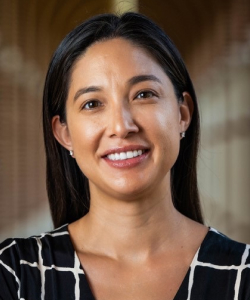
Patricia Stepp is the Assistant Vice President for Technology Transfer at Rice University. She leads the strategic planning and operations of the Office of Technology Transfer (OTT). Her vision is to support Rice’s entrepreneurship and innovation community by transforming research innovations into products and services with real-world societal impact. To transform an initial concept into a market-ready innovation, Rice’s OTT manages a multi-stage pipeline that takes innovation out of the lab, secures intellectual property protection, and oversees commercial strategy and industrial collaboration. She is also on the Board of Directors for AUTM, the non-profit that educates, promotes, and inspires professionals to support the development of academic research that changes the world and drives innovation forward. AUTM has over 3,000 members who work at more than 800 universities, research centers, hospitals, businesses, and government organizations worldwide.
Dr. Stepp is an active figure in the biotech ecosystem, having helped launch the Phoenix chapter of Nucleate during her time at Arizona State University and supporting the Houston chapter of Nucleate while at Rice University. Nucleate is a student-led nonprofit that supports the formation of life science startups. She participates as a judge for the Rice Business Plan Competition and enjoys mentoring students interested in pursuing careers in intellectual property, technology transfer, and entrepreneurship.
She is a registered patent agent who previously worked at a law firm and in-house, handling the preparation and prosecution of patent applications. She has a bachelor’s degree in chemical engineering from the University of Arkansas and a Ph.D. in biomedical engineering from Illinois Institute of Technology. She completed postdoctoral fellowships at the University of Pittsburgh's Department of Orthopaedic Surgery and the Institute of Organic Chemistry and Biochemistry at the Czech Academy of Sciences.
SUMMARY OF INNOVATION OR COMMERCIALIZATION WORK:
"Since joining Rice University as the Assistant Vice President for Technology Transfer, Patricia Stepp has spearheaded a significant cultural shift by implementing a customer service-oriented approach to innovation and commercialization. This model prioritizes increased outreach and relationship building with faculty and researchers, focusing on the foundational stages of the technology pipeline to ensure the university’s world-class research is effectively captured and protected. By transitioning the Office of Technology Transfer (OTT) into a high-quality service provider, Dr. Stepp has overseen a substantial and steady rise in the volume of annual invention disclosures. This increased engagement has directly translated into a dramatic surge in the number of patent applications filed and a corresponding increase in successfully granted patents.
This operational growth extends into the commercial sector, where Rice has seen a marked increase in executed license and option agreements with both established industry partners and emerging startups. While the office continues to manage a robust portfolio of industry-sponsored research agreements, it is also aggressively expanding the use of master research agreements with large corporations to provide more streamlined funding and collaborative pathways for researchers. Dr. Stepp has further strengthened this ecosystem by instituting a new, startup-friendly intellectual property policy and increasing the office's visibility through weekly campus office hours and joint sessions with the Office of Corporate and Foundation Relations. Her leadership also helped Rice University rank 68 th in the National Academy of Inventors’ top 100 U.S. universities, with 30 granted utility patents, up 26 spots from 2023’s 94 th.
Beyond the campus, Dr. Stepp is deeply integrated into the Houston innovation landscape, providing leadership through the Gulf Coast Consortium, the Rice Business Plan Competition, and the local chapter of Nucleate. Her influence on the national stage in technology transfer and innovation continues to grow following her recent election to the AUTM Board of Directors. While long-term outcomes such as increased startup formation and commercialized products are the anticipated downstream effects of her strategy, the current focus remains on empowering researchers at the earliest stages of discovery to maximize the eventual societal impact of Rice’s innovations.
RELEVANT LINKS:
- https://research.rice.edu/ott/
- https://news.rice.edu/news/2025/rice-rises-26-spots-ranking-top-100-us-universities-utility-patents
- https://autm.net/about-autm/board-of-directors
- https://research.rice.edu/news/slicing-through-red-tape
- https://www.linkedin.com/in/patriciastepp/
- https://houston.innovationmap.com/intel-rice-university-subscription-agreement-2673996248.html
Southern Methodist University SMU.EDU

Brett A. Story, Ph.D. is an Associate Professor of structural engineering in the Civil and Environmental Engineering Department and Director of the Smart Infrastructure Innovation Initiative (s3i) at Southern Methodist University. Story received his B.S., M.S., and Ph.D. from Texas A&M University. After graduation in 2012, he served as assistant director at the TAMU Center for Railway Research before joining the faculty at SMU in 2013. Story has a strong record of structural, infrastructure, and rail related research spanning 20 years from his graduate studies at Texas A&M University to his current research at SMU. Story’s research passion addresses society’s most pressing infrastructure resilience challenges through development of novel and practical solutions fusing classical mechanics, instrumentation, and applied machine learning towards smarter infrastructure. Story leads in the laboratory and in the classroom as an Altshuler Distinguished Teaching Professor and Golden Mustang Teaching awardee. Story’s work has been funded by USDoT, industry, local government, and NSF. The research impact of the Story s3i Laboratory is apparent in his over 50 journal and conference articles and numerous invited talks and conference presentations including a recent Plenary Talk at the 2024 AREMA National Conference and an international Best Presentation Award at the 1st International Conference on Artificial Intelligence for Structural Engineering. Story’s commitment to creating novel AI and ML algorithms and integrating them into multi-modal sensing platforms has manifested in 4 issued patents (3 more in progress), a licensing agreement and continual partnerships with forward thinking industry partners.
SUMMARY OF INNOVATION OR COMMERCIALIZATION WORK:
Story’s innovation stems from the foundational motivation of turning research into practical, impactful technologies, practices, and programs. Three innovation spaces created in Story’s Smart Infrastructure Innovation Initiative (s3i, founded in 2016) include: rail bridge monitoring systems, sustainable construction using earth blocks, and a transformative s3i program bringing together high school, university, industry and government partners to address critical societal infrastructure needs. As a specific example of innovative technology, rail bridge monitoring research that started with a small startup company, SENSR, in Georgetown, TX generated successful technologies (i.e. an AI-based bridge impact detection in 2017 – well ahead of the current AI boom and a data-fusion approach to estimating bridge displacements using low-cost cameras) that have been patented and licensed. A second license agreement for a subsequent patent is in discussion under an NDA with another startup. A second innovation example comprises a suite of AI tools that predict soil classification without laboratory tests and determine the appropriate proportions of soil, cement or lime, and water to achieve a target structural strength. Two patents have been issued on this technology and these inventions eliminate the critical barriers (i.e. scalability and prescribed mix design) preventing widespread construction using this sustainable construction technique. Lastly, the heart of the s3i laboratory’s innovation and impact resides in the s3i program which combines the expertise, experience, and perspectives from all stakeholders to achieve the outcome of implementable tools from fundamental research. Contributions from all parties permits an ultimately useful research product as it fosters an environment of critical thought and understanding of the technical, practical, and societal issues that need addressed to ensure a successful outcome.
RELEVANT LINKS:
"CBS News Writeup and TV Story on Compressed Earth Blocks
https://www.cbsnews.com/texas/news/smu-compressed-earth-bricks-affordable-housing-texas/
Dallas Morning News Article on Bridge Monitoring with Smart Phones
https://www.dallasnews.com/news/2019/09/11/smu-researcher-garland-students-are-using-smartphones-to-monitor-bridge-safety/
YouTube Smart Infrastructure Bridge Monitoring
https://www.youtube.com/watch?v=Bv4f0W3vjp8
YouTube Smart Infrastructure Education
https://www.youtube.com/watch?v=jV8FBffVmQ8
Civil Engineering Magazine National Writeup on Infrastructure Outreach Program
https://www.civilengineering-digital.com/civilengineering/january_2019/MobilePagedArticle.action?articleId=1455377#articleId1455377
Patents:
- Story, B.A., Sitton, J. D.*, and DeJong, A. (2025). Data fusion technique for predicting soil classification -Part 2. Issued. US12442723B2, Oct. 14, 2025.
- Story, B.A., Hillyard, R.*, (2025). Mix Design and Quality Control of Compressed Earth. (Application Filed 2025).
- Story, B.A., Khresat, H.*, Sitton, J.D.* (2025). System and Method for Improved Rail Bridge Strike Detection. (Application Filed 2025).
- Story, B., Rajan, D., Camp, J., Napier-Jameson, M.* (2025). Method and apparatus to infer structural response from user device measurements. (Application re-filed 2025).
- Story, B.A., Sitton, J. D.*, and DeJong, A. (2024). Data fusion technique for predicting soil classification. Issued. US12007313B2, June 11, 2024.
- Story, B.A., Sitton, J.D.*, Orsak, J., Bleser III, W. (2023). Bridge impact detection and classification systems and methods. Issued. US11551092B2, Jan. 10, 2023.
- Rajan, D., Story, B.A., Camp, J. (2020). Method and Apparatus to Infer Structural Stresses with Visual Image and Video Data. Issued. US10846819B2, Nov. 24, 2020.
Mary and Richard Templeton Centennial Chair
Electrical and Computer Engineering
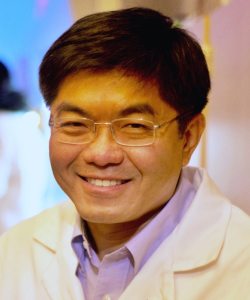
J.-C. Chiao received his Ph.D. in Electrical Engineering from California Institute of Technology. He was a Research Scientist at Bellcore, and Assistant Professor at University of Hawaii, Manoa. He joined Chorum Technologies as Product Line Manager and Senior Technology Advisor in 1999-2002. Dr. Chiao was Janet and Mike Greene Professor of Electrical Engineering at University of Texas - Arlington from 2002 to 2018. He was an Adjunct Professor in Internal Medicine, UT-Southwestern Medical Center in 2009-2015.
Dr. Chiao has been Mary and Richard Templeton Centennial Chair of Electrical and Computer Engineering at Southern Methodist University since 2018. He serves as a lead in Texoma Semiconductor Tech Hub, designated by U.S. Department of Commerce in 2023.
Dr. Chiao has authored and edited over 390 publications. He is a Fellow of Institute of Electrical and Electronics Engineers (IEEE), Institute of Engineering and Technology (IET), International Society for Optics and Photonics (SPIE), American Institute for Medical and Biological Engineering (AIMBE), and National Academy of Inventors (NAI).
He was the Founding Editor-in-Chief for IEEE Journal of Electromagnetics, RF, and Microwaves in Medicine and Biology, and Chair of 2022 IEEE Sensors and 2018 International Microwave Biomedical Conferences. Dr. Chiao is currently on the Editorial Board of IEEE Access and Journal of Microwaves.
Dr. Chiao is the recipient of 2023 Dallas Innovates’ Future 50 Innovators, Pan Wen-yuan Excellence in Research Award, Tech Titans Technology Innovator Award, Heroes of Healthcare Research in Medicine award, IEEE Region-5 Outstanding Educator award and Excellent Performance award, Lockheed Martin Excellence in Engineering Teaching award, IEEE Distinguished Microwave Lecturer, Sensors-Council Distinguished Lecturer, and O’Donnell Award in Engineering from The Academy of Medicine, Engineering and Science of Texas. Dr. Chiao’s works have been covered by global media including National Geographic magazines (in 33 languages), Washington Post, NPR, and CBS Henry Ford Innovation Nation.
SUMMARY OF INNOVATION OR COMMERCIALIZATION WORK:
Dr. Chiao holds 27 awarded and 6 pending U.S. patents and is actively engaged in translating his innovations into practice. He currently collaborates with two startups that license his patents and mentors two entrepreneurial teams at SMU developing business plans based on his recent technologies.
Two awarded and one pending patents, “Sensor and Method for Detecting Target Molecules,” are in final licensing negotiations with the startup QuickDx. This technology enables affordable, rapid, and reconfigurable point-of-care diagnostics for infectious diseases. Its disposable microfluidic devices quantitatively measure temporal antibody profiles from a single drop of blood, supporting personalized treatment decisions. The platform enables multiplexed antigen detection for large-scale population screening triage. These inventions provide cost-effective diagnostic solutions accessible anytime and anywhere, with substantial societal and economic benefits to healthcare systems.
Three patents, “Amorphous IrOx Film pH Sensor,” are licensed to the startup SensTek for commercialization of miniature, disposable electrical pH sensing films in medical and food safety applications. The sensors can be integrated onto flexible and deformable substrates with low-power wireless electronics. Demonstrated applications include endoscopic implants for monitoring gastroesophageal reflux disease and real-time tissue pH monitoring for sepsis management. The sensor products are poised to revolutionize industry by continuously monitoring food during shipping and storage. This can significantly reduce food waste, a global cost of $1T annually. The profound social and economic impacts of Dr. Chiao's works extend far and beyond.
Under Dr. Chiao’s mentorship, two entrepreneurship teams are developing commercialization plans for patents, “Tuned Microwave Resonant System for Subcutaneous Imaging” and “Noninvasive Water Content Sensor.” These technologies target rapid screening for breast and skin cancers, and continuous hydration monitoring. An affordable noninvasive radio-frequency detection method without the risks from x-ray exposure can be used to identify cancers in their early stage for much better treatment outcomes. The invention of a wearable able to comfortably and continuously monitor whole-body hydration levels can prevent heat stroke, cardiac risks, kidney failure or dementia.
While the licensing of his inventions undeniably affirms their practicality values, the true measure of his achievements lies in the transformative effects on inspiring students. Earlier in his career, Dr. Chiao served as Product Line Manager and Senior Technology Advisor at Chorum Technologies, an optoelectronic startup that grew from 15 to more than 800 employees and raised $225M in venture funding. In academia, he continues to mentor engineering students in entrepreneurship, with former students successfully founding and growing companies.
RELEVANT LINKS:
Assistant Professor
Biological Sciences
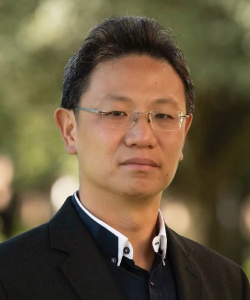
Dr. Zhihao Wu joined the Department of Biological Sciences at Southern Methodist University (SMU) in 2020. He was honored with the Floyd B. James Professorship from 2023 to 2025 in acknowledgment of his scholarly accomplishments. Since his induction at SMU, his research group has authored numerous publications, including in Nature Communications and eLife. His work has received support from projects funded by the Cancer Prevention & Research Institute of Texas (CPRIT) high-risk high-impact program and the NIH Maximizing Investigators' Research Award (MIRA) (R35) program. Dr. Wu's research primarily addresses metabolic homeostasis during aging, proteostatic stress in neuromuscular tissues, and glioma development. Since his postdoctoral training at Stanford University, he and his mentor have filed several patents, including those concerning novel therapeutic targets for Amyotrophic Lateral Sclerosis (ALS), Parkinson's disease (PD), and glioblastoma multiforme (GBM).
SUMMARY OF INNOVATION OR COMMERCIALIZATION WORK:
Obesity and Type 2 Diabetes (T2D) represent a significant and growing public health crisis in many parts of the United States, marked by increasing prevalence and substantial economic strain. Current treatments primarily manage symptoms with limited success in reversing the underlying pathology, underscoring the urgent need for a deeper understanding of their mechanism and identification of novel molecular targets.
Our compelling preliminary data, obtained at SMU, suggest that a protein that has not been described in detail before is a critical element in cellular nutrient-sensing and stress-response pathways in aging. Significantly, the targeted overexpression in mouse models has demonstrated significant improvements in metabolic health, including body weight control, reduced obesity, enhanced glucose tolerance, and decreased hepatic steatosis. These findings provide the scientific basis for this innovation.
We believe this is a key regulator of energy homeostasis in essential metabolic tissues, and that increasing its expression could serve as an effective therapeutic strategy to slow the progression of obesity and T2D.
Successful completion of this project will deepen our understanding of human metabolism, find a novel metabolic regulator, establish a robust preclinical foundation for target-based gene therapy, and address a critical unmet medical need.
RELEVANT LINKS:
LinkedIn: https://www.linkedin.com/in/zhihao-wu-666b3743/
Media Coverage: https://dallasinnovates.com/smu-professor-gets-1-8m-nih-award-to-study-how-bodies-may-work-to-repair-cells/
Tarleton State University TARLETON.EDU
Chemistry
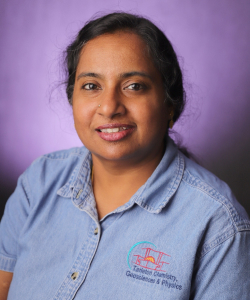
Dr. Rajani Srinivasan is a tenured Professor and Burnaby Munson Research professor of Chemistry in Department of Chemistry geosciences and physics at Tarleton State University, Texas A&M University System located in Stephenville, TX. She completed her Ph.D. in Applied Chemistry from, Chhatrapati Sahu Ji Maharaj University, Kanpur, India. She worked as lecturer in India for two years. She worked as research scientist in AgriLife Black land Research Center, Texas A&M University System located in Temple TX for 5 years. She joined Tarleton State University in September of 2012 as a tenure track assistant professor. Her research focus is extraction and development of plant-based ecofriendly polysaccharides as water treatment agents for removal of emerging contaminants and as non-toxic, target directed delivery system for pesticides, chemotherapeutic agents and oral delivery systems for insulin. She has several publications in national and international peer reviewed journals and patents. She has mentored several undergraduate and graduate students.
She has been serving the American Chemical Society (ACS) Community as the chair elect for DFW section in 2022, Chair for the years 2023 and 2024, Past Chair and alternate councilor for the year 2025 and chair elect for 2026. She has been mentoring the young chemists as the Advisor for the ACS local chapter at Tarleton State University since 2014. She has been the president for Sigma Xi Tarleton’s Chapter for two years. She has been ACS member since 2005.
SUMMARY OF INNOVATION OR COMMERCIALIZATION WORK:
Dr. Rajani Srinivasan has established herself as a national leader in the development of natural polysaccharide based technologies for the removal of emerging contaminants from water systems. Her research focuses on translating food grade, plant derived polysaccharides into scalable, low cost, non toxic materials capable of being deployed within existing municipal and industrial water treatment infrastructure, eliminating the need for specialized equipment or costly process redesigns. This emphasis on accessible implementation has made her technologies attractive for both academic and commercial sectors focused on sustainable water purification.
A cornerstone of Dr. Srinivasan’s research program is her innovation in using natural polymers—derived from plants such as okra, fenugreek, and other food grade crops—to remove pharmaceutical residues, microplastics, nanomaterials, oil, microorganisms and other emerging pollutants from water. Her methodology has produced not only highly effective contaminant removal efficiencies but also environmentally restorative downstream products. Notably, the sludge generated after contaminant binding can be safely repurposed as animal feed or as fertilizers for non food crops, demonstrating a full circular economy approach that reduces waste, adds value, and avoids the secondary pollution common in synthetic sorbent technologies.
Dr. Srinivasan’s pioneering work resulted in a 2019 patent awarded through the Texas A&M University System, which was subsequently licensed by Pristhana LLC (formerly Columbia Bio Gas LLC). This early commercial adoption underscores the market readiness and practical utility of her materials. Her innovation placed her notably ahead of the field: Dr. Srinivasan was the first researcher to develop non toxic, plant based polysaccharide systems specifically engineered to remove microplastics from diverse water sources, at a time when the broader scientific community was still focused primarily on characterizing microplastics rather than removing them. This achievement has positioned her as a transformative contributor in a globally critical research area.
Building on that foundational success, the Texas A&M University System is now pursuing an additional patent covering her expanded breakthroughs in microplastic removal technologies. This subsequent invention has already been licensed by Unplastic Inc., reflecting ongoing commercial interest and the translational strength of her research pipeline. The dual licensing of her technologies by separate companies highlights their adaptability across sectors and their potential for national and international deployment.
Beyond environmental applications, Dr. Srinivasan has extended the versatility of food grade polysaccharides into the biomedical domain. She has developed a nontoxic, targeted polysaccharide based delivery system derived from fenugreek and okra for siRNA based chemotherapeutic drugs. This innovative platform supports targeted gene silencing therapies while maintaining biocompatibility, biodegradability, and stability—key challenges in the delivery of nucleic acid therapeutics. A patent for this technology has already been applied for and published, underscoring its novelty and clinical relevance.
Collectively, Dr. Srinivasan’s research portfolio demonstrates a rare combination of sustainability, scalability, safety, and translational impact. Her ability to convert low cost natural materials into high performance environmental and biomedical technologies—coupled with her record of patenting and licensing—positions her as a uniquely capable investigator poised to advance the next generation of green water purification systems and biopolymer based therapeutics.
RELEVANT LINKS:
- https://www.acs.org/pressroom/presspacs/2025/may/research-update-okra-fenugreek-extracts-remove-most-microplastics-from-water.html
- How Okra can clean up drinking water. Texas Monthly Journal, Published July 18th 2022. https://www.texasmonthly.com/news-politics/okra-water-microplastics/
- Cooking up your way to remove microplastics from wastewater: https://www.youtube.com/watch?v=iuOd4aGzHjQ (American Chemical Society exclusive interview)
- Apr 21, 2022 — For ocean water, they paired carbohydrate extracts from okra and fenugreek. Srinivasan says the results of her tests show that microplastics can ...
- https://www.ndtv.com/world-news/bhindi-imli-methi-hold-key-to-safe-drinking-water-study-2840283
- https://www.indiatimes.com/technology/science-and-future/researcher-used-this-healthy-vegetable-to-filter-microplastics-from-drinking-water-565316.html
- Texas Researchers Use Okra to Remove Microplastics from Wastewater (southern Living) Media publications: https://www.southernliving.com/food/veggies/okra/texas-researchers-find-okra-can-remove-microplastics-from-wastewater#:~:text=Researchers%20discovered%20that%20food%2Dgrade,from%20water%20using%20two%20processes.
- Okra Goo: The New Secret Weapon in the Battle Against ...https://www.ecowatch.com › okra-goo-microplastics-po...
- https://www.fox9.com/news/researchers-use-okra-aloe-extracts-to-remove-microplastics-from-wastewater
- https://www.youtube.com/watch?v=INFmjcMOQUo
- https://www.acs.org/pressroom/presspacs/2025/may/research-update-okra-fenugreek-extracts-remove-most-microplastics-from-water.html
Patents:
- Rajani Srinivasan, Plant-derived polysaccharide polymers as treatment agents for removal of microplastics, Provisional patent filed by Texas A&M University System on May 20, 2025. TAMUS Ref. 6406 (USSN 63/808,901) - ""Removal of bioplastics using plant-based polysaccharides.” (Licensed by Unplastic inc.)
- Rajani Srinivasan, Anuradha Mishra and John McKinney, Polysaccharide agents and methods of their use for removing solids from water, patent (USP No. 10442710) filed by Texas A&M University System and granted in October 2019. (Licensed by Pristhana LLC.) but now it’s not licensed
- Plant derived polysaccharides for RNA based therapies: Rajani Srinivasan and Alexander Asea. International patent Application (PCT/US2011/045239) filed by Scott and White Health care in July 25, 2011
Patents Links:
https://patents.google.com/patent/US10442710B2/en
Title: Polysaccharide agents and methods of their use for removing solids from water.
Licensed by Pristhana LLC.
https://patents.google.com/patent/WO2012018594A2/en
Title: Plant-derived polysaccharides for delivery of rna-based therapies.
Mathematics

Dr. Bryant Wyatt is a Professor of Mathematics at Tarleton State University and the founder and director of the university’s High Performance Computing (HPC) Lab. Established in 2011 with support from the NVIDIA Corporation and Mellanox Technologies, the lab has grown into a central hub for interdisciplinary STEM research across campus. Under Dr. Wyatt’s leadership, the lab has enabled hundreds of student and faculty research presentations and has received numerous awards for innovative uses of GPU-accelerated computing.
Dr. Wyatt’s research leverages high-performance and GPU computing to address complex scientific problems spanning astrophysics, engineering, biology, chemistry, and applied mathematics. In recognition of his commitment to research-driven education, he was named the Mathematical Association of America Distinguished University Teacher for the State of Texas in 2018.
Over the past three years, Dr. Wyatt has focused on developing a computational digital twin of the left atrium to gain deeper insight into cardiac arrhythmias. This work has led to a three-year, NIH-funded research grant, for which Dr. Wyatt serves as Principal Investigator, in collaboration with the University of Houston and Baylor College of Medicine.
SUMMARY OF INNOVATION OR COMMERCIALIZATION WORK:
Dr. Bryant Wyatt’s innovation and commercialization activities center on the development, deployment, and sustainability of high-performance computing (HPC) infrastructure to accelerate translational research across STEM disciplines. As the founder and director of Tarleton State University’s High Performance Computing Lab, Dr. Wyatt has led the design and implementation of GPU-accelerated research environments that enable computationally intensive modeling previously inaccessible at a primarily undergraduate institution. Established in 2011 with industry support from NVIDIA Corporation and Mellanox Technologies, the lab represents a long-term investment in scalable research infrastructure that bridges academic research, workforce development, and industry-relevant computing practices.
A key innovation of Dr. Wyatt’s work lies in translating advanced GPU computing into domain-specific research tools. His lab has developed and optimized numerical solvers, N-body simulation frameworks, and large-scale differential equation models that leverage CUDA-enabled architectures. These tools have been applied across astrophysics, engineering, chemistry, biology, and applied mathematics, allowing researchers to move from proof-of-concept models to production-scale simulations. This infrastructure-first approach reduces barriers to adoption and enables rapid prototyping, reproducibility, and data-driven discovery.
More recently, Dr. Wyatt’s work has focused on the development of a computational digital twin of the left atrium to study cardiac arrhythmias. This research integrates GPU-accelerated solvers with physiologically motivated models and represents a clear pathway toward translational impact. The resulting platform has supported a three-year NIH-funded project, with Dr. Wyatt serving as Principal Investigator in collaboration with the University of Houston and Baylor College of Medicine. This effort positions the technology for future clinical integration, including patient-specific modeling and decision-support tools.
From a commercialization perspective, Dr. Wyatt’s innovation strategy emphasizes sustainability, extensibility, and workforce readiness rather than one-off software products. His lab produces GPU-enabled research pipelines and trained personnel who transition into industry, national laboratories, and graduate programs. By aligning infrastructure development with external funding mechanisms and industry-standard technologies, Dr. Wyatt’s work demonstrates a scalable model for converting computational innovation into long-term research capacity, external investment, and real-world impact.
RELEVANT LINKS:
- https://www.siam.org/publications/siam-news/authors/bryant-wyatt/?_page=1&keywords=&_limit=10&authorPersonKey=d21acbb5-54e9-4c6c-831f-29a750b5b816
- https://reporter.nih.gov/search/Vl-zDbdCWUuhNjfH9RJxqw/project-details/11124535
- https://scholar.google.com/citations?hl=en&user=kj0sXEMAAAAJ
- https://www.tarleton.edu/news/tarleton-mathematics-professor-delivers-conference-keynote/
Professor
Department of mechanical, Environmental, and Civil Engineering
Mayfield College of Engineering
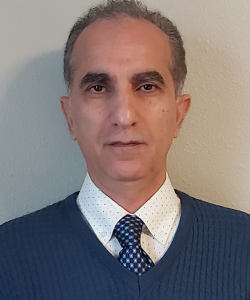
Dr. Zabihollah is a distinguished Professor of Mechanical Engineering and a licensed Professional Engineer (P.E.) in the State of Texas, with expertise in smart materials, adaptive systems, intelligent structures, control, and mechatronics. His research focuses on the development and integration of advanced functional materials, including shape memory alloys and polymers, magnetorheological materials, shear-thickening materials, and piezoelectric materials, into next-generation sensing, actuation, vibration mitigation, and control systems. He has authored more than 100 peer-reviewed publications covering sensor technologies, smart material systems, structural control, and multifunctional engineered structures. His work spans a broad range of interdisciplinary applications, including wearable biomedical devices, civil infrastructure monitoring, aerospace systems, and automotive technologies. Dr. Zabihollah has made significant contributions to corrosion monitoring of storage tanks using fiber Bragg grating (FBG) sensors, leakage detection in buried pipelines, and structural health monitoring of critical infrastructure subjected to extreme events such as hurricanes. His research also addresses offshore structures and composite wind turbine blades, with emphasis on resilience, durability, intelligent diagnostics, and real-world engineering implementation. His scholarly contributions to smart systems and structures have received substantial international recognition, with his work cited by approximately 1,200 researchers worldwide. Through sustained innovation and cross-disciplinary collaboration, he continues to advance the translation of smart materials and adaptive technologies into practical, high-impact engineering solutions. With more than 15 years of academic experience, Dr. Zabihollah has demonstrated a strong commitment to education and mentorship, successfully supervising over 500 students across undergraduate and graduate levels while fostering experiential learning aligned with professional engineering practice.
SUMMARY OF INNOVATION OR COMMERCIALIZATION WORK:
SMART AND ADAPTIVE FOOT ANKLE BRACE
MVS Docket No. P15384US00
TAMUS Docket No. 6635
Summary of Innovation and Commercialization Work
This project advances a smart, adaptive foot–ankle orthotic system that addresses a critical unmet need in the treatment of drop foot, a common and debilitating condition affecting millions of stroke survivors, individuals with spinal cord injuries, elderly populations, and trauma patients. Existing solutions, including rigid ankle-foot orthoses (AFOs) and powered exoskeletons, either restrict natural ankle motion or are too bulky, expensive, and impractical for routine daily use. The proposed technology fills this gap by offering a lightweight, wearable, and intelligent alternative that combines active assistance with continuous rehabilitation support.
The core innovation lies in the integration of embedded sensors, adaptive actuation, and wireless communication within a compact orthotic platform. The system continuously monitors gait parameters in real time, detects footdrop events, and delivers precisely controlled ankle assistance to restore physiological dorsiflexion during walking. Unlike passive orthoses, this closed-loop system dynamically adapts to each user’s gait pattern, enabling personalized mitigation of footdrop while preserving natural joint mobility. A companion software platform securely collects, stores, and analyzes biomechanical data, generating actionable reports that support clinicians in tailoring rehabilitation programs and tracking patient progress both in clinical and home settings.
From a commercialization perspective, the technology is being developed with scalability, affordability, and ease of use as guiding principles. The design leverages commercially available sensors and compact actuators to reduce manufacturing costs and simplify assembly, positioning the device as a cost-effective alternative to robotic exoskeletons. Its modular architecture allows customization for different patient populations and uses cases, including stroke rehabilitation, post-surgical recovery, elderly fall prevention, and home-based physical therapy.
The project has reached the proof-of-concept stage, with a functional prototype fabricated and preliminary experimental validation completed. Ongoing efforts focus on refining on-site actuation, improving durability and user comfort, and conducting clinical testing to demonstrate safety, efficacy, and usability. Parallel commercialization activities include intellectual property development, market assessment, and engagement with clinicians, rehabilitation centers, and industry partners to guide product requirements and regulatory pathways.
Currently, we are in the process of negotiation and formal agreement with two companies introduced by TAMU to support further development, manufacturing scale-up, and market entry.
Overall, this innovation represents a significant step toward accessible, data-driven, and patient-centered mobility assistance, with strong potential for clinical impact and successful translation to the rehabilitation and assistive technology markets.
Texas Christian University TCU.EDU
Student Founder, Bakame AI
Institute for Entrepreneurship and Innovation, Neeley School of Business
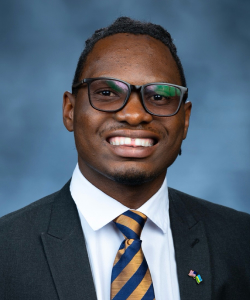
Happy Herman is a Rwandan entrepreneur, economics and finance double major at TCU, where he is also a member of the John V. Roach Honors College. Originally from Kigali, Rwanda, Happy has dedicated his academic and professional life to using technology and education to uplift underserved communities.
In 2021, Happy co-founded The Street Bridge, a nongovernmental organization focused on returning street-connected children in Kigali to the classroom. Recognizing that school enrollment alone was insufficient without meaningful skills development, he turned his attention to the language barrier that limits economic mobility across Rwanda, where nine out of ten children cannot express themselves in English despite it being the official language of instruction since 2008.
This insight led Happy and his team to create Bakame AI, a voice-first, offline artificial intelligence platform that teaches English through ordinary phone calls, requiring no smartphone and no internet connection. Named after the wise rabbit of Rwandan folklore, the platform is designed to reach the estimated 2.9 billion people worldwide who remain offline.
Happy's work has earned significant recognition. In February 2026, Bakame AI was awarded first place and the Gold Global Best M-Gov Award at the World Governments Summit in Dubai, presented under the patronage of His Highness Sheikh Mohammed bin Rashid. At TCU, Happy received seed funding through the CREATE cross-campus accelerator powered by the Shaddock Seed Fund and has been mentored by leaders including Dr. Marcellis Perkins, Angelo Biasi, and Paul Evans. He is also a PKD National Forensics Champion and serves on TCU's International Admission team, guiding prospective students through the admissions process.
SUMMARY OF INNOVATION OR COMMERCIALIZATION WORK:
Bakame AI is an offline, voice-first artificial intelligence platform that delivers English language education through ordinary phone calls. Users dial a toll-free number from any basic cellular phone and engage in real-time, AI-driven conversational English lessons. The system requires no smartphone, no internet access, and no cost to the learner, removing the three primary barriers to digital education in low-connectivity environments.
The innovation addresses a critical gap: while 97 percent of Rwandans own a cellular phone, only 34.2 percent have internet access, and most language-learning tools require both connectivity and a smartphone. By operating entirely over voice telephony infrastructure, Bakame AI transforms the most basic communication device into a personalized learning tool. The platform's AI engine adapts to each caller's proficiency level, providing tailored instruction that scales without the constraints of traditional classroom settings.
From a commercialization standpoint, Bakame AI has advanced rapidly from concept to global recognition. The venture received initial seed funding of $8,000 through TCU's CREATE accelerator program, powered by the Shaddock Seed Fund, and has raised over $20,000 in total early-stage capital and $50,000 in pre-deployment government grants. The platform was stress tested across Rwandan schools and is designed for government adoption, with a business model in which governments procure the service so that citizens access it at no cost, a strategy positioned for a domino effect across neighboring nations.
In February 2026, Bakame AI earned the Gold Global Best M-Gov Award (first place) at the World Governments Summit in Dubai, the world's premier gathering for government innovation with over 6,000 attendees, 35 heads of state, and 500 ministers from 150 countries. The award generated 24 confirmed media hits across 10 countries, reaching an estimated 501,987 impressions and $12,776 in earned media value. Coverage spanned government sources (World Governments Summit, Dubai Media Office, Emirates News Agency), international news outlets (Africanews/Euronews, GhanaWeb, CompleteAITraining), and institutional channels (TCU Neeley School of Business). The story was syndicated in English and French across the UAE, United States, Senegal, Pakistan, Ghana, Cameroon, and Rwanda, with Africanews alone generating an estimated 200,000 impressions.
Bakame AI represents a scalable, commercially viable model for delivering AI-powered education to the 2.9 billion people globally who remain disconnected from the internet.
RELEVANT LINKS:
Startup & Product:
- Bakame AI: https://bakame.org
Award & Event:
- World Governments Summit Official Coverage: https://www.worldgovernmentssummit.org/media-hub/news/detail/mohammed-bin-rashid-bin-mohammed-bin-rashid-honours-winners-of-govtech-prize--global-best-m-gov-award
- Dubai Media Office: https://mediaoffice.ae/en/news/2026/february/04-02/mohammed-bin-rashid-bin-mohammed-honours-the-winners-of-the-government-technology-award
Media Coverage:
- Africanews (Euronews): https://www.africanews.com/2026/02/05/african-students-win-global-prize-for-ai-education-system-without-internet/
- CompleteAITraining: https://completeaitraining.com/news/african-students-build-ai-you-can-call-win-global-award-for/
- Dallas Innovates (CREATE Program): https://dallasinnovates.com/eight-tcu-student-ventures-split-50000-in-university-accelerator-program/
University / Institutional:
- TCU 360 Feature: https://tcu360.shorthandstories.com/bakame-ai/index.html
- TCU Admissions Blog: https://admissions.tcu.edu/frogblog/posts/2025/international-student-happy-herman.php
- TCU Neeley (Facebook): https://www.facebook.com/TCUNeeleySchool/posts/1354630616464382/
- TCU Neeley (LinkedIn): https://www.linkedin.com/posts/texas-christian-university-neeley-school-of-business_tcu-neeley-students-happy-herman-niyorurema-activity-7426755689777094656-iwVX
Founder Profiles:
- Bakame AI LinkedIn: https://www.linkedin.com/company/bakameai
- PressAfrik (Founder Profile): https://www.pressafrik.com/Portrait-Mame-Diarra-Niang-l-architecte-d-une-IA-africaine_a300869.html
Social Media:
- WGS Award Post (Bakame AI LinkedIn): https://www.linkedin.com/posts/bakameai_today-at-theworld-governments-summitin-activity-7425068813395632128-uPav
Professor, Chair of Fashion Merchandising
Director of Research and Creative Activities College of Fine Arts
College of Fine Arts Dept. of Fashion Merchandising
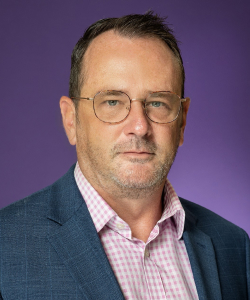
Dr. Charles E. Freeman is a scholar-innovator whose work advances the intersection of advanced textiles, wearable technologies, and applied material systems. As Full Professor and Chair of Fashion Merchandising at Texas Christian University, he leads translational research initiatives that convert creative design and human-centered engineering into protected intellectual property and market-ready technologies.
Dr. Freeman has developed eight intellectual property filings spanning wearable sensor systems, smart textile integration, polymer innovation, and protective equipment design. His work includes awarded U.S. utility patents in wearable motion capture systems, sustainable polymer manufacturing processes, and textile-based testing apparatuses, alongside design patents focused on capacitive stretch sensors, wearable devices for markerless motion capture, and advanced filtration technologies. His research portfolio demonstrates a consistent pattern: identify a systems-level problem, prototype iteratively across disciplines, protect the invention, and position it for commercialization or industry adoption.
As CEO of an NSF-supported research spin-off, Humo Technologies, he translated athlete engineering research into a venture-backed enterprise with a multi-million-dollar valuation. His commercialization leadership includes formal licensing agreements, SBIR/STTR pipeline development, and integration with university technology transfer frameworks.
A defining dimension of Dr. Freeman’s innovation leadership is mentorship. He led and mentored the interdisciplinary TCU NASA SEAMS team in designing advanced seam solutions for lunar environments, guiding students through systems analysis, prototype development, and high-stakes technical presentation. Under his mentorship, the team earned NASA’s Best Innovation recognition, demonstrating his ability to cultivate next-generation innovators capable of solving aerospace-grade challenges.
Dr. Freeman’s work exemplifies innovation not as isolated invention, but as an integrated ecosystem of research, intellectual property strategy, commercialization, and student-centered translational impact.
SUMMARY OF INNOVATION OR COMMERCIALIZATION WORK:
Dr. Charles E. Freeman’s innovation portfolio reflects a consistent commitment to translating interdisciplinary research into protected, deployable technologies. His work spans advanced textiles, wearable sensor systems, polymer science, and protective equipment engineering, with eight intellectual property filings that include awarded U.S. patents and multiple technology disclosures in motion capture systems, smart textile sensors, filtration testing apparatuses, and performance polymers. These inventions move beyond conceptual design to address real-world performance gaps in aerospace, occupational safety, human performance monitoring, and advanced materials manufacturing.
A defining characteristic of Dr. Freeman’s innovation work is systems-level integration. Rather than isolating materials research from application, he develops technologies within performance ecosystems. This approach is evident in the development of wearable motion capture systems and textile-based sensing platforms that combine biomechanics, industrial engineering, and advanced fabrication. Several of these technologies have progressed through university technology transfer pipelines, with formal licensing agreements and commercialization strategies established to move research into the private sector.
As CEO of an NSF-supported research spin-off, Humo Technologies, Dr. Freeman translated athlete engineering research into a venture-backed company, securing private investor funding and achieving a multi-million-dollar valuation. He has built commercialization frameworks that align faculty research with SBIR/STTR pipelines, industry partnerships, and structured research entrepreneur training programs. His leadership has included securing federal and state appropriations to operationalize commercialization networks and creating cross-college innovation infrastructures that connect researchers, investors, and corporate stakeholders.
His mentorship of the award-winning NASA SEAMS team further demonstrates his translational philosophy. Under his guidance, students approached lunar dust infiltration not as a materials coating problem but as a seam architecture challenge, producing a novel, non-obvious construction method that has implications for aerospace suits and terrestrial PPE markets. The project reflects Dr. Freeman’s broader innovation model: identify an overlooked structural variable, prototype iteratively, validate through testing, and position for scale.
Across research, commercialization, and student mentorship, Dr. Freeman’s work exemplifies innovation as a disciplined process, grounded in intellectual property strategy, validated performance improvement, and measurable economic and societal impact.
RELEVANT LINKS:
- https://www.tcu.edu/news/2025/innovation-in-orbit-tcu-team-designs-for-nasas-future.php
- https://fwtx.com/news/tcu-students-innovate-spacesuit-seams-to-block-lunar-dust/
- https://dallasinnovates.com/tcu-student-uncovers-fashions-hidden-costs-and-designs-for-the-moon/
- https://wwd.com/fashion-news/fashion-features/nasa-texas-christian-university-space-suit-students-1237985555/
- https://msstate-innovations.technologypublisher.com/technology/46847
- https://msstate-innovations.technologypublisher.com/technology/51212
- https://msstate-innovations.technologypublisher.com/technology/51231
- https://msstate-innovations.technologypublisher.com/technology/47113
- https://msstate-innovations.technologypublisher.com/technology/46116
Associate Professor
Department of Physics and Astronomy
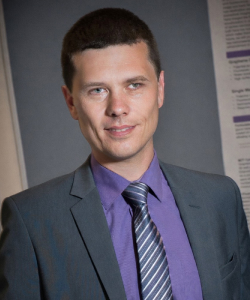
Anton V. Naumov, Ph.D., is an Associate Professor of Physics and Astronomy at Texas Christian University and an internationally recognized innovator at the intersection of nanotechnology, biotechnology, and quantitative bioimaging. He leads an interdisciplinary research program that engineers graphene quantum dots (GQDs), carbon nanotubes, and other advanced nanomaterials for transformative applications in cancer therapeutics, CRISPR gene editing, antimicrobial resistance, neurodegenerative disease diagnostics, and multimodal optical and ultrasound imaging.
Dr. Naumov received his Ph.D. in Applied Physics from Rice University and has built a career that bridges fundamental physics with translational biomedical impact. From 2011–2014, he worked in industry at Ensysce Biosciences, where he contributed to the development of gene-based cancer therapy. A TCU Dr. Naumov has developed a vibrant biophysics research program focusing on preclinical imaging and nanomaterials-assisted therapeutic delivery collaborating with lead researchers in the US, Europe and Asia. His work is supported by the National Institute of Health and industry partnerships including an Ensysce/Sanofi Genzyme contract expanding his experience in pharmaceutical innovation and translational R&D.
He actively mentors postdoctoral, graduate and undergraduate researchers, fostering entrepreneurial thinking and translational science. His work has received international recognition for excellence and impact as he was elected a Member at Large and a Secretary at Nanocarbon’s division of the Electrochemical Society. His research impact was commemorated by TCU’s Deans’ Award for Research and Creative Activity in 2025. Through a career that seamlessly integrates physics, engineering, and medicine, Dr. Naumov advances technologies designed not only to expand scientific knowledge but also to meaningfully improve human health.
SUMMARY OF INNOVATION OR COMMERCIALIZATION WORK:
Commercialization and innovation are integral to Anton Naumov’s research program, which is designed to translate nanomaterials and quantitative imaging advances into tools that can accelerate discovery and improve health outcomes. A central example is Intrapic, a student-led LLC startup company that emerged from Naumov’s lab and won the highest award through TCU Neeley School of Business CREATE Accelerator. Intrapic developed AI-powered microscopy image analysis software aimed at dramatically increasing the speed and accuracy of analyzing complex microscopy datasets, specifically tasks such as fluorescence intensity quantification and cell morphology assessment thereby helping biomedical researchers and diagnostic innovators move from raw images to actionable measurements faster.
Dr. Naumov’s work is deliberately structured to move discoveries from fundamental nanomaterials science to protected intellectual property and translational deployment. As a pioneer in the development of near-infrared-emissive graphene quantum dots, he is the inventor of the issued U.S. patent, “Near-Infrared Emissive Graphene Quantum Dots: Method of Manufacture and Uses Thereof,” along with two provisional patent filings that further expand this technological platform into advanced biomedical imaging, therapeutic delivery, and precision diagnostics. This innovation is particularly significant because graphene quantum dots represent one of the least toxic and most promising classes of nanomaterials for biomedical imaging, offering superior optical tunability and improved biocompatibility. By securing intellectual property around this platform technology, Dr. Naumov has strategically positioned graphene quantum dots to advance multiple transformative directions, including ultrasound contrast imaging, chemotherapeutic delivery systems, and wearable or implantable biosensors for hormones and neurotransmitters. This innovation-driven patent strategy is central to translating laboratory breakthroughs into scalable, commercially viable biomedical technologies with broad clinical and industrial impact.
Dr. Naumov’s earlier industry experience at Ensysce Biosciences strengthened his translational focus, contributing to next-generation drug-delivery systems engineered for improved therapeutic index and safety. His research collaboration under contract with Sanofi Genzyme further expanded his engagement with pharmaceutical-grade development standards. These industry experiences, combined with federally funded academic research, uniquely position Dr. Naumov at the interface of discovery science and commercialization strategy.
Together, these activities reflect a consistent “bench-to-prototype” approach: develop scalable, biocompatible nanomaterials and quantitative analysis methods; validate them in relevant biological contexts; and then support translation via IP protection and venture formation such as Intrapic.
RELEVANT LINKS:
Texas A&M University TAMU.EDU
Professor, Veterinary Pathobiology, College of Veterinary Medicine and Biomedical Sciences

Dr. Scott Victor Dindot earned his B.S. in Molecular and Cell Biology from Texas A&M University in 1999 and his Ph.D. in Genetics from Texas A&M University in 2003. He performed his postdoctoral training as an NIH Fellow at Baylor College of Medicine before joining the Department of Veterinary Pathobiology in the College of Veterinary Medicine & Biomedical Sciences as a faculty member in 2008. He currently holds the rank of Professor. His research and teaching programs focus on the molecular basis of genetic and epigenetic diseases and the development of nucleic acid therapies. In addition to his academic appointment, Dr. Dindot previously served as Chief Scientific Officer of GeneTx Biotherapeutics, a biotechnology company founded on discoveries from his laboratory to develop an antisense oligonucleotide therapy for Angelman syndrome, a severe neurogenetic disorder with no approved treatments. He also currently serves as Executive Director of Molecular Genetics at Ultragenyx Pharmaceuticals, a clinical‑stage biopharmaceutical company developing novel therapies for rare and ultra‑rare genetic disorders.
Dr. Dindot’s scientific contributions have been recognized through numerous honors, including three Outstanding Scientific Achievement Awards and the Outstanding Graduate Student & Postdoc Mentor Award from the College of Veterinary Medicine & Biomedical Sciences, the Excellence in Innovation Award from the Texas A&M Technology Commercialization Office, the Cure Angelman Syndrome Discovery Award from the Foundation for Angelman Syndrome Therapeutics, the AgriLife Research Director’s Superior Grantsmanship Award from AgriLife Research, the Einstein Award from Ultragenyx, the Chancellor’s EDGES Fellowship Award from the Texas A&M System, and the inaugural Chancellor’s Innovation Award from the Texas A&M Innovation Office.
SUMMARY OF INNOVATION OR COMMERCIALIZATION WORK:
Dr. Dindot’s most significant scientific contribution is the invention of apazunersen (GTX-102), an investigational antisense oligonucleotide developed for the treatment of Angelman syndrome, a debilitating neurogenetic disorder for which there are currently no approved therapies. In 2018, GeneTx licensed apazunersen in what became the largest commercial licensing agreement in the history of the Texas A&M System. In 2020, apazunersen became the first molecular therapy for Angelman syndrome to advance into clinical development. In 2022, Ultragenyx acquired GeneTx to secure control of Apazunersen. Apazunersen has been granted Orphan Drug Designation, Rare Pediatric Disease Designation, Fast Track Designation, and Breakthrough Therapy Designation from the US. Food and Drug Administration (FDA), Orphan Designation and PRIME Designation from the European Medicines Agency (EMA), and Orphan Designation from the Japan Pharmaceuticals and Medical Devices Agency (PMDA). In 2024, apazunersen advanced into a Phase 3 Clinical Trial, making it one of only two therapies invented at Texas A&M to reach this stage of clinical development.
RELEVANT LINKS:
Professor and Director of the Center for Worker Health
Environmental & Occupational Health, School of Public Health

Dr. Benden’s was born in Washington DC and would later become a 1st generation college graduate. His early work experience includes Class A machinist, US Army as an enlisted combat medic, and as a combat engineer officer. He also worked as a rehabilitation engineer, ergonomics consultant, plant & corporate ergonomics engineer and executive vice president, CEO & CTO. At the age of 32 he became an officer of a NASDAQ traded company, NTRL.
He currently serves as Executive Director of the TAMU Center for Worker Health and is Department Chair for the Environmental & Occupational Health Department within the School of Public Health. He holds courtesy appointments in the TAMU Multi-Disciplinary and Industrial & Systems Engineering departments. He is the author of many articles, books and book chapters and has spoken to multiple professional groups around the world. Dr. Benden developed the theory of Technology Induced Inactivity for children and adults to describe effects of sedentariness in modern-day life on health outcomes. His most recent research has centered around the use of digital humans as agentic agents in healthcare and industrial training. He has spent the past 35 years in various positions of responsibility in industry from occupational safety and health management through corporate safety and health and now is a leading academic and startup founder. He is the current chair for the Texas A&M System faculty inventor council.
He has been married to his wife, Teresa for 37 years and has 3 sons, 3 daughters in-love and 9 grandchildren who all reside in College Station.
SUMMARY OF INNOVATION OR COMMERCIALIZATION WORK:
Dr. Benden holds 26 Patents (24 US & 2 Int’l) for current ergonomic, health and industrial products with several other designs US Patent Pending. His early designs were breakthroughs in ergonomics and are now industry standards that have been deployed in millions of units of products sold. According to Patent Vector, his 26 patented inventions are some of the most highly cited patents in the field of ergonomics and rank above 82% of ALL US patents ever issued for impact, with an estimated lifetime value of over $4 billion. Dr. Benden’s inventions were licensed by and reduced to practice by companies still producing variations of even his earliest work. His first patent, a 4-way adjustable office chair arm (1990) was the top approach to ergonomic chair arms for decades. His additions to seating safety and ergonomics are still copied around the world. His creation of stand-biased desking for students led to the start of an industry that did not previously exist and now more than 10 million students around the world have used his standing desk designs. According to Patent Vector, his inventions are some of the most highly cited patents in the field of ergonomics and rank above 82% of ALL US patents ever issued for impact. Many of Dr. Benden’s patents have led to other advancements for multiple breakthrough designs in ergonomics. As a faculty inventor, Dr Benden has licensed 9 of his inventions to companies for commercialization and has started three companies to commercialize his designs including his current startup where he serves as CTO for www.Humanate.Ai which uses his technology to help patients in healthcare settings. His previous startup company Stand2Learn was an Inc 5000 fastest growing company (#567) and #5 on the Aggie 100 list. In 2018, he won the TAMUS Innovator Award and in 2023 he was selected as a Fellow in the National Academy of Inventors and in 2025 his most recent startup won the TAMU New Ventures Competition.
RELEVANT LINKS:
Texas A&M Regents Professor, Department of Biomedical Engineering

Dr. Coté is recognized globally for his translational and fundamental bioengineering research contributions in biomedical optics, primarily for diagnostic and monitoring applications including wearable and handheld devices. Specifically, his fundamental macro-scale to nano-scale biomedical sensing research has made a global impact by furthering the knowledge base in the field of biomedical optical sensing for chronic disease applications (e.g. diabetes, cardiac disease, cancer, preeclampsia), infectious disease (e.g. malaria) and other biosensing applications (e.g. blood toxicants) as highlighted in his over 450 journal papers, book chapters, patents, conference proceedings and abstracts, and invited talks. Dr. Coté’s multidisciplinary research accomplishments have been recognized by his peers through his selection as the 2024 SPIE Britton Chance Biomedical Optics Award, given for transformative advances in both fundamental and translational optical research toward the diagnosis and monitoring of chronic and infectious diseases. In addition, because of his accomplishments, he was elected as a Fellow in four different societies including the international Society for Optics and Photonics (SPIE), Institute of Electrical and Electronics Engineers (IEEE), the American Institute for Medical and Biological Engineering (AIMBE), and the Biomedical Engineering Society (BMES). Dr. Coté also contributes to translational research and the innovation ecosystem as the co-holder of over 25 patents and patents pending, is active in research and engagement with dozens of companies and is a co-founder of four of his own medical device companies. These translational accomplishments have led to his induction as a Fellow in the National Academy of Inventors, to his being awarded the Sigma Xi Walston Chubb Award for Innovation, and to his winning the 2024 Chancellor’s Innovation Award, which recognizes one employee from an institution within The Texas A&M University System who has made a remarkable achievement through their discovery and invention.
SUMMARY OF INNOVATION OR COMMERCIALIZATION WORK:
Dr. Coté has a history of translational research and commercialization activities providing a direct impact in the lives of patients. He co-founded four medical device companies namely; BioTex, BasePair BioTechnologies, and Visualase (acquired by Medtronic in 2014). BioTex serves as an OEM design and manufacturing company for development of medical devices in a regulated, good manufacturing practices, environment for several applications including cardiac and neurosurgery technologies. BasePair is designing aptamers (similar to antibodies) using a parallel SELEX method and selling them to pharmaceutical companies and researchers for targeted detection of molecules. Visualase (purchased in 2014 and now branded as part of Medtronic Neurosurgery) provides advanced MRI-guided laser ablation technology for neurosurgery including the treatment of patients with cancer and those with epilepsy. This therapy is literally changing the lives of patients. For example, one teenager in Dallas had epileptic seizures 3-5 times daily and after the Visualase treatment has been seizure free for several years. His most recent company, CardiaTex, Inc. was founded in March 2025 to pioneer the development of a wearable continuous, cuffless, blood pressure technology that can deliver real-time cardiovascular insights without the limitations of traditional cuff-based approaches.
Beyond his own startup companies, Dr. Coté leads a funded NSF Engineering Research Center (ERC) entitled, Precise Advanced Technologies and Health Systems for Under-resourced Populations (PATHS-UP). He and his team from Texas A&M, Rice, UCLA, and Florida International are focused on engineering effective and affordable technologies for two main disease types, Cardiovascular and Diabetes, that are not only top killers globally but are particularly devastating in under-resourced communities in the US, where they are contracted at much higher rates than the national average. A primary focus is to not only to lead the team to create these systems but develop an innovation ecosystem for translation of research and technology with existing companies globally. Toward that end he has created an Industry Practitioner Board that includes several companies that have paid memberships including Johnson & Johnson, Medtronic, Biotronic, Abbott, Eli Lilly, Pepsico, and several small companies. Most recently, he has a leadership role in the Texas A&M Engineering as Associate Agency Director and Project Office for Industry Engagement and Entrepreneurism for which he directs the advisory board and interacts with nearly 50 companies and organizations in all areas of engineering including for example, Lockheed Martin, Chevron, Aegis Aerospace, Samsung Austin Semiconductor, Philips Healthcare, and Sante Ventures.
RELEVANT LINKS:
Texas State University TXST.EDU
Assistant Professor (Instruction), Ingram School of Engineering Texas State University
Environmental Engineering

Dr. Sujata Mandal holds a Ph.D. in Mechanical and Energy Engineering from the University of North Texas and a Master’s degree in Sustainable Energy Systems from the State University of New York. She has more than ten years of teaching experience in Engineering, Physics, and Chemistry, with instructional roles at the State University of New York, Texas State University, and internationally.
Her research advances circular water management and One Water sustainability by integrating bio-based materials, low-energy treatment technologies, and AI-driven optimization across water and wastewater systems. Through nature-based and green solutions, her work strengthens water infrastructure, improves water quality, and enhances resilience to droughts and floods. She also advances wastewater treatment and reuse to provide reliable alternative supplies for growing urban and industrial needs.
In parallel, Dr. Mandal’s research includes natural polymer–based hydrogels for sustainable agriculture, improving soil health and water retention. Her multidisciplinary portfolio spans DOE-supported studies on PFAS fate and transport and DoD-funded research on detection and mitigation of heavy metals under extreme climate conditions.
She has produced multiple peer reviewed publications and conference papers in leading water, environmental, and energy journals. Her widely cited work contributes to advancements in sustainable treatment technologies, contaminant remediation, and circular water systems.
A dedicated mentor, Dr. Mandal, guides both graduate and undergraduate researchers in sustainability, materials innovation, and water treatment. Her students have earned distinctions such as Best Student Abstract Awards and Undergraduate Research Fellowships.
Her innovation efforts include five U.S. patent filings and several internal and federal grants, including NSF support for water purification technology. She is a pitch competition winner, a finalist at World TechConnect, and an invited panelist at SXSW’s Sustainability Cluster, recognitions that underscore the impact and commercial promise of her research.
SUMMARY OF INNOVATION OR COMMERCIALIZATION WORK:
Dr. Sujata Mandal’s innovation and commercialization efforts are driven by a commitment to advancing sustainable materials, circular water solutions, and environmentally responsible technologies that address critical global challenges. Her body of work spans water purification, agricultural resilience, hygiene product innovation, and green nanomaterial development. She has filed multiple U.S. patent applications that demonstrate not only scientific rigor but also strong real world commercial potential.
One of her leading innovations focuses on eco friendly nanocomposites for portable water purification, designed as green, high efficiency materials capable of delivering clean drinking water on the go. These nanocomposites provide a sustainable alternative to chemical disinfectants and energy intensive treatment processes.
In the agricultural domain, Dr. Mandal has developed a sustainable superabsorbent hydrogel tailored for innovative farming practices. This biodegradable hydrogel significantly enhances soil moisture retention, improves irrigation efficiency, and strengthens crop resilience offering scalable solutions for drought prone and resource limited regions.
Her work also includes the creation of an eco friendly, skin safe absorbent, a non toxic, biobased material intended for applications such as diapers and wound care dressings. This innovation addresses the growing demand for biodegradable, safe, and environmentally conscious alternatives to traditional petroleum based absorbents.
Another major contribution is her advancement of green synthesis methods for zinc oxide nanoparticles, developed using environmentally responsible processes. These nanoparticles have broad utility, including antimicrobial coatings, water purification technologies, and agricultural applications bridging sustainability with high performance material science.
Additionally, her work on engineered biochar provides sustainable solutions for both soil amendment and water pollution control. These biochar materials enhance soil health, improve nutrient retention, and effectively remove pollutants from contaminated soil and water systems, supporting regenerative and circular environmental practices.
Beyond her technical innovations, Dr. Mandal is actively engaged in industry collaboration. She has established partnerships and signed NDAs with multiple mid sized water technology companies to support technology validation, scale up, and commercialization pathways. Her entrepreneurial mindset has been recognized through her success in the TXST Pitch Competition, which provided institutional support to launch a startup under the Texas State University entrepreneurial ecosystem. Collectively, her work reflects a strong integration of scientific innovation, sustainability, and commercialization readiness.
RELEVANT LINKS:
"Dr. Mandal has filed five U.S. patent applications and actively collaborates with industry partners to advance commercialization pathways. Her key innovations include:
1. Eco friendly Nanocomposites for Portable Water Purification
U.S. Patent Application No. 63/548,978 filed on March 1, 2024
Development of portable, green nanocomposite systems for rapid and efficient drinking water purification.
2. Sustainable Superabsorbent Hydrogel for Innovative Farming Practices
U.S. Patent Application No. 63/548,991 filed on February 14, 2024
A biodegradable, water retaining hydrogel designed to improve irrigation efficiency, soil moisture, and crop resilience.
3. Eco friendly Skin Safe Absorbent
U.S. Patent Application No. 63/560,055 filed on March 3, 2024
A biobased, non toxic absorbent material suitable for hygiene products such as diapers and wound care applications.
4. Green Synthesis of Zinc Oxide Nanoparticles and Applications
U.S. Patent Application No. 63/773,996 filed on March 2025
Environmentally friendly synthesis of ZnO nanoparticles for antimicrobial, water treatment, and agricultural uses.
5. Biochar – A Sustainable Solution for Soil Amendment and Water Pollution Control
U.S. Patent Application No. 63/774,051 filed on March 2025
Multifunctional biochar materials for improving soil health, nutrient retention, and removing contaminants from water.
- Start Up ‘AquaSipWater’, Feb 2024
- Awarded 1st place in the Buda Entrepreneur Pitch Competition, Nov 2024
- SXSW Panelist: March 9-12, Austin, 2025
(1) Sustainability Clusters (2) Revolutionizing Stormwater and Floodwater Management
- Finalist in TechConnect Critical Technology Challenge – ‘AquaSipWater’, Austin, June 9-11, 2025
Assistant Professor, Ingram School of Engineering, Texas State University
Civil Engineering
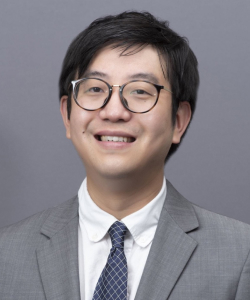
Dr. Xijun Shi, P.E., is an Assistant Professor of Civil Engineering at Texas State University (TXST). He earned his PhD and MS degrees in Civil Engineering from Texas A&M University (TAMU) and completed his undergraduate studies in the prestigious “Mao Yisheng” Honors Pavement Engineering Program at Southeast University, China. Following his doctoral studies, Dr. Shi served as an Assistant Research Scientist/Postdoctoral Fellow at the Center for Infrastructure Renewal (CIR) at TAMU and as a Postdoctoral Researcher at the Texas A&M Transportation Institute (TTI). Dr. Shi’s research focuses on high-performance and multifunctional infrastructure materials, with emphasis on cementitious materials and pavement engineering. Since joining TXST in Fall 2020, he has secured more than 25 internally and externally funded research projects as PI or Co-PI, totaling over $14 million, supported by agencies including NSF, NASA, USDOT, NCHRP, TxDOT, NMDOT, and the American Concrete Institute (ACI) Foundation. Notably, he is a Co-PI of TXST’s USDOT Tier-1 University Transportation Center on infrastructure durability. He has authored over 50 peer-reviewed journal publications. Dr. Shi is actively involved in professional service, serving as Secretary of ACI Committee 555 (Concrete with Recycled Materials), Chair of ACI 555-A, a voting member of ACI 221 (Aggregates), ACI 555, and ACI 565 (Lunar Concrete). He also serves on the editorial boards of several international journals. Dr. Shi is the inventor of Plient Concrete, a cost-effective fiber-reinforced cementitious material. He led a team that won the 2021 TXST New Ventures Competition and subsequently secured NSF I-Corps and PFI-TT funding. In 2022, he co-founded Circle Concrete Tech Inc., which has since received EPA and NSF SBIR Phase I awards. He is a recipient of the USDA E. Kika De La Garza Fellowship and an ACI Class of 2022 Emerging Leader.
SUMMARY OF INNOVATION OR COMMERCIALIZATION WORK:
A central goal of Dr. Xijun Shi’s research program is to bridge the gap between academic innovation and real-world implementation by translating advanced materials research into deployable, market-ready technologies. His work is driven by a strong commitment to addressing critical challenges in the concrete industry, including rising material costs, supply-chain constraints, and the need for waste reduction through the use of recycled resources.
During his time at Texas A&M University, Dr. Shi developed and patented a novel concrete product, Plient Concrete, which integrates recycled concrete aggregates and recycled steel fibers to produce a cost-effective, high-performance concrete material. This innovation demonstrated that recycled constituents can be strategically engineered to enhance mechanical performance while reducing reliance on virgin materials. Since joining Texas State University (TXST), Dr. Shi has further refined and validated this technology through laboratory testing, pilot-scale studies, and industry engagement. These efforts led to Plient Concrete being selected as one of three winners of the 2021 TXST New Ventures Competition, highlighting its strong technical merit and commercial potential.
Dr. Shi’s commercialization activities have been supported by multiple competitive federal programs, including an NSF I-Corps award ($50,000) that enabled systematic customer discovery and market validation, followed by an NSF Partnerships for Innovation (PFI) award ($250,000) to advance prototype development and commercialization planning. Plient Concrete has also been showcased at major innovation and outreach venues, including the SXSW TXST Innovation Labs (2023–2025) and the Texas A&M New Ventures program (2023), increasing visibility among industry stakeholders, investors, and policymakers.
To accelerate market adoption, Dr. Shi co-founded Circle Concrete Tech Inc (https://buildwithcircle.com/) in 2021, a startup dedicated to scaling innovative concrete technologies. Since 2024, the company has secured two competitive SBIR Phase I awards—one from the U.S. Environmental Protection Agency ($100,000) and one from the National Science Foundation ($305,000)—with TXST serving as a subcontractor on both projects, thereby reinforcing strong university–industry collaboration. Beyond Plient Concrete, Dr. Shi’s broader technology transfer portfolio includes a NASA M-STTR project on lunar concrete materials (2022) and a TXST-filed patent (March 2025) for a novel cement-free bioconcrete, underscoring the breadth and long-term impact of his innovation and commercialization efforts.
RELEVANT LINKS:
- Research group: https://xshi.wp.txstate.edu/
- Startup: https://buildwithcircle.com/
- Patents: https://patents.google.com/patent/US20230082445A1/en
Media coverage:
NSF SBIR Award: https://seedfund.nsf.gov/awardees/phase-1/details/?company=circle-concrete-tech-inc
EPA SBIR Award: https://www.epa.gov/newsreleases/epa-announces-300000-funding-three-small-businesses-texas-and-oklahoma-development
NSF PFI Award: https://www.nsf.gov/awardsearch/show-award/?AWD_ID=2314080
NSF I-Corps Award: https://www.nsf.gov/awardsearch/show-award/?AWD_ID=2136006
NASA M-STTR Award: https://www.nasa.gov/learning-resources/nasa-gives-a-boost-to-minority-serving-institution-innovators/
TAMU CIR Showcase Event: https://cir.tamu.edu/news/new-technology-spotlight-cir-welcomes-circle-concrete-tech-inc-to-present-plient-fiber-reinforcement/
The 3rd Annual TXST New Ventures Competition Winner: https://news.txst.edu/press-releases/2021/winners-of-third-annual-txst-new-ventures-competition-announced.html
Department of Physics
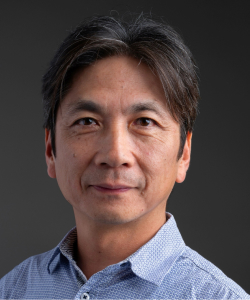
Dr. Yoichi Miyahara is an Associate Professor in the Department of Physics at Texas State University, where he leads a research group dedicated to advancing nanoscale measurement science through innovative scanning probe microscopy (SPM) technologies. His research focuses on developing highly sensitive, mechanically based spectroscopic methods for characterizing material properties at the nanometer scale. His team studies a wide variety of nanoscale systems—including quantum dots (QDs), nanoparticles, nanowires, two-dimensional (2D) materials, and next-generation energy materials—with an emphasis on unlocking their electronic and quantum behaviors.
A central innovation from Dr. Miyahara’s lab is the development of the Scanning Single-Electron Box Electrometer Microscope, a novel tool that enables charge detection and spectroscopy with unprecedented spatial precision. This instrument, supported by an NSF Major Research Instrumentation (MRI) grant, is designed to advance the study of materials for quantum science and technology, paving the way for next-generation quantum devices. Dr. Miyahara also received the prestigious NSF Faculty Early Career Development Program (CAREER) award for his project on the “Characterization of quantum dot qubits by scannable mechanical resonator,” which explores the fundamental physics and control of quantum states through nanoscale mechanical detection.
In addition to his research achievements, Dr. Miyahara has participated in the NSF Innovation Corps (I-Corps) program to assess the commercialization potential of his SPM technologies and has contributed to collaborative efforts under an NSF Center for Research Excellence in Science and Technology (CREST) grant. His work exemplifies the integration of scientific discovery, instrumentation innovation, and entrepreneurial vision that drives the advancement of quantum technology and materials research in Texas and beyond.
SUMMARY OF INNOVATION OR COMMERCIALIZATION WORK:
The Scanning Single-Electron Box (SSEB) Electrometer Microscopy is a groundbreaking innovation in nanoscale measurement technology that brings quantum-level sensitivity to the widely used atomic force microscope (AFM) platform. This new tool allows scientists and engineers to visualize extremely small electric charges and potentials—down to microvolt levels—with nanometer-scale precision. By combining the mechanical detection capabilities of AFM with the charge sensitivity of a single-electron device, the SSEB technique opens a new frontier for exploring materials and devices critical to quantum computation, energy storage, and next-generation electronics.
Traditional scanning single-electron transistor (SSET) probes have demonstrated exquisite charge sensitivity but remain impractical due to their complex three-terminal design, delicate structure, and reliance on detecting extremely small currents. The SSEB approach overcomes these barriers by offering a simpler, more rugged, and more accessible design. Instead of measuring current, the SSEB senses electrical forces generated by the tunneling of single electrons between a nanoscale metallic island and the probe tip. This force-based detection, performed with AFM, eliminates the need for complex electrical circuitry and significantly reduces fabrication difficulty and cost.
Fabricated using straightforward nanofabrication steps, the SSEB probe contains only a single tunnel junction—making it compatible with standard AFM probes and cryogenic setups. Successful experiments at 4 K have demonstrated clear single-electron tunneling signatures, visualized as equipotential contours on sample surfaces. These images confirm the technique’s ability to detect sub-elementary charges with nanometer resolution.
From an innovation standpoint, SSEB microscopy transforms the landscape of nanoscale electrical measurement. It offers quantum-level sensitivity in a form factor that is easily manufacturable, adaptable, and scalable. Researchers and instrument companies can readily integrate SSEB probes into existing AFM systems, accelerating breakthroughs in semiconductor characterization, 2D materials science, and quantum device development. Two provisional patents have been filed for the probe fabrication processes, underscoring its commercialization potential. By bridging precision measurement and practical usability, SSEB electrometer microscopy exemplifies technology translation from fundamental research to impactful innovation in quantum and nanoscale science.
RELEVANT LINKS:
Texas Woman's University TWU.EDU
Director and Professor, School of Education

Juan J. Araujo is Director and Professor in the School of Education within the College of Professional Education at Texas Woman’s University. He holds a Doctor of Philosophy in reading with a minor of anthropology from University of North Texas, a Master of Bilingual Education from Southern Methodist University and a Bachelor of Science in electrical engineering from New Jersey Institute of Technology. He is President for the Association of Literacy Educators and Researchers (ALER), an organization that seeks to improve literacy practices in college settings. Dr. Araujo has been a lead editor for books on teacher preparation, most recently focusing on responsible AI integration and its potential to support student success. He was co-editor/lead editor for the ALER yearbook from 2016-2020, and Co-editor with the LRI Journal from 2022-2026, and today a co-editor for Reading Research Quarterly, the premier peer reviewed international literacy journal.
SUMMARY OF INNOVATION OR COMMERCIALIZATION WORK:
Dr. Araujo led efforts to develop AI handbooks that focus on integrating theoretical foundations with real-world applications for both preservice and inservice teacher educators, and the often-overlooked repercussions of its use and deployment in school settings. The two volumes for which he serves as editor examine the evolution of AI technology, practical applications, and implementation across the multiple disciples within a school of education (i.e., early childhood education, bilingual education, literacy education, and teacher education). The book project was conceived to reimagine teacher preparation considering AI’s emergence. Together, with Dr. Sharla Snider, Professor, he submitted a book proposal which was accepted for production and publication 8 months later. In their call to potential authors (internal/external) he asked: What are promising practices, what are useful frameworks in the content areas, what does responsible AI integration look line, and what questions do we need to ask ourselves as educators as we prepare future teachers to teach the next generation of children in their care. Altogether, 10 TWU faculty made it through the peer review process to publication, and many of them continue to implement this work in their day to day teaching. The other chapters in the volumes were written by both national and international experts in their fields including business, engineering, technology, and secondary education.
RELEVANT LINKS:
Interim Associate Director of the School of the Sciences and Division Head of Computer Science

David Gardner, Ph.D., is the Interim Associate Director of the School of the Sciences and Division Head of Computer Science at Texas Woman’s University. As a 2025 TWU AI Fellow, Dr. Gardner functions as a strategic architect of emerging technology, bridging the gap between high-level administrative vision and the technical implementation of ""Universal Design."" With a background in Learning Technologies, his leadership is defined by a commitment to ensuring that digital innovation creates fair access and success for a diverse student body.
Dr. Gardner’s reach is uniquely interdisciplinary, orchestrating collaborations that merge Computer Science with Occupational Therapy (AI-driven VR rehabilitation), Chemistry (robotic laboratory automation), and the Humanities (embodied literary analysis installations). He is currently part of the team leading the university’s transition to a scalable AI infrastructure, evaluating hybrid solutions that range from AWS Bedrock ""playbooks"" to local, high-performance distributed clusters for secure model training.
A former President of the Emerging Learning Technologies division of AECT, Dr. Gardner’s work has garnered national visibility, including a recent case study with Anthology on scaling digital accessibility. On campus, he is a tireless champion for the Texas STEM pipeline; he founded the inaugural TWU Pioneer Robotics Invitational and leads the ""SHTEAM Punks"" initiative, which integrates narrative concepts with engineering through Destination Imagination and K-12 outreach. Whether he is architecting a new Professional Science Master’s in Cybersecurity or developing a six-module AI Literacy OER for faculty and staff, Dr. Gardner remains focused on a single mission: empowering the next generation of Texas graduates with the technical fluency and ethical framework required to lead in a technology-driven economy.
SUMMARY OF INNOVATION OR COMMERCIALIZATION WORK:
"Description of Innovations
- AI Literacy & Curricular Pathways: Technical developer and co-author of a six-module asynchronous AI Literacy OER for university-wide fluency and designed the Applied AI in Data Science and Cybersecurity certificates, merging traditional technical workforce courses with Generative AI skills.
- Secure Pedagogical Infrastructure: Engineered ""replicable sandboxes"" for safe classroom CS and AI experimentation. Anticipating industry Model Context Protocol (MCP) standards, he developed a custom Canvas AI plugin, providing a monitorable, multi-backend interface for student-AI interaction without compromising pedagogical rigor and allowing for fiscally scalable solutions.
- Interdisciplinary Robotics & Automation: Partnered with Chemistry to architect robotic systems for automated laboratory experiments. He founded the TWU Pioneer Robotics Invitational and the SHTEAM Punks outreach initiative to bridge technical engineering with narrative arts for K-12 engagement.
- Clinical & Assistive Technology: Collaborated with Occupational Therapy to develop AI-integrated VR simulations that adapt difficulty for cognitive rehabilitation. His project portfolio includes wearable technology for disability awareness and mentoring student research in 3-D printed pediatric prosthetics.
- Scalable Compute Infrastructure: Spearheaded the funding for a multi-GPU interdisciplinary research server and is currently co-architecting with other stakeholders a hybrid infrastructure,leveragingAWS Bedrock playbooks alongside local distributed clusters, to democratize high-level modeling for all academic divisions.
- Real-World IoT Solutions: Directed ""applied-code"" projects where students build IoT micro-climate monitoring devices, transforming introductory programming into a pipeline for potential commercial-grade data monitoring products."
The University of Texas at Arlington UTA.EDU
Professor, Department of Biology
Dr. Todd Castoe is a nationally recognized leader in genomics and evolutionary biology with more than 20 years of experience advancing genome science. He has authored over 155 peer-reviewed publications, with more than 13,500 citations and an h-index of 56, reflecting the sustained impact of his work. His research program has attracted over $8 million in external funding from major agencies including the NIH and NSF, as well as industry sponsors. He currently serves as Associate Dean for Research and Development in the College of Science at UTA and holds the Dye Endowed Professorship for Innovative Biosciences.
The Castoe Laboratory integrates genome biology, evolutionary genomics, and advanced computational approaches to address fundamental and applied questions in biology. Using vertebrates particularly snakes with their unique genomic and phenotypic traits as well as invertebrate parasites such as schistosomes, his team investigates how gene regulatory networks evolve, how genome structure shapes phenotypic diversity, and how evolutionary processes drive adaptation and speciation. His work also examines parasite transmission and drug resistance, with implications for human health.
Research in the laboratory combines large-scale “omics” data generation, single-cell analyses, and development of novel computational and statistical methods. These integrative approaches not only advance understanding of genome evolution and function but also produce broadly applicable analytical tools and theoretical frameworks that extend beyond his immediate research systems.
SUMMARY OF INNOVATION OR COMMERCIALIZATION WORK:
Dr. Todd Castoe is a leader in genomics innovation whose work integrates evolutionary biology, functional genomics, and advanced computational science to generate impactful scientific and translational advances. Over more than two decades, he has built a highly influential research program that advances fundamental understanding of genome biology while also developing analytical tools, datasets, and methodological frameworks with wide applicability across biomedical and life sciences research.
Dr. Castoe’s laboratory specializes in large-scale omics research, including population genomics, functional genomics, and single-cell analyses. A distinguishing feature of his work is the development and refinement of novel computational and statistical approaches for interpreting complex genomic data. These innovations enhance the ability of researchers to uncover gene regulatory networks, understand genome structure and function, and identify mechanisms underlying phenotypic variation, adaptation, and speciation. The analytical platforms and theoretical frameworks generated in his lab are broadly applicable across biological disciplines.
Using model systems such as snakes, which possess unique genomic architectures, and parasitic organisms such as schistosomes, Dr. Castoe’s research addresses both fundamental and applied challenges. His work on parasite transmission dynamics and evolutionary responses to control efforts provides insight into mechanisms of drug resistance and disease ecology, with implications for global health. Collaborative projects in infectious disease evolution, antibiotic optimization, cell signaling, and epigenomics further demonstrate the translational reach of his genomics expertise.
With more than $8 million in competitive funding from agencies including NIH and NSF, Dr. Castoe has demonstrated sustained success in translating innovative genomic concepts into funded research programs. In addition, his leadership as Associate Dean for Research and Development strengthens institutional research capacity, supports interdisciplinary collaboration, and mentors the next generation of scientists.
Through methodological innovation, large-scale data integration, and cross-disciplinary collaboration, Dr. Castoe’s work continues to drive progress in genome science and its broader applications.
RELEVANT LINKS:
Professor, Department of Kinesiology
Dr. Michael D. Nelson is a Professor in the Department of Kinesiology at The University of Texas at Arlington, where he also serves as Director of the Clinical Imaging Research Center and Director of the Center for Healthy Living and Longevity. He is the Principal Investigator of the Arlington Study of Healthy Aging, a large community-based cohort study investigating the mechanisms of functional decline with age. In addition to his primary appointments, Dr. Nelson holds an Adjunct appointment in the Department of Bioengineering at UT Arlington, serves as a Visiting Faculty Scientist at Cedars-Sinai Medical Center in Los Angeles, and is an Adjunct Professor in the Department of Internal Medicine (Division of Cardiology) at UT Southwestern Medical Center.
Dr. Nelson’s research integrates human physiology, biomedical imaging, and translational science to advance understanding of cardiovascular and metabolic health across the lifespan. His work focuses on cardiac mechanics and ventricular function, the cardio-metabolic syndrome, and vascular regulation including neurovascular coupling. He has developed innovative imaging techniques to noninvasively assess cardiac and vascular function, contributing critical insight into how aging and disease impact cardiovascular performance.
With more than 150 peer-reviewed publications in leading cardiology, imaging, and gerontology journals, Dr. Nelson has established himself as a leading voice in integrative physiology and biomedical research. He has secured over $60 million in extramural funding as Principal Investigator or Co-Investigator, primarily from the National Institutes of Health and the American Heart Association, supporting both basic and translational research programs.
Through his leadership of major research centers, mentorship of trainees, and innovative research programs, Dr. Nelson continues to drive advances in cardiovascular health, aging, and biomedical imaging. His work bridges foundational science with clinical application, improving understanding of functional decline with age and informing strategies to enhance health and longevity in diverse populations.
SUMMARY OF INNOVATION OR COMMERCIALIZATION WORK:
Dr. Michael D. Nelson directs an internationally recognized research program that integrates state-of-the-art imaging technologies, including magnetic resonance imaging and spectroscopy (MRI/MRS), ultrasound, and optical imaging, to study cardiovascular health, metabolism, and disease. His work focuses on developing innovative, noninvasive tools that provide critical insights into cardiac physiology, metabolic function, and microvascular regulation, enabling both basic scientific discovery and translational application.
Current research projects under Dr. Nelson’s leadership target three key areas. First, his studies of cardiac physiology emphasize diastolic function, cardiac mechanics, and ventricular performance, with a goal of improving early detection and characterization of heart disease. Second, his work on cardio-metabolic disease examines ectopic fat deposition, metabolic dysfunction, and their impact on cardiovascular outcomes, leveraging imaging to quantify and monitor disease progression. Third, his investigations into microvascular function address coronary microvascular ischemia and skeletal muscle blood flow regulation during exercise, offering new perspectives on cardiovascular resilience and functional capacity.
Dr. Nelson’s program is highly translational. He has pioneered patent-pending lower body negative-pressure pants that simulate upright gravitational effects during exercise MRI, providing more accurate cardiac stress testing and potential for clinical adoption. Additionally, his team has developed noninvasive MRI-based methods to measure venous oxygenation and cardiovascular efficiency without the need for catheterization, enhancing safety and accessibility of advanced diagnostic techniques.
Beyond technological innovation, Dr. Nelson’s leadership of the Arlington Study of Healthy Aging (ASHA), a large, multiethnic community cohort study, exemplifies his commitment to bridging fundamental science with real-world impact. By integrating imaging, physiology, and longitudinal health data, ASHA generates insights that can inform personalized interventions and preventive strategies for age-related functional decline.
Through the creation of novel imaging technologies, development of translational diagnostic tools, and leadership of large-scale cohort studies, Dr. Nelson’s work exemplifies how innovative biomedical research can advance clinical practice, improve patient outcomes, and contribute to the commercialization of next-generation healthcare technologies. His efforts continue to push the boundaries of cardiovascular science while laying the groundwork for practical, scalable solutions in precision medicine.
RELEVANT LINKS:
Associate Professor, College of Nursing and Health Innovation

Dr. Varanasi received his doctorate from the University Of Florida Department Of Chemical Engineering in 2004 and in partnership with the Department of Energy Oak Ridge National Laboratory. His graduate work focused on developing new solid oxide electrolytes for fuel cell technology used in green energy power supply for aerospace vehicles and land-based power generation. He then launched his career in biomaterials and bioengineering as a Postdoctoral Scholar at the University of California at San Francisco and Lawrence Berkeley National Laboratory. There, he started his work on developing bioactive materials for use in bone healing. Dr. Varanasi was then awarded an NIH K25 career development award in 2007 to continue this work as a faculty member at UCSF and then later moved to UT Arlington in 2018 and has continued his work. Dr. Varanasi has published more than 35 peer-reviewed articles, book chapters, patents, and funded on various projects from the Department of Energy, Canadian Nuclear Energy Agency, NIH, and industry. He is currently funded on an NIH grant to explore the adoption of the materials developed in his current research into potential clinical translation. Dr. Varanasi has also collaborated with Dr. Pranesh Aswath and Dr. Marco Brotto on several projects to further expand his biomaterials research for use in musculoskeletal and intracranial-related disorders and traumatic injuries.
SUMMARY OF INNOVATION OR COMMERCIALIZATION WORK:
Venu Varanasi’s innovation and commercialization efforts focus on advancing translational research in bone regeneration through the development of novel nanoparticle-based technologies and next-generation biomaterials. His work is centered on designing and evaluating biomaterials and nanoscale delivery systems that enhance bone healing, improve tissue integration, and support regenerative outcomes in both orthopedic and dental applications.
A key aspect of Dr. Varanasi’s research is the development of nanoparticle platforms for targeted delivery and controlled release of therapeutic agents. By precisely modulating the local microenvironment at injury sites, these technologies aim to improve treatment efficacy, accelerate recovery, and enhance long-term patient outcomes. His laboratory has also pioneered the integration of intrinsic antioxidant properties into biomaterials, leveraging redox mechanisms to actively reduce reactive oxygen species (ROS). This approach addresses a major barrier to tissue regeneration, shifting therapeutic strategies from passive structural replacement toward biologically responsive designs that actively promote healing.
From a commercialization perspective, Dr. Varanasi works to translate laboratory discoveries into practical applications. His efforts include intellectual property development, preclinical validation studies, and the establishment of strategic partnerships to facilitate the adoption of innovative regenerative therapies. By bridging fundamental research with translational and market-focused strategies, he ensures that his scientific discoveries are positioned for clinical impact and commercial viability.
Dr. Varanasi’s work exemplifies the integration of cutting-edge science, engineering, and translational strategy. By developing technologies that address critical unmet needs in regenerative medicine, his research has the potential to transform patient care while contributing broadly to the advancement of biomaterials innovation and the commercialization of next-generation therapeutic platforms.
RELEVANT LINKS:
The University of Texas at Austin UTEXAS.EDU
Associate Professor of Mechanical Engineering and Interim Assistant Vice President for Research for Core Facilities, Department of Mechanical Engineering
Dr. Michael A. Cullinan is an Associate Professor of Mechanical Engineering and Interim Assistant Vice President for Research for Core Facilities at The University of Texas at Austin, where he also directs the Semiconductor Science and Engineering Program and the Nanoscale Design and Manufacturing Laboratory. His work sits at the intersection of precision engineering, micro/nanoscale additive manufacturing, and advanced semiconductor packaging, with a strong record of translating foundational research into commercially viable technologies.
Dr. Cullinan has secured over $13 million in individual research funding within more than $900 million in collaborative awards, including major programs funded by DARPA, NSF, NASA, Sandia National Laboratories, and industry partners across the semiconductor and advanced manufacturing sectors. His portfolio includes 14 patent filings, many of which have been licensed, including graphene based MEMS sensors and metrology systems for roll to roll manufacturing. He is the Founder and President of Texas Microsintering, LLC, and Co Founder and Scientific Advisor for Supra Elemental Recovery, Inc., demonstrating a long-standing commitment to commercialization and technology deployment.
His innovations in high throughput nanomanufacturing techniques and next generation metrology systems such as microscale selective laser sintering (µ SLS), holographic metasurface nanolithography, and roll-to-roll atomic force microscopy have been adopted by leading semiconductor and electronics companies. Dr. Cullinan has also led large-scale, multi institutional efforts to accelerate U.S. semiconductor manufacturing capabilities, including DARPA-funded research on next generation microelectronics fabrication and advanced 3D nanostructure printing.
Recognized for both research excellence and translational impact, Dr. Cullinan has received the ASME Kornel F. Ehmann Manufacturing Medal, the ASPE Early Career Award, and multiple teaching and leadership awards. His work continues to advance the commercialization pipeline for emerging semiconductor, additive manufacturing, and nanotechnology innovations, helping position U.S. industry at the forefront of micro and nanoscale manufacturing.
SUMMARY OF INNOVATION OR COMMERCIALIZATION WORK:
Dr. Michael Cullinan’s innovation and commercialization work centers on moving advanced manufacturing ideas from the lab into practical use through startups, licensing, and externally validated programs. He is the Founder and President of Texas Microsintering, LLC and a Co‑Founder and Scientific Advisor (Engineering) of Supra Elemental Recovery Inc. These tow startups focus on translating research into products and platforms in two high-impact areas: semiconductor packaging and critical-minerals recovery. Texas Microsintering and Supra have each raised approximately ~$3M in pre-seed funding within the past year to commercialize technologies that have come out of Dr. Cullinan’s lab at UT-Austin.
At Texas Microsintering, Dr. Cullinan is commercializing new manufacturing approaches intended to improve how advanced electronics are packaged and built. One flagship effort is Holographic Metasurface Nano‑Lithography (HMNL), a method designed to create complex, multi-material structures more quickly and with fewer steps than conventional manufacturing, enabling faster iteration and reducing waste. This work has been funded through a $14.5M DARPA award supporting a broad academic–industry team and an NSF SBIR award aimed at commercializing microscale manufacturing of semiconductor interconnect structures.
At Supra Elemental Recovery, Dr. Cullinan supports commercialization of a modular recovery platform based on engineered, reusable cartridges that selectively capture valuable ions from industrial streams. The platform combines ion-selective chemistry with porous polymer structures and 3D-printed cartridge architectures intended to improve flow and reduce fouling. Supra has demonstrated proof-of-concept performance including 100% cobalt ion uptake and large improvements in selectivity and throughput compared to incumbent approaches, while using benign release steps such as water rinses. The technology features flexible deployment, including drop-in cartridges and compact, modular systems appropriate for pilots with partner facilities that make this technology cost effective and commercially viable.
Across these efforts, Dr. Cullinan has demonstrated sustained technology transfer with lists 14 patent filings and multiple inventions licensed to startups in sensing, semiconductors, and metrology, including Deep Breath Inc., Silicon Metamaterials, Inc., and ICSPI Inc. Together, these outcomes reflect measurable progress in translating research into real-world impact through venture formation, licensing, and major external validation.
RELEVANT LINKS:
Research Group Website: https://ndml.me.utexas.edu/
UT News: 3D Printed Chip Packages Could Supercharge Semiconductor Manufacturing: https://news.utexas.edu/2025/12/03/3d-printed-chip-packages-could-supercharge-semiconductor-manufacturing/
Tech Briefs interview: Revolutionizing the Production of Semiconductor Chips: https://www.techbriefs.com/component/content/article/54361-revolutionizing-the-production-of-semiconductor-chips
SBIR.gov award record: NSF SBIR Phase I (Texas Microsintering): https://www.sbir.gov/awards/215139
List of Patents
Ekoi, E., Cullinan, M., and Kovar, D. ""Systems and Methods for Producing Masks with Microscale Features in Patterned Films"" U.S. Provisional Patent Application No. 63/880,615, filed September 12, 2025
Meade, R., and Cullinan, M. “Co-Packaged Optics Photonic Connector,” U.S. Provisional Application No. 63/773,750, filed on March 18, 2025
Sessler, J., Page, Z. Cullinan, M., Mason, K., amd Huang, D. “3D Printed Porous Supramolecular Sorbents.” U.S. Provisional Application No. 63/531,908, filed on August 10, 2024 (Licensed to Supra Elemental Recovery)
Sainaghi, P., Gray, A., Lou, C., Cullinan, M. and Hopkins, J. “Mechanical Neural Network Driven by Flexure-Based, Meso-Scale, Bi-Directional Thermal Actuators.” U.S. Provisional Application No. 63/678,886, filed on August 2, 2024
Cullinan, M., Chang, C., Page, Z. and Menon, R. “Simultaneous Volumetric 3D Printing of Multi-Material Conductive and Insulating Nanostructures using Holographic Metasurface Nanolithography,” U.S. Patent Application No. 63/658,163, filed on June 10, 2024. (Licensed to Texas Microsintering)
Saha, S., Panas, R., Cullinan, M., and Ladner, I., “Microscale sensors for direct metrology of additively manufactured features.” Patent Number 10,451,539, Award Date: October 22, 2019.
Cullinan, M., Cho, J., Cayll, D., and Ladner, I., “Graphene Microelectromechanical System (MEMS) Resonant Gas Sensor.” Patent Number: 11228294, Award Date: January 18, 2022. (Licensed to Deep Breath Inc.)
Cullinan, M., and Connolly, L., “Coupled Multiscale Positioning of Arrays of Parallel, Independently Actuated and Simultaneously Driven Modular AFM Probes for Nanoscale Measurement of Flexible, Large Area, and Roll-to-Roll Processes.” Patent Number: 10,649,003, Award Date: May 12, 2020. (Licensed to ICSPI Inc.)
Cullinan, M., Roy, N., Yuksel, A., and Foong, C.S. “Micro-Selective Sintering Laser Systems and Methods Thereof,” Patent Number: 10,722,947, Award Date: July 22, 2020 (Licensed to Texas Microsintering)
Cullinan, M., Yuksel, A., and Roy, N., “Modeling of Nanoparticle Agglomeration and Powder Bed Formation in Microscale Selective Laser Sintering Systems,” Application Number: 15/475,807, Filing Date: March 31, 2017 (Licensed to Texas Microsintering)
Sreenivasan, S., Ajay, P., Sayal, A., Mcdermott, M., Singhal, S., Abed, O., Dunn, L., Goyal, V., and Cullinan, M., “Heterogeneous Integration of Components onto Compact Devices using Moiré Based Metrology and Vacuum Based Pick-and-Place,” Patent Number: 11,469,131, Award Date: October 11, 2022. (Licensed to: Silicon Metamaterials, Inc.)
Cullinan, M. and Duenner, A., “Systems and Methods for Passive Alignment of Semiconductor Wafers,” Application Number: US16/60236, Filing Date: November 3, 2016 (Licensed to ICSPI Inc.)
Cullinan, M. and Yao, T.F., “A Plurality of Sensing Probes,” Application Number: US16/60235, Filing Date: November 3, 2016 (Licensed to ICSPI Inc.)
Cullinan, M. and Yao, T.F, Duenner, A., “Metrology Devices for Rapid Specimen Setup,” Patent Number: 10,712,364, Award Date: July 14, 2020 (Licensed to ICSPI Inc.)
Professor, Department of Physics, Oden Institute

Alex is a co-founder and CEO of La Luce Cristallina. He is a distinguished figure in the field of materials physics, serving as a Professor at the University of Texas at Austin. With a prolific career marked by notable achievements, Alex boasts an impressive portfolio of 11 U.S. patents and many patent applications, showcasing his innovative contributions to the field. He has published almost 300 research papers, several books, and is a Fellow of the American Physical Society, Materials Research Society, and a Senior Member of the IEEE. Alex received his Ph.D. in Physics from Arizona State University. Prior to joining the University of Texas in 2005, he worked in Motorola’s R&D organizations. His expertise extends globally, positioning him as an international authority and thought leader in the crucial domain of semiconductor manufacturing materials.
SUMMARY OF INNOVATION OR COMMERCIALIZATION WORK:
Alex Demkov has published hundreds of research papers on barium titanate and silicon photonics. He holds 11 U.S. patents and has also written several books. He is a Fellow of the American Physical Society Materials Research Society, and a Senior Member of the IEEE. Alex is the co-founder and CEO of La Luce Cristallina, a manufacturer of Si-integrated high-performance materials for silicon photonics, focused on barium titanate (BaTiO₃) materials. The company recently launched its state-of-the-art fabrication facility in Austin, TX, and announced the availability of its 200-mm barium titanate wafer, supporting data center and telecommunications demands. The company’s 200-mm wafer offers better speed, a smaller size, and lower power consumption than silicon photonics modulators while addressing the integration challenges of alternative materials.
RELEVANT LINKS:
"Articles, Publications and Presentations
a. New material on the block: Barium titanate for silicon photonics - https://www.laserfocusworld.com/optics/article/55338359/new-material-on-the-block-barium-titanate-for-silicon-photonics
b. The wonderful world of silicon photonics materials: How to choose - https://www.lightwaveonline.com/home/article/55335548/the-wonderful-world-of-silicon-photonics-materials-how-to-choose
c. Ultra-compact electro-optical modulators based on monolithic BaTiO3 on silicon - https://ieeexplore.ieee.org/document/10984580
d. Ferroelectrics for emergent silicon-integrated optical computing - https://www.spiedigitallibrary.org/conference-proceedings-of-spie/13372/3048430/Ferroelectrics-for-emergent-silicon-integrated-optical-computing/10.1117/12.3048430.short
e. Ferroelectric BaTiO3 for Electro-Optic Modulators in Si Photonics - https://ieeexplore.ieee.org/document/10538359
f. Si-Integrated BaTiO3 for Electro-Optic Applications: Crystalline and Polarization Orientation Control - https://pubs.acs.org/doi/10.1021/acsaelm.3c00747
g. Ferroelectric Materials for EO Modulation, EPIC Photonics presentation - https://www.youtube.com/watch?v=61YQhmSiWH8
h. La Luce Cristallina launches 200-mm BaTiO₃ wafer, Silicon Semiconductor Magazine - https://siliconsemiconductor.net/video/733/La_Luce_Cristallina_launches_200-mm_BaTiO%e2%82%83_wafer
i. CEO Interview with SemiWiki - https://semiwiki.com/ceo-interviews/362005-ceo-interview-with-alex-demkov-of-la-luce-cristallin/
j. Featured Expert: La Luce Cristallina, Semiconductor Industry Monthly - https://semiconductorindustrymonthly.com/featured-expert-la-luce-cristallina/
k. La Luce Cristallina Launches CMOS-Compatible Oxide Pseudo-Substrate, Enhancing Scalability for Silicon Photonics and Advanced Electronics. - https://www.prnewswire.com/news-releases/la-luce-cristallina-launches-cmos-compatible-oxide-pseudo-substrate-enhancing-scalability-for-silicon-photonics-and-advanced-electronics-302667819.html
ki. Electronics World. - https://www.electronicsworld.co.uk/la-luce-cristallina-launches-cmos-compatible-oxide-pseudo-substrate-for-advanced-electronics-and-photonics/40623/
kii. Quantum Zeitgeist - https://quantumzeitgeist.com/la-luce-cristallina-oxide-substrate-oxide-substrate/
kiii. Semiconductor Today - https://www.semiconductor-today.com/news_items/2026/jan/la-luce-cristallina-280126.shtml
kiv. PIC Magazine - https://picmagazine.net/article/123335/La_Luce_Cristallina_launches_CMOS-compatible_oxide_pseudo-substrate_for_scalable_silicon_integration?la%20luce
kv. Semiconductor Digest - https://www.semiconductor-digest.com/la-luce-cristallina-launches-cmos-compatible-oxide-pseudo-substrate-enhancing-scalability-for-silicon-photonics-and-advanced-electronics/
kvi. SemiConAsia - https://semiconleadersasia.com/news/63/658/la-luce-cristallina-launches-cmos-compatible-oxide-pseudo-substrate.html
kvii. Photonics Online - https://www.photonicsonline.com/doc/la-luce-cristallina-launches-cmos-compatible-oxide-pseudo-substrate-enhancing-scalability-for-silicon-photonics-0001
kviii. Semiconductor Engineering - https://semiengineering.com/chip-industry-week-in-review-123/
kix. Photonics Spectra - https://www.photonics.com/Products/CMOS-Compatible-Oxide-Pseudo-Substrate/p5/pr71598
l. ""What It Would Take: The Rise of Barium Titanate"" to be released in PiC magazine shortly.
Other
La Luce Cristallina Company Website - https://lalucecristallina.com/
Demkov Research Group UT Austin Website - https://sites.utexas.edu/aadg/
Alex Demkov LinkedIn - https://www.linkedin.com/in/alex-demkov-17bb376/
La Luce Cristallina LinkedIn - https://www.linkedin.com/company/104778728/admin/inbox/thread/2-M2M2ODhmYTEtNjIyMC00ZDEzLWE5ZjctZjRiYTdjZDg0NDQ5XzAxMA==/
Professor, Department of Aerospace Engineering and Engineering Mechanics

Luis Sentis is a robotics pioneer dedicated to creating machines that work naturally and safely alongside people. Currently a Professor at the University of Texas at Austin, he leads the Human Centered Robotics Lab, where he bridges the gap between control systems, AI and physical hardware. His career is a unique blend of rigorous academic research and high-impact commercial ventures, focused on making robots a helpful, ubiquitous presence in everyday life.
Luis co-founded Apptronik, a company that has become a global leader in humanoid robotics. His foundational work in Whole-Body Control and liquid-cooled actuators paved the way for humanoids to perform complex tasks with human-like safety and grace. This innovation was a key factor in helping secure a landmark $1 billion investment led by Google DeepMind, signaling a massive shift in how the world views general-purpose robots. His patents and control system software are now used by robotics builders across the globe, influencing the design and architecture of the next generation of humanoid machines.
Building on this success, Luis founded AIVE AI Systems. As CEO, he has raised $3 million in seed funding to commercialize advanced situational awareness software for Unmanned Aerial Systems (UAS). AIVE’s technology helps drones understand and navigate complex environments, bringing a new level of intelligence and autonomy to the skies. Whether he is developing geolocation software or refining robotic balance, his focus remains on turning visionary ideas into practical tools.
Luis is a frequent participant in the exclusive MARS conference, where he has engaged in high-level discussions with the industry’s most prominent leaders to help shape the future of robotics. He is a passionate advocate for the Austin tech ecosystem and believes that the future of robotics isn't just about the machines themselves, but about how they can improve human well-being. When he isn't in the lab or the boardroom, he remains a lifelong student of emerging technology, always looking for the next way to solve real-world problems through innovation.
SUMMARY OF INNOVATION OR COMMERCIALIZATION WORK:
Luis' innovation work focuses on a difficult challenge in modern engineering: giving robots the physical intelligence to interact safely and effectively with the human world. This journey began with the development of Whole-Body Control (WBC), a framework that allows a humanoid robot to coordinate its entire body to maintain balance and perform tasks simultaneously. This shifted the industry away from ""stiff"" robotic movements toward more fluid, human-like behavior.
To bring this theory to the market, he co-founded Apptronik. One of the most significant breakthroughs was the creation of liquid-cooled actuators, for which Apptronik holds several patents. High-performance robots often struggle with overheating during intense tasks; our cooling systems solved this, allowing for continuous, high-torque operation in demanding environments. These advancements were instrumental in the commercialization of humanoid robots and helped lead to a historic $1 billion investment from Google DeepMind. By commercializing these technologies, we proved that humanoid robots are not just laboratory experiments but scalable industrial solutions. Today, Dr. Sentis' control methodologies serve as a blueprint for humanoid builders worldwide, establishing a standard for how these machines move and interact.
Dr. Sentis' current work at AIVE AI Systems focuses on the ""mind"" of the machine. They are commercializing situational analysis software for Unmanned Aerial Systems (UAS). By integrating work in geolocation and mission planning, AIVE AI Systems has developed software that allows drones to perceive and respond to their environment with unprecedented precision. They recently secured $3 million in funding to scale this technology, focusing on making autonomous systems more reliable and aware of their surroundings.
Across both Apptronik and AIVE, Dr. Sentis' approach remains the same: identify a fundamental physical limitation—whether it’s thermal management in actuators or environmental awareness in drones—and solve it with elegant software and hardware integration. His goal is to continue bridging the gap between academic discovery and commercial deployment, ensuring that the next wave of AI innovation has a robust, safe, and commercially viable physical presence in our world.
RELEVANT LINKS:
The University of Texas at Dallas UTDALLAS.EDU
Professor
Department of Psychology

Chandramallika Basak, PhD, is a cognitive neuroscientist and health‑tech innovator at UT Dallas whose work focuses on improving brain health across the lifespan. She is a Professor in the School of Behavioral and Brain Sciences and leads research on attentional control, working memory, and cognitive resilience in aging and at‑risk populations.
Dr. Basak has authored 40+ peer‑reviewed publications, led more than a dozen sponsored research projects funded by NIH, DoD, and foundations, and served as PI on multi‑site clinical trials on cognitive training and brain health. Her research combines rigorous neuroscience with applied game design and data‑driven personalization.
She is also a startup founder translating cognitive science into scalable digital health solutions, notably through OptiMIND and Neuroflight. Her work has been recognized through competitive commercialization awards and regional innovation coverage, positioning her as a leader at the interface of neuroscience, digital therapeutics, and aging innovation.
SUMMARY OF INNOVATION OR COMMERCIALIZATION WORK:
Dr. Basak’s commercialization work centers on transforming evidence‑based cognitive neuroscience into accessible digital interventions that address major public health challenges, including cognitive decline, dementia risk, and attentional disorders.
She is the founder of OptiMIND, a brain‑training platform rooted in her laboratory’s research on working memory and attentional control. OptiMIND won the Research Innovation Award at UT Dallas’ Big Idea Competition, receiving $40,000 to support commercialization. The platform uses adaptive cognitive games designed to enhance brain resilience across the lifespan, with particular relevance to aging populations in Texas.
Building on this foundation, Dr. Basak founded Neuroflight, a health‑technology company focused on non‑invasive, game‑based cognitive interventions and digital therapeutics. Neuroflight integrates neuroscience, data analytics, and scalable software delivery to support brain health in older adults and clinical populations, aligning with growing demand for preventive cognitive care.
Together, these ventures translate decades of NIH‑funded research into practical tools with potential for wide deployment through healthcare systems, senior living communities, and consumer wellness platforms. Their relevance to Texas is significant: the state faces a rapidly aging population and rising healthcare costs, making scalable cognitive health solutions both an economic and societal priority.
Dr. Basak’s work exemplifies how behavioral science innovation can generate commercial value while addressing urgent demographic and healthcare needs.
RELEVANT LINKS:
UT Dallas Profile: https://profiles.utdallas.edu/cbasak
OptiMIND coverage (Dallas Innovates): https://dallasinnovates.com/the-last-word-chandramallika-basak-of-optimind-on-winning-her-award-at-utds-big-idea-competition/
Neuroflight: https://www.neuroflight.ai/chandramallika-basa
Margaret Fonde Jonsson Professor, and Director, Texas Biomedical Device Center
Department of Neuroscience

Michael P. Kilgard, PhD, is an internationally recognized neuroscientist and translational innovator whose work has reshaped neurorehabilitation through targeted neural plasticity. He is the Margaret Fonde Jonsson Professor of Neuroscience at UT Dallas and serves as Executive Director and Chief Science Officer of the Texas Biomedical Device Center (TxBDC), a leading hub for biomedical device commercialization in Texas.
Dr. Kilgard’s research focuses on understanding and directing synaptic plasticity to treat neurological and psychiatric disorders. He is best known for pioneering Targeted Plasticity Therapy (TPT), which pairs precisely timed vagus nerve stimulation with rehabilitation to drive functional recovery. This work has resulted in more than 130 peer‑reviewed publications in top journals including Nature, Science, and Neuron, as well as 25+ U.S. patents.
Under his leadership, TxBDC has become a national model for translating neuroscience discoveries into FDA‑cleared therapies and venture‑backed companies. Dr. Kilgard’s work has attracted sustained federal and foundation funding, including support from NIH, DARPA, and private foundations, and has directly contributed to new standards of care for stroke and neurological injury recovery.
SUMMARY OF INNOVATION OR COMMERCIALIZATION WORK:
Dr. Kilgard’s innovation impact is distinguished by successful, real‑world translation of neuroscience into FDA‑approved therapies and Texas‑based companies. Through the Texas Biomedical Device Center, he has created an integrated commercialization pipeline that combines academic discovery, preclinical validation, clinical trials, and venture formation.
His laboratory’s breakthrough in vagus nerve stimulation (VNS)‑paired rehabilitation led to the first neurotechnology proven to significantly improve motor recovery after chronic stroke. Following multicenter clinical trials involving more than 140 patients across the U.S. and U.K., this approach received U.S. FDA approval, representing a landmark commercialization success for a Texas‑originated neurotechnology.
Dr. Kilgard’s work has catalyzed multiple Texas‑based biomedical startups and commercialization efforts affiliated with TxBDC, including:
- MicroTransponder – developer of the FDA‑approved Vivistim® system for stroke rehabilitation;
- XNerve – advancing neuromodulation technologies for nerve repair and recovery;
- NeuWire Medical – developing implantable neural interface technologies for precision therapies.
Collectively, these efforts have resulted in tens of millions of dollars in follow‑on funding, manufacturing partnerships, and new high‑skilled jobs in North Texas. Beyond economic impact, Dr. Kilgard’s innovations address major public health challenges relevant to Texas, including stroke, spinal cord injury, PTSD, and age‑related neurological decline.
RELEVANT LINKS:
UT Dallas Profile: https://profiles.utdallas.edu/michael.kilgard
Texas Biomedical Device Center: https://txbdc.utdallas.edu/about/leadership/
MicroTransponder (FDA‑approved Vivistim®): https://microtransponder.com
Media coverage (TxBDC impact): https://richardsonlifemagazine.com/healing-the-future/
Associate Professor and Director, Center for Engineering Innovation
Department of Materials Science & Engineering and Department of Mechanical Engineering
Walter E. Voit, PhD, is a professor‑entrepreneur at UT Dallas whose career bridges advanced polymer science, bioelectronics, and large‑scale commercialization. He is an Associate Professor in the Erik Jonsson School of Engineering and Computer Science and Director of the Center for Engineering Innovation, where he leads translational research in shape‑memory polymers, flexible electronics, and advanced manufacturing.
Dr. Voit is a prolific innovator and company founder, having launched more than a dozen technology ventures originating from university research. He is widely recognized for advancing programmable polymer systems used in medical devices, neural interfaces, and additive manufacturing. His scholarly output includes 100+ publications and patents, alongside sustained funding from NIH, NSF, DARPA, FDA, and industry partners.
Among his most notable successes, Dr. Voit founded Adaptive3D, which was acquired by Desktop Metal (NYSE: DM) in 2021, marking one of the most visible advanced‑materials exits in Texas. He continues to build venture‑scale companies that keep R&D, manufacturing, and workforce development rooted in the Texas innovation ecosystem.
SUMMARY OF INNOVATION OR COMMERCIALIZATION WORK:
Dr. Voit’s innovation portfolio represents one of the deepest and most diverse commercialization pipelines emerging from UT Dallas. His work centers on translating advanced polymer chemistries into manufacturable, IP‑protected platforms that address unmet needs in healthcare and advanced manufacturing.
Through Qualia, Inc. and its affiliated companies, Dr. Voit has advanced multiple commercial products:
- Qualia OTO – developing next‑generation soft and conformable materials for cochlear implants;
- Backstop Neural – focused on safety‑critical neural interface protection technologies;
- Adaptive3D – a pioneer in elastomeric materials for additive manufacturing, acquired by Desktop Metal and integrated into global manufacturing supply chains.
These ventures have collectively attracted venture capital, strategic corporate investment, and acquisition outcomes, validating UT Dallas‑originated IP in competitive global markets.
Importantly for Texas, Dr. Voit’s companies emphasize local R&D, prototyping, and workforce training, contributing to North Texas’s emergence as a hub for advanced materials and medical device innovation. His technologies address high‑growth sectors—including hearing health, neural interfaces, and digital manufacturing—while strengthening translational pathways between Texas universities and industry partners.
Dr. Voit’s sustained entrepreneurial output demonstrates how faculty‑led commercialization can generate durable economic value, foster startup density, and reinforce Texas’s reputation as a leader in engineering‑driven innovation.
RELEVANT LINKS:
UT Dallas Profile: https://profiles.utdallas.edu/walter.voit
Center for Engineering Innovation: https://cei.utdallas.edu/about/
Qualia OTO: https://www.qualiaoto.com/news-archive
Adaptive3D acquisition: https://en.wikipedia.org/wiki/Walter_Voit
The University of Texas Rio Grande Valley UTRGV.EDU
Associate Professor, Health & Biomedical Sciences
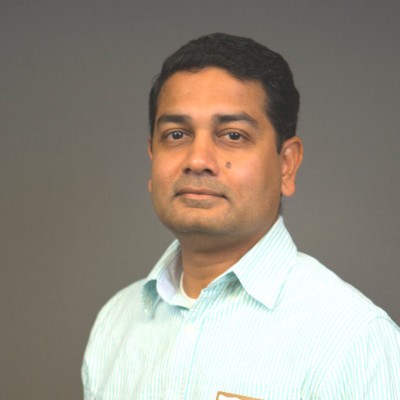
Dr. Upal Roy is an Associate Professor at the University of Texas Rio Grande Valley and a recognized innovator in nanomedicine and targeted drug delivery, with over 20 years of experience spanning academia, federally funded research, and translational biomedical science. Trained as a microbiologist, Dr. Roy has held progressive research and faculty positions at Tulane University, the University of Nebraska Medical Center, Florida International University, SRI International, and UTRGV. His interdisciplinary research integrates neuroscience, nanotechnology, and space biology, with a strong emphasis on patient-centered impact. His research focuses on developing advanced therapeutic strategies for HIV, neurodegenerative diseases, and space-related health challenges. Dr. Roy holds four U.S. patents and multiple pending applications, including technologies for fluorescent nanodiamond-based drug delivery, gut-targeted nanocarriers, and implantable nanodrug systems. These inventions aim to overcome barriers in drug penetration across the blood-brain barrier and improve treatment of persistent viral reservoirs.
His patented innovations have laid the foundation for next-generation nanotherapeutics, combining precision targeting with sustained drug release. Building on this portfolio, Dr. Roy founded Arasus Technology LLC, a biotech startup dedicated to translating these breakthroughs into clinical and commercial applications. His entrepreneurial efforts are supported by participation in the NSF I-Corps program and other commercialization accelerators, positioning his work at the forefront of translational nanomedicine.
Dr. Roy’s pioneering contributions extend to NASA-funded research on neuroinflammation in spaceflight environments, where he is developing nanotechnology-based strategies to protect astronaut brain health. With over 45 peer-reviewed publications and leadership in NIH-funded projects, his work exemplifies the integration of cutting-edge science with real-world impact.
Finally, Dr. Roy is committed to motivating the next generation of scientists, researchers, and innovators. He has directly mentored more than 60 undergraduate researchers, 12 master’s thesis students, and 5 Ph.D. students, organized multiple community outreach programs, and mentored innovators both locally and nationally.
SUMMARY OF INNOVATION OR COMMERCIALIZATION WORK:
Dr. Upal Roy has been a valued member of UTRGV since 2017, and as faculty in the Health and Biomedical Sciences, he has earned a university-wide reputation for pioneering research in next-generation drug-delivery systems. His work addresses major limitations of traditional methods, which often require frequent dosing, cause side effects, and fail to target diseased organs effectively.
To overcome these barriers, Dr. Roy developed a patented oral drug-delivery system, “Materials and Methods for Targeting Therapeutic Compositions to Gut-Associated Lymphoid Tissue (GALT)” (U.S. Patent #9,872,859, 2018). This innovation uses antibody-based targeting to deliver drugs directly to the affected organ, improving efficacy, reducing side effects, and allowing less frequent dosing. Patients can take medication conveniently at home, avoiding invasive intravenous procedures.
Building on this breakthrough, Dr. Roy introduced “Nanodiamond compositions and their use for drug delivery” (U.S. Patent #9616022, 2017) to address toxicity concerns. These inert carbon-based compounds enable safer drug delivery. His subsequent patent (U.S. Patent #63067682, 2022) expanded low-toxicity, targeted oral delivery options. Most recently, his patent application for “Fluorescent nanodiamond for image-guided targeted drug delivery” (U.S. Patent Application #63/697,460, 2024) uses naturally fluorescent carbon molecules to allow real-time monitoring of drug movement in the body, ensuring precise delivery. Although initially developed for HIV therapies, this transformative technology can be adapted for numerous diseases, including cancer.
Beyond research, Dr. Roy advances innovation and commercialization at UTRGV. He exemplifies entrepreneurial leadership as Founder and Chief Scientific Officer of Arasus Technology, LLC, and he plays a central role in translating research innovation at UTRGV. He actively collaborates with institutional programs, including the Office of Technology Commercialization (OTC), the Center for Innovation and Commercialization (CIC), and the UTRGV Entrepreneurship and Commercialization Center (ECC), to mentor faculty and students in innovation and commercialization. He has guided numerous faculty and trainees in developing invention disclosures and patent applications, both within UTRGV and nationally. His mentorship has supported patent filings in collaboration with fellow investigators. Through CIC, he has contributed to startup development, mentoring innovators in elevator pitch development. He actively supports faculty teams within the UTRGV College of Health Professions to advance innovations from concept to commercialization. Dr. Roy’s mentorship reflects a deep commitment to the next generation of innovators and their long-term success.
Dr. Roy’s work demonstrates how academic research can converge with technology and commercialization to improve lives. His groundbreaking contributions, mentorship, and entrepreneurial spirit make him a rising star in healthcare innovation.
RELEVANT LINKS:
Links (media, awards, etc.)
https://patents.google.com/patent/US9872859B2/en?oq=9%2c872%2c859
https://patents.google.com/patent/US9616022B1/en?oq=9616022
https://texasborderbusiness.com/utrgv-awarded-grant-for-anti-hiv-drug-research/
https://www.instagram.com/p/DA8rsMry5tV/
https://www.facebook.com/photo/?fbid=821757023089857&set=ecnf.100070448259300
https://reporter.nih.gov/search/iqnTUAodE06ouREDrwcKaQ/project-details/11001854
https://reporter.nih.gov/search/iqnTUAodE06ouREDrwcKaQ/project-details/9621251
https://youtu.be/5nwcqbba3VY?si=dWNUPOucBwokyDu-
https://upalroy.com/community-service/
https://upalroy.com/2024/12/16/nanoformulation-for-hiv-effects-on-gut-immunity-and-behavior/
https://upalroy.com/2024/08/29/advancing-precision-medicine-healthcare-innovation-research/
https://upalroy.com/2020/03/12/utrgv-awarded-grant-for-anti-hiv-drug-research/
Professor, Physics and Astronomy
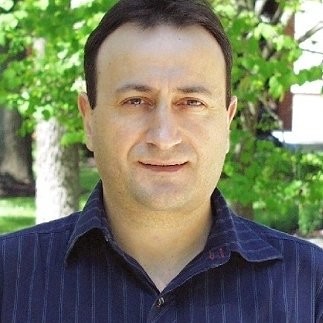
Dr. Martirosyan, the Houston Endowed Chair in Science, Math, and Technology and Professor of Physics at UTRGV, specializes in experimental and theoretical condensed matter physics with an emphasis on solid-state phenomena in nanostructured systems. His research focuses on two areas: (1) developing high-energy systems to create nano-tailored materials for energy, environmental, and biomedical applications, and (2) elucidating nanoscale physical phenomena. Current projects include nanoenergetic systems, magnetic, ferroelectric, multiferroic, and superconducting devices, as well as contrast agents for biomedical imaging and drug delivery. This work integrates materials design, fabrication, and characterization.
Dr. Martirosyan has served three times as a Faculty Fellow at the Air Force Research Laboratory (AFRL) and holds editorial leadership roles, including Editor-in-Chief of the Journal of OA Nano-Bio-Technology and board memberships on journals such as Nanomedicine and Nanotechnology and Self-Propagating High-Temperature Synthesis. He has participated in numerous NSF review panels and directed a nanoscience program supported by NSF, DOD, and AFRL, combining research with curriculum development and graduate training. He has successfully mentored undergraduate, master, doctoral students as well as postdoctoral and Fulbright fellows and international scholars, exemplified by successful completion of their co-authorship in peer-reviewed publications.
His contributions to innovation are demonstrated by five U.S. patents in nanomaterials and energy storage technologies and over 100 peer-reviewed publications in high-impact journals spanning nanoscience, advanced materials, and applied physics. In addition to his academic appointments, Dr. Martirosyan has held administrative leadership roles, including serving as an Associate Dean for Research and Educational Innovations at the College of Sciences and Associate Vice President of Research Enhancement at UTRGV, shaping initiatives that connect academic research with innovation, commercialization, and public engagement. Dr. Martirosyan brings extensive experience in research administration, compliance, faculty development, and technology transfer. His work exemplifies successful translation of academic research into industrial applications, fostering interdisciplinary collaboration and commercialization.
SUMMARY OF INNOVATION OR COMMERCIALIZATION WORK:
Dr. Martirosyan’s innovation activities focus on translating fundamental research in several complementary technology areas within advanced materials synthesis and biomedical imaging. Together, unified by a focus on efficiency, precision, and system-level integration, these inventions address critical needs in scalable manufacturing of functional materials and next-generation medical imaging and diagnostics.
The first innovation involves a carbon combustion synthesis approach for producing complex oxide materials (US Patent # 7,897,135). This method leverages controlled carbon-based combustion reactions to generate localized high temperatures that rapidly drive the formation and crystallization of multicomponent oxides. By using carbon as both a fuel and reactive component, the process significantly reduces external energy requirements, shortens processing times, and enables precise control over phase composition, stoichiometry, and microstructure. The technique is compatible with pressure-assisted consolidation and additive manufacturing workflows. This synthesis route is well suited for applications in energy storage, catalysis, sensing, electronics, and extreme-environment manufacturing, including submicron and nanostructured materials. This invention demonstrates how highly exothermic reactions can be harnessed to consolidate materials rapidly with minimal external energy input, offering a transformative alternative to conventional furnace-based manufacturing.
Dr. Martirosyan is an innovator in the field of biomedical imaging, evidenced by his innovation of seeds and markers for use in medical imaging and marker delivery and extraction systems and methods of manufacture (US Patent 8,529,872 and 8,846,006). These devices are designed as biocompatible, implantable elements that provide reliable and repeatable visibility across one or multiple imaging modalities, including MRI and CT. The geometry, surface chemistry, and material composition of these seeds and markers are optimized to minimize migration and tissue disruption while enabling accurate localization. These markers are particularly useful for image-guided surgery, radiation therapy planning, longitudinal disease monitoring, and procedural navigation, where precise spatial reference is essential. Dr. Martirosyan further contributed to medical innovation with a cobalt-based MRI contrast agent and associated imaging system (US Patents 9,345,790 B2 and 9,555,135 B2). Compared to conventional agents, the cobalt-based system enables tunable T1 and T2 contrast behavior and may be functionalized for targeted imaging of specific tissues or molecular markers. The invention also may improve imaging methods and software algorithms optimized to detect and quantify cobalt-induced signal changes, enabling improved contrast resolution and quantitative imaging.
Collectively, these technologies demonstrate an integrated approach to innovation, combining advanced synthesis methods with precision imaging tools to enable scalable manufacturing, enhanced diagnostics, and improved clinical and industrial outcomes.
RELEVANT LINKS:
- https://scholarworks.utrgv.edu/jae/10/
- https://utrgvradio.com/index.php/2023/10/09/utrgv-will-now-see-further-within-with-new-electron-microscope/
- https://www.elsevier.com/en-in/events/conferences/people/karen-martirosyan
- https://prem-dmr.org/people/14449951
- https://www.youtube.com/watch?v=JaYE3ZiDXI0
- https://www.utrgv.edu/nanoscience/people/
- https://starter.utrgv.edu/people/karen-martirosyan
Patent links:
- https://patents.google.com/patent/US7897135B2/en?oq=7%2c897%2c135
- https://patents.google.com/patent/US8529872B2/en?oq=+8%2c529%2c8
- https://patents.google.com/patent/US8846006B2/en?oq=8%2c846%2c006
- https://patents.google.com/patent/US9345790B2/en?oq=9%2c345%2c790
- https://patents.google.com/patent/US9555135B2/en?oq=9%2c555%2c135
The University of Texas at San Antonio UTSA.EDU
Associate Professor, UT San Antonio Long School of Medicine, Dept. of Psychiatry & Behavioral Sciences

David L. Roberts, PhD, is Associate Professor of Psychiatry at UT Health San Antonio and Education Director of the UT Transitional Care Clinic and NOW Clinic, where he oversees psychotherapy training, clinical onboarding, and quality assurance in high-volume academic community mental health settings. His scholarship focuses on the development, testing, and dissemination of scalable psychotherapy interventions and workforce training models.
Dr. Roberts began his career developing and evaluating Social Cognition and Interaction Training (SCIT) for individuals with schizophrenia, an intervention now supported by more than 30 peer-reviewed studies and published in Oxford University Press’s Treatments That Work series. He has trained over 3,000 clinicians across eight countries in this approach. A member of the Motivational Interviewing Network of Trainers (MINT), Dr. Roberts also has trained more than 2,000 clinicians in Motivational Interviewing and has led multiple implementation initiatives aimed at expanding behavioral health capacity in underserved communities.
His recent work centers on Reflective Training (RT), a scalable, peer-based training and assessment platform designed to accelerate skill acquisition in psychotherapy and counseling. RT integrates structured practice, observational learning, and objective behavioral rating tools to improve fidelity while reducing faculty time and cost. RT is currently used for clinical staff onboarding and quality assurance across UT clinics and has been disseminated to community agencies across Texas.
Dr. Roberts has served on the UT Health San Antonio Institutional Review Board for over a decade and is committed to ethical, rigorous, and translational research that strengthens the behavioral health workforce.
SUMMARY OF INNOVATION OR COMMERCIALIZATION WORK:
Texas, like much of the country, faces a behavioral health workforce bottleneck. Training clinicians is slow, expensive, and difficult to scale. Continuing education is largely passive, supervision is time-intensive, and measuring actual clinical skill remains inconsistent. The result is a structural gap between research-supported psychotherapy techniques and real-world delivery.
David Roberts’ innovation addresses that bottleneck directly.
He developed Reflective Training (RT) to transform psychotherapy training from a lecture-based model into a measurable, practice-driven system. RT is a web-enabled platform that replaces passive continuing education with structured behavioral rehearsal, peer coaching, and objective skill rating. Every session generates data. Every learner demonstrates observable competencies. Growth is tracked longitudinally.
The conceptual breakthrough is simple but powerful: treat training itself as a performance science problem. Borrowing from deliberate practice research and Motivational Interviewing fidelity science, RT creates distributed, feedback-rich learning loops that allow advanced learners to serve as calibrated coaches. This architecture dramatically reduces reliance on scarce expert faculty while preserving rigor.
The commercialization opportunity emerged organically. UT Health clinics began using RT for onboarding and quality assurance. Community agencies adopted it for workforce development contracts. Learners returned for advanced modules. Demand began to outpace academic delivery capacity.
To scale beyond a university silo, Dr. Roberts collaborated with his long-time colleague and clinic director, Megan Fredrick, to found Reflective Learning Inc. (RLI), a mission-driven startup translating this academic innovation into a broader workforce solution. RLI operates at the intersection of digital health, continuing education, and competency-based credentialing. The platform has now supported hundreds of learners across disciplines, generating thousands of structured training interactions and a growing dataset on skill acquisition.
RLI’s long-term vision is statewide and national: a scalable behavioral health training infrastructure that allows universities, health systems, and public & private community agencies to rapidly upskill clinicians, staff and leaders while preserving evidence-based fidelity.
In short, Dr. Roberts’ work reframes psychotherapy training as measurable, scalable infrastructure—bridging academic research and commercialization to address one of Texas’ most urgent workforce challenges.
RELEVANT LINKS:
https://pubmed.ncbi.nlm.nih.gov/39106021/
The Dangwung article shows that RT-trained counseling interns were not inferior to licensed clinicians in providing crisis counseling for psychiatric patients.
The Roberts article is a proof of concept showing the reliability of RT’s Feedback Form assessment tool and large learning gains from RT students.
Reflective Training Website: www.reflectivetraining.org
Associate Professor, Biomedical and Chemical Engineering

Dr. Amina Ann Qutub is the Burzik Endowed Professor of Engineering Design and an Associate Professor in Biomedical Engineering at UT San Antonio. At UT San Antonio she co directs the Center for Precision Medicine, serves as assistant director of strategic partnerships and research lead of the MATRIX Artificial Intelligence (AI) Consortium. She also directs the UT San Antonio Graduate Group in Biomedical Engineering. Qutub co founded two AI biotech startups: PaloBio, which creates behavioral focused digital twins for athletes and individuals with atypical neurological conditions, and Leah, which develops AI solutions for trauma care. Qutub's research sits at the intersection of computer science, biology, and engineering, aiming to understand human cell design and combat brain and vascular related diseases. She co leads the iRemedyACT project—a collaboration with seven hospitals to develop and test AI clinical decision tools for trauma patients—and directs the Quantu Project, a nationwide study integrating biosensing, AI, and neurogenesis assays to optimize brain health across lifespan. Recognitions include fellowship in the American Institute for Medical and Biological Engineering, the National Academies’ Keck Future Initiatives Award, the Health Cell Honoree award, and an NSF CAREER award. She earned a B.S. in Chemical Engineering from Rice University and a Ph.D. in Bioengineering jointly from UC Berkeley and UCSF, followed by postdoctoral training as an NIH NRSA Fellow at Johns Hopkins University. Qutub serves on the National Academies’ Standing Committees on Advances and National Security Implications of Transdisciplinary Biotechnology and Transformative Science and Technology for the DoD. She participated as a 2025 U.S. Department of State Overseas Speaker for the “Innovations in AI” Tour. She co‑chaired planning committees for several National Academies' workshops including Non Linguistic AI Models (2025), AI and Automated Laboratories for Biotechnology (2024), and Transformative S&T for Assessing and Strengthening Individual to Population Resilience under Societal and Environmental Stress (2024).
SUMMARY OF INNOVATION OR COMMERCIALIZATION WORK:
Dr. Amina Ann Qutub is an innovator whose work transforms complex biomedical data into intelligent, deployable systems that redefine how health care and human performance are delivered. Dr. Qutub’s work is distinguished by the creation of deployable technologies that function in real-world environments to solve urgent societal challenges.
A central innovation is her leadership in AI-enabled trauma decision support, where she serves as technology lead for iRemedyACT, a multi-hospital collaboration spanning seven trauma centers. Dr. Qutub directs the design, validation, and deployment of real-time, workflow-embedded AI systems that assist clinicians during the most time-critical moments of care. In contrast to retrospective analytics, iRemedyACT integrates live data streams to reduce delays in triage, routing, and intervention during the trauma “golden hour.” Backed by more than $2 million in public investment, the program has drawn national attention for its potential to save lives and to modernize emergency medicine at a systems level (mAIndset, 2025; Texas Public Radio, 2024).
Dr. Qutub also pioneers biological digital twins through her co-founding of PaloBio, a biotechnology startup that fuses behavioral data, biosensing, and AI to personalize training and daily care for individuals with neurological differences. By shifting focus from population averages to individual-specific models, this approach advances personalized medicine across athletics, neurorehabilitation, and brain health optimization. Her second venture, Leah, commercializes trauma-care AI tools developed through federally funded research, bridging academic innovation with large-scale deployment. Leah’s platform integrates multiple AI design frameworks alongside a statewide trauma supply-chain and coordination model, demonstrating a rare fusion of technical depth and operational reach.
At the scientific infrastructure level, Dr. Qutub led the development of the Leukemia Protein Atlas, introducing MetaGalaxy, a computational framework that integrates heterogeneous biological datasets into clinically interpretable disease signatures. Published in Nature Biomedical Engineering, this work has become a reference model for translating high-dimensional proteomic data into actionable insights for precision oncology (Nature Biomedical Engineering, 2019; BioCompare, 2019; LabMedica, 2019).
Her contributions to neurotechnology include platform technologies to screen brain regenerative therapies (““Method to Identify Patterns in Brain Activity” (US Patent Pending 20240282460A1),”, 2024) and cytoNet, an open computational platform recognized by the NIH BRAIN Initiative for enabling reproducible quantification of neural communication patterns. cytoNet underpins advances in neuroregeneration research, drug discovery, and AI-assisted biological analysis (NIH BRAIN Initiative, 2019).
Across domains, Dr. Qutub’s innovations share a defining principle: embedding intelligence into biological and clinical systems in ways that are scalable, ethical, and actionable. Her record reflects sustained success in moving ideas from laboratory insight to platforms that deliver measurable impact.
RELEVANT LINKS:
"Qutub Lab Site - https://www.qutublab.org
iRemedyACT Site - https://ai.utsa.edu/iremedyact/
Patent Pending “Method to Identify Patterns in Brain Activity”: https://patents.google.com/patent/US20240282460A1/en?q=(Method+to+Identify+Patterns+in+Brain+Activity+Amina)&inventor=qutub&oq=Method+to+Identify+Patterns+in+Brain+Activity+Amina+qutub
Select Media:
2025 mAIndset Podcast “Where AI Meets Medicine On Crossroads [with Prof. Amina A Qutub]”
https://www.youtube.com/watch?v=tQMETU31uH8
Texas Public Radio (2024): “UTSA developing AI tool to expedite patient care in trauma emergencies” https://www.tpr.org/podcast/petrie-dish/2024-07-26/petrie-dish-utsa-developing-ai-tool-to-expedite-patient-care-in-trauma-emergencies
2024 “Petrie Dish: Using artificial intelligence to solve medical mysteries.” Texas Public Radio https://www.tpr.org/podcast/petrie-dish/2024-09-16/petrie-dish-using-artificial-intelligence-to-solve-medical-mysteries
2024 “UTSA, UT Health San Antonio, and UT Tyler secure $1 million to enhance trauma care through AI advancements”
2015 TEDxHouston, “How can visualizing our personal data empower our health?”
https://www.youtube.com/watch?v=90y_iAHyO0w
Nature Biomedical Engineering (2019): https://www.nature.com/articles/s41551-019-0387-2
Nature Biomedical Engineering Editorial: https://www.nature.com/articles/s41551-019-0474-4
BioCompare (2019): “The Leukemia Atlas: A Proteomic Analysis of Disease” https://www.biocompare.com/Life-Science-News/360200-The-Leukemia-Atlas-A-Proteomic-Analysis-of-Disease/
NIH BRAIN Initiative (2019): https://braininitiative.nih.gov/news-events/blog/brain-initiative-neuroscience-2019
“Discovering biomarkers in a dish,” BioTechniques (2023) https://www.biotechniques.com/neuroscience/29469/
Associate Professor, Mechanical Engineering
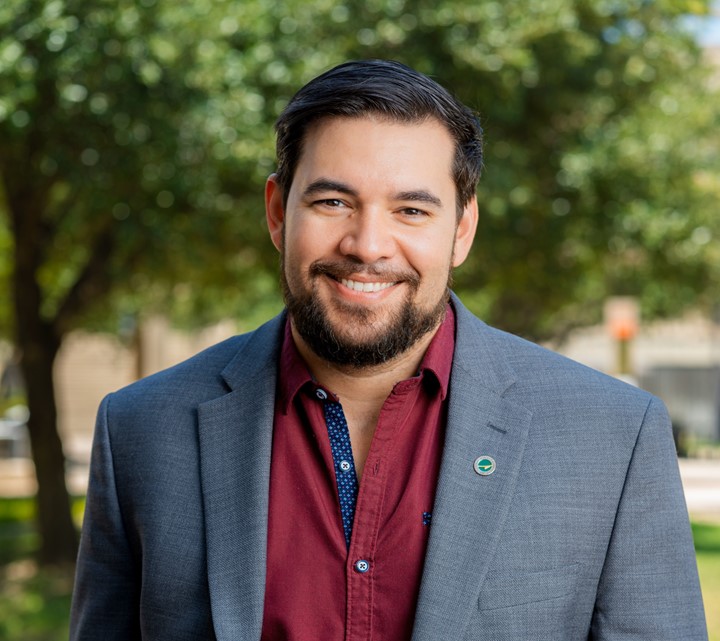
Dr. Lyle Hood is an Associate Professor of Mechanical Engineering at The University of Texas at San Antonio (UTSA), with joint appointments in the UTSA–UT Health San Antonio Biomedical Engineering Graduate Program and the Department of Emergency Medicine at UT Health San Antonio. He grew up in Corpus Christi before getting his B.S. in Biomedical Engineering from the University of Houston and his M.S. and Ph.D. in Biomedical Engineering from the joint Virginia Tech–Wake Forest program, followed by postdoctoral training at Houston Methodist Research Institute.
Dr. Hood leads the Medical Design Innovations Laboratory, a translational engineering research group focused on developing next-generation medical technologies for emergency care, controlled drug delivery, and device-enabled therapeutics. His work integrates engineering design, clinical partnership, and commercialization strategy to move technologies from concept to real-world deployment. He has authored more than 45 peer-reviewed publications and is an inventor on over a dozen patents, several of which have been licensed to startup ventures advancing medical technologies toward clinical adoption.
His research has been supported by the National Science Foundation, National Institutes of Health, U.S. Department of Defense, as well as several other state and San Antonio local programs. Dr. Hood is a Senior Member of the National Academy of Inventors and a recipient of honors including UTSA’s Innovator of the Year and Undergraduate Faculty Mentor of the Year awards.
Beyond his research accomplishments, Dr. Hood is deeply committed to mentoring student innovators and building translational pipelines that bridge engineering, medicine, and entrepreneurship. His work reflects a sustained commitment to advancing impactful medical technologies while cultivating the next generation of biomedical innovators.
SUMMARY OF INNOVATION OR COMMERCIALIZATION WORK:
Dr. Lyle Hood’s innovation and commercialization efforts focus on transforming airway management in prehospital, combat, and emergency care settings: environments where preventable deaths persist due to outdated technologies and limited portability of existing tools. Through the Medical Design Innovations Laboratory at UT San Antonio, he has built a translational engineering program dedicated to modernizing first-responder kit for airway management.
His team has developed three distinct portable suction device platforms tailored to different operational environments, ranging from ultra-compact, cargo-pocket–sized systems for point-of-injury care to multi-line, transport-capable units for field hospitals and aeromedical evacuation. These systems address longstanding gaps in weight, power, reliability, and orientation-dependent failure. In parallel, his group has engineered next-generation endotracheal tube technologies designed to improve first-pass success, reduce dislodgement, guide placement, and enhance usability for providers operating under extreme conditions.
A defining feature of Dr. Hood’s commercialization model is early and sustained end-user engagement. Through multiple NSF Innovation Corps programs and structured customer discovery efforts involving hundreds of clinicians and medics, his team has systematically aligned engineering design with real-world clinical and market needs. This approach has strengthened both regulatory strategy and commercialization readiness from the outset.
Dr. Hood co-founded a university-backed startup to license and advance these airway technologies toward market adoption. Collectively, his work has generated more than 16 invention disclosures as well as U.S. and international patent filings. His translational portfolio has attracted over $3 million in competitive funding from federal agencies, military research programs, and private philanthropic sources, validating both technical merit and commercial potential.
Beyond intellectual property generation, Dr. Hood has created a vertically integrated innovation pipeline in which students and trainees participate directly in prototyping, testing, regulatory planning, and customer discovery. More than 100 students have contributed to these efforts. His work exemplifies a scalable model of academic entrepreneurship that bridges engineering, medicine, military partnerships, and startup formation to deliver life-saving technologies from concept to commercialization.
RELEVANT LINKS:
"Medical Design Innovations Laboratory Website: https://mdi.lab.utsa.edu/
MDI Lab LinkedIn Page: https://www.linkedin.com/company/106028921
EmergenceMed, LLC Website: https://emergencemed.com/
Patents
Method and apparatus for the fail-safe termination of in vivo drug delivery from an implantable drug delivery system: https://patents.google.com/patent/US20250281693A1/en
Digital extenders with haptic feedback: https://patents.google.com/patent/US12290454B2/en
Theranostic Methods: https://patents.google.com/patent/US20240350828A1/en
Methods, apparatuses, and systems for aspirating airways: https://patents.google.com/patent/US20240157039A1/en
Endotracheal tube: https://patents.google.com/patent/US20240100278A1/en
Tunable, Pulsatile, and 3-Dimensional Fluidic Oscillator: https://patents.google.com/patent/US20230323903A1/en
Implantable intrathecal drug delivery system for chronic pain control: https://patents.google.com/patent/US20230201454A1/en
Microneedle array electroporation system for cell transfection: https://patents.google.com/patent/US11624050B2/en
Reciprocating Pump: https://patents.google.com/patent/US20230106780A1/en
Selectively tunable attraction device: https://patents.google.com/patent/US20190133105A1/en
Fiber array for optical imaging and therapeutics: https://patents.google.com/patent/US8798722B2/en
Relevant Media Coverage
UT Health Newsroom, ""UT Health San Antonio, UTSA researchers receive prestigious 2025 Hill Prizes for medicine and technology,"" 2025, https://news.uthscsa.edu/ut-health-san-antonio-utsa-researchers-receive-prestigious-2025-hill-prizes-for-medicine-and-technology/
UTSA Today, “Innovator of the Year and other powerhouse inventors honored in UTSA’s 2024 Innovation Awards,” 2024, https://www.utsa.edu/today/2024/12/story/2024-innovation-awards.html#:~:text=Chambers%20is%20an%20internationally%20recognized,U.S.%20Army's%20Distinguished%20Service%20Award.
UTSA Today, “NIH Awards UTSA Professors $1.35 Million to Train Next Generation of Biomedical Engineering ‘Superheroes’” 2024, https://klesse.utsa.edu/news/2024/08/12-bme-superheroes.html
UTSA Today, “REDKE announces 2023 Innovator of the Year, awards innovation honors,” 2023, https://www.utsa.edu/today/2023/12/story/2023-innovator-awards.html
UTSA Today,“UTSA researchers elected senior members of National Academy of Inventors,” 2023, https://www.utsa.edu/today/2023/07/story/utsa-researchers-selected-by-national-academy-of-inventors.html
UTSA Today, “UTSA Innovation Awards return to recognize commercialization excellence,” 2022, https://www.utsa.edu/today/2022/04/story/innovation-awards-return-to-recognize-commercialization-excellence.html
Startups San Antonio, “New San Antonio Biomedical Seed Fund Invests $150,000 in Local Innovators for Military Medical Collaboration,” 2020, https://www.startupssanantonio.com/new-san-antonio-biomedical-seed-fund-invests-150000-in-local-innovators-for-military-medical-collaboration/
KSAT TV News and Posted Article, “UTSA engineers create innovative breathing tube in effort to battle COVID-19 in future,” 2020,
https://www.youtube.com/watch?v=yLMIdfCZYfw, https://www.ksat.com/news/local/2020/05/20/utsa-engineers-create-innovative-breathing-tube-in-effort-to-battle-covid-19-in-future/
NBC News4SA article by SBG San Antonio Staff Reports, “UTSA engineers develop new breathing tube used in ventilators to treat COVID-19 patients,” 2020, https://news4sanantonio.com/news/local/utsa-engineers-develop-new-breathing-tube-used-in-ventilators-to-treat-covid-19-patients
Texas Public Radio program All Things Considered, “Organ Chamber From UTSA To Help Preserve Soldiers' Lost Limbs,” 2019 https://www.tpr.org/post/organ-chamber-utsa-help-preserve-soldiers-lost-limbs
PBS New York SciTech NOW, “3D printing helps fight cancer,” 2019. https://app.criticalmention.com/app/#clip/view/fe3def8d-ff70-4b30-a7bf-6a623d9b0788?token=9dc768cf-a065-484e-a9d5-c7f489b76b00
The University of Texas at Tyler UTTYLER.EDU
Associate Professor and Director of Center for Robotics and Intelligent Systems, The University of Texas at Tyler, Dept of Electrical and Computer Engineering

Dr. Prabha Sundaravadivel is an Associate Professor of Electrical and Computer Engineering at The University of Texas at Tyler and serves as the Director of the Center for Robotics and Intelligent Systems (CeRIS). Her research focuses on edge artificial intelligence, embedded systems, and robotics, with applications in precision agriculture, smart healthcare, and environmental monitoring. She is particularly known for developing low-power, resource-efficient AI systems that operate reliably in real-world, field-deployed settings.
Dr. Sundaravadivel has secured more than $1.7 million in external research funding as Principal Investigator or Co-Principal Investigator from agencies including the U.S. Department of Agriculture, National Science Foundation, NASA, and the University of Texas System. Her work emphasizes translational research, bridging foundational algorithms with deployable hardware-software systems. She has authored numerous peer-reviewed publications in leading IEEE, ACM, Springer, and Elsevier venues and holds multiple awarded and provisional patents related to edge-intelligent wearables, autonomous systems, and AI-driven sensing technologies.
In addition to her research contributions, Dr. Sundaravadivel is deeply committed to education, mentoring, and workforce development. She has supervised PhD, master’s, undergraduate, and high-school researchers, with her students receiving national and international awards, best paper recognitions, and entrepreneurship prizes. She has also developed and led hands-on courses in FPGA design, VLSI systems, IoT, and robotics, integrating entrepreneurship and real-world problem solving into the engineering curriculum.
Dr. Sundaravadivel is a Senior Member of IEEE and has held numerous leadership roles in professional service, including General Chair of the IEEE Dallas Circuits and Systems Conference and Special Session Chair for multiple IEEE and ACM conferences. Her work has been recognized through several honors, including the ASEE Curtis W. McGraw Research Award, Dean’s Research Excellence Award, and international alumni awards for professional excellence.
SUMMARY OF INNOVATION OR COMMERCIALIZATION WORK:
Dr. Prabha Sundaravadivel has established a strong commercialization-driven innovation portfolio at the intersection of edge artificial intelligence, embedded systems, and robotics, with a clear focus on converting federally funded research into deployable, market-ready technologies. Her work is rooted in the premise that commercially viable AI must operate under real-world constraints, limited power, bandwidth, compute, and connectivity, making edge deployment not just an optimization, but a necessity for adoption at scale.
A hallmark of Dr. Sundaravadivel’s innovation strategy is use-inspired, customer-informed system design, particularly in precision agriculture, smart healthcare, and environmental monitoring. As Principal Investigator and Co-Principal Investigator on multiple projects funded by the U.S. Department of Agriculture (USDA), NSF, NASA, and the UT System, she has led the development of field-tested prototypes including AI-enabled handheld multispectral plant health scanners, low-cost autonomous UAV and UAV-swarm platforms for crop monitoring, and edge-intelligent wearable systems for health and behavioral assessment. These systems are explicitly designed with deployment pathways in mind, prioritizing cost, scalability, robustness, and ease of integration for end users such as growers, healthcare providers, and public-sector agencies.
Dr. Sundaravadivel has demonstrated a sustained commitment to intellectual property generation and technology transition. Through her ongoing USDA-funded research portfolio, she has filed one patent and three provisional patents covering autonomous drone platforms, AI-driven plant analysis pipelines, and edge-intelligent sensing architectures, establishing a strong foundation for SBIR/STTR translation and industry licensing. In parallel, she has worked directly with two women entrepreneurs in healthcare technology, resulting in two awarded patents for edge-intelligent wearable systems focused on behavioral and health monitoring. These collaborations reflect her ability to co-develop IP with commercialization partners and align technical innovation with market needs.
Beyond IP creation, Dr. Sundaravadivel actively builds a startup-oriented innovation pipeline through VentureWell-supported initiatives and entrepreneurship-infused curricula. She has mentored interdisciplinary student teams in transforming research prototypes into commercialization-ready products and validated business models, leading to multiple first-place awards in competitive innovation and venture pitch competitions. Several of these efforts have advanced toward external partnerships, SBIR-aligned pathways, and technology transfer opportunities.
Collectively, Dr. Sundaravadivel’s innovation and commercialization efforts reflect a rare combination of technical rigor, market awareness, and execution-focused leadership, delivering scalable, IP-backed technologies positioned for impact in agriculture, healthcare, and smart infrastructure markets.
RELEVANT LINKS:
Linkedin: https://www.linkedin.com/in/prabhasundaravadivel/
Google Scholar: https://scholar.google.com/citations?hl=en&user=34avWFsAAAAJ&view_op=list_works&sortby=pubdate
Patent 1 : https://patents.google.com/patent/US12488888B2/en
Postdoctoral Fellow, Center for Robotics and Intelligent Systems (CeRIS), UT Tyler
Electrical and Computer Engineering

Shekhar Suman Borah, Ph.D., is a Postdoctoral Research Associate in the Department of Electrical and Computer Engineering at The University of Texas at Tyler. His research focuses on analog and mixed-signal VLSI design, memristive and current-mode circuits, and low-power microelectronic systems for edge intelligence. His work connects core circuit design with practical AI-enabled sensing solutions, especially for precision agriculture and environmental monitoring. Dr. Borah earned his Ph.D. in Electronics and Communication Engineering from the Indian Institute of Information Technology Guwahati, India, where his doctoral research focused on current-mode analog signal processing and new circuit building blocks. He also holds an M.Tech. in Electronics and Telecommunication Engineering and a B.E. in Electronics and Communication Engineering. Before joining UT Tyler, he worked as a Research Associate at the Bhabha Atomic Research Centre (BARC), contributing to applied electronics and radiation safety systems.
At UT Tyler, Dr. Borah is involved in interdisciplinary research that combines microelectronics, edge AI, and intelligent sensing. He has co-led funded projects on AI-based tutoring tools for hardware–software co-design and has contributed to the development of edge devices for plant health monitoring, UAV-based weed detection, and multimodal agricultural intelligence. His work has been published in several peer-reviewed IEEE and Elsevier journals and conferences. Alongside his research, Dr. Borah has strong mentoring experience. He has supported undergraduate and graduate courses in analog integrated circuits, digital design, and VLSI laboratories, and regularly mentors students in circuit design, simulation, and research writing. His long-term goal is to turn low-power microelectronic research into practical, real-world systems that support sustainable agriculture, environmental monitoring, and edge computing.
SUMMARY OF INNOVATION OR COMMERCIALIZATION WORK:
Dr. Borah’s innovation-focused work sits at the intersection of low-power microelectronics, memristive systems, and edge artificial intelligence. His research develops circuit-level solutions that enable compact, energy-efficient hardware capable of intelligent sensing and on-device decision-making. A central goal of his work is to move computation closer to the sensor, which reduces power use, lowers latency, and limits reliance on cloud-based processing.
A major contribution of his research is the design of high-frequency, low-power memristor emulators and memristive neural circuits. These designs offer practical and hardware-efficient approaches for in-memory computing and neuromorphic processing, with clear relevance to future edge AI hardware. His published circuit architectures emphasizes resistorless designs, current-mode operation, and electronic tunability, making them well suited for integration into real-world VLSI systems. Building on this foundation, Dr. Borah has applied his circuit expertise to intelligent sensing solutions for precision agriculture. His work includes UAV-based weed detection systems, AI-enabled plant health monitoring devices, and multimodal phenotyping platforms that combine imaging, embedded processing, and low-power electronics. These systems are developed with real deployment in mind, addressing key constraints such as cost, reliability, and energy efficiency in agricultural environments. In parallel, Dr. Borah has contributed to reconfigurable edge devices and educational technology, including an AI-based tutoring tool for hardware–software co-design. This effort highlights the practical impact of his work by supporting hands-on training and workforce development in microelectronics and embedded systems. His innovation portfolio supports multiple commercialization paths, including intellectual property development in memristive circuits, deployable edge AI hardware for agriculture and environmental monitoring, and integrated software–hardware platforms for education and training. His work aligns well with priorities in smart agriculture, semiconductor innovation, and edge computing, and is positioned for future industry partnerships, technology transfer, and startup opportunities.
RELEVANT LINKS:
Google Scholar: https://scholar.google.com/citations?user=S50kz_MAAAAJ&hl=en
LinkedIn: https://www.linkedin.com/in/dr-shekhar-suman-borah-88797082/
Assistant Professor, Information Technology
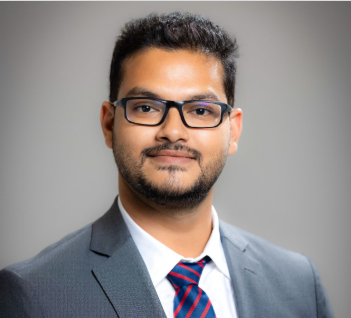
Dr. Sagnik Dakshit is an AI researcher, educator, and innovation leader specializing in human-centered artificial intelligence, adaptive learning systems, and trustworthy AI. He currently serves as Assistant Professor of Information Technology at Kennesaw State University and leads research within the Integrated Intelligence Lab. Previously, he was appointed as an Assistant Professor in the Computer Science department at The University of Texas at Tyler where his work focused on development of scalable AI systems that augment human-AI collaboration in education and healthcare.
Dr. Dakshit’s research integrates large language models, multimodal machine learning, explainable AI, and immersive technologies such as virtual reality. He has published in leading venues across AI, healthcare informatics, and educational technology, and has served as PI on internal and externally funded projects, including NSF-supported initiatives. His work bridges technical innovation with measurable institutional impact, emphasizing personalization, transparency, and real-world deployment. Dr. Dakshit’s mission is to design AI systems that increase access to high-quality instruction, address educator shortages, and strengthen AI literacy and career readiness at scale. His work positioned UT Tyler at the forefront of integration of AI in education in Texas institutions as well as collaboration with UT System cloud at the forefront of responsible, human-centered innovation. His work has been extensively covered by local media and can be found at www.sagnikdakshit.com
SUMMARY OF INNOVATION OR COMMERCIALIZATION WORK:
The Virtual Teaching Assistant (VTA) is an AI-driven instructional system designed to address a growing national shortage of computer science and AI educators while preparing students for high-stakes AI-integrated careers. VTA is a Retrieval-Augmented Generation (RAG) based AI tutor integrated directly into a university learning management environment to function as a structured supplementary instructor for existing courses. Rather than replacing faculty or delivering generic responses like publicly available LLMs, the system is grounded in course-specific materials and institutional content, ensuring alignment with instructor intent and academic standards. The VTA operates by retrieving authoritative course documents including lecture slides, assigned readings, problem sets, and instructor-provided resources and using large language models to generate contextualized, traceable responses. This RAG architecture constrains the system to verified instructional materials, reducing hallucinations and maintaining academic integrity. Students can ask questions, request clarifications, review concepts, and receive guided explanations that mirror the structure of the course. The system is currently being deployed and evaluated across multiple undergraduate and graduate courses at the University of Texas at Tyler, spanning computer science and related technical disciplines. It functions as a 24/7 supplemental tutor, helping address variability in student preparation, reinforcing foundational concepts, and supporting exam review without increasing faculty workload. Importantly, the VTA provisions future generation of anonymized usage analytics that allow instructors to identify common misconceptions, frequently queried topics, and patterns of conceptual difficulty. These insights inform instructional adjustments and curriculum refinement. Unlike standalone AI chat tools, this deployment is institutionally embedded, course-bound, instructor-aligned and protects data but not requiring sharing with third-party companies. It represents a practical model for responsible AI integration in higher education, one that enhances instructional access while preserving faculty authority and curricular coherence. The ongoing multi-course evaluation at UT Tyler provides a real-world testbed for understanding how RAG-based AI tutors can scale across departments while maintaining pedagogical alignment and institutional governance. VTA has been presented in multiple conferences around the world and a modified version of the VTA is currently in the works for commercialization for a stealth startup.
RELEVANT LINKS:
- https://dl.acm.org/doi/abs/10.1145/3686852.3686864
- https://www.mdpi.com/2227-7102/16/2/198
- https://repositories.lib.utexas.edu/items/e9246690-83f8-4642-9bc2-7d4b0d3e03b0
- https://arxiv.org/abs/2510.17910
- https://www.cbs19.tv/article/news/local/ut-tyler-to-launch-ai-teaching-assistant/501-c077bf61-aca3-4e85-ba93-774c80f60da3
The University of Texas Medical Branch at Galveston UTMB.EDU
Department of Biochemistry & Molecular Biology

Dr. Watowich is an Associate Professor in the Department of Biochemistry & Molecular Biology at The University of Texas Medical Branch (UTMB). He founded and serves as CEO of Ridgeline Therapeutics, a biotech company advancing transformative drugs to reverse progressive age-related muscle weakness, obesity-linked metabolic diseases, and chronic kidney disease. In the past few years, under Dr. Watowich’s leadership, Ridgeline’s technology has been validated by receipt of >$13M in non-dilutive funding from the NIH and DoD. In recognition of his transformative advances in combating aging, the US National Academy of Medicine recently selected Dr. Watowich as the winner of its Healthy Longevity Global Competition Award.
Dr. Watowich is an accomplished educator, researcher, serial inventor, and developer of world-class innovative resources that have advanced biomedical discovery on a global scale. Among his notable contributions, Dr. Watowich developed the world-wide “DiscoveryingDengueDrugs-Together” project with IBM, harnessing distributed computing power to accelerate the search for antiviral therapeutics. He also created the DrugDiscovery@TACC supercomputer-based drug screening portal, which provides researchers with powerful computational tools to efficiently identify promising drug candidates.
Beyond his research accomplishments, Dr. Watowich has demonstrated a strong commitment to fostering the next generation of innovators. He developed the University of Texas System's state-wide Innovation and Entrepreneurship program, developed in partnership with the UT McCombs School of Business. In this role, he helped cultivate entrepreneurial skills among students and faculty across Texas, bridging the gap between academic discovery and real-world application. He conceived and built the CPRIT-funded Accelerator for Cancer Therapeutics, designed to support Texas researchers in establishing new biotech companies to advance next-generation cancer treatments. Most recently, he developed and currently serves as Executive Director for the Gulf Coast Consortium Research Evaluation and Commercialization Hub, one of five NIH-funded centers tasked with helping Texas researchers more rapidly bring their biomedical discoveries to patients.
Dr. Watowich graduated from Carleton College, received his Ph.D. in Physical Chemistry from the University of Chicago, and completed a research fellowship at Harvard University before joining UTMB. A commitment to both rigorous scientific inquiry and innovative approaches to education and research infrastructure has marked his academic career.
SUMMARY OF INNOVATION OR COMMERCIALIZATION WORK:
Dr. Stan Watowich represents an exceptional candidate for the TCU Innovation Award, demonstrating outstanding leadership and measurable progress in translating research into real-world impact through commercialization, startup formation, and industry collaboration. As an Associate Professor of Biochemistry & Molecular Biology at The University of Texas Medical Branch (UTMB) and Founder & CEO of Ridgeline Therapeutics, he has built a distinguished career as an accomplished entrepreneur, inventor, educator, researcher, and developer of world-class innovative resources.
Dr. Watowich's academic credentials are impressive. He graduated from Carleton College, received his Ph.D. in Physical Chemistry from the University of Chicago, and completed a research fellowship at Harvard University before joining UTMB. Beyond his faculty role, he recently served as director of the University of Texas System's statewide entrepreneurship program, developed in partnership with the UT McCombs School of Business, and currently serves as Executive Director of the Texas-wide NIH-0funded Research Evaluation and Commercialization Hub, demonstrating his commitment to fostering innovation across all Texas institutions. His innovative spirit is further evidenced by his development of groundbreaking resources, including the global ""DiscoveringDengueDrugs-Together"" project with IBM and the DrugDiscovery@TACC supercomputer-based drug screening portal.
What truly distinguishes Dr. Watowich is his entrepreneurial success with Ridgeline Therapeutics, a Houston-based biotechnology company he founded to develop transformative drugs to treat pervasive chronic diseases. The company's technology is built on Dr. Watowich's patented innovations, which have been developed into oral drugs ready to enter clinical trials as treatments for age-related muscle weakness, obesity-linked metabolic diseases, and chronic kidney disease. Ridgeline’s technology has been extensively vetted by the National Institutes of Health and Department of Defense, securing >$13M in funding over the past few years. Most recently, Ridgeline received an NIH NIA Phase 2 grant to advance its drug that preserves muscle during GLP-1-mediated weight loss and DoD funding to develop a novel drug to prevent osteoarthritis and speed recovery following traumatic joint injury. Dr. Watowich is a sought-after speaker, most recently invited to speak at the 9th Annual MASH Drug Development Summit in Boston.
Dr. Watowich's trajectory, from fundamental discovery to patented innovations to the formation of a successful startup with secured federal funding, embodies the translational leadership the TCU Innovation Award seeks to honor. His work promises to transform how we approach healthy aging and reverse many prevalent chronic diseases.
RELEVANT LINKS:
Department of Pharmacology & Toxicology
Dr. Fernanda Laezza, M.D., Ph.D., is a tenured Professor in the Department of Pharmacology & Toxicology, the Director of the Sealy Center of Environmental Health and Medicine (SCEHM) at The University of Texas Medical Branch (UTMB), and the co-founder and former inaugural Chair of the Mental Health Research Consortium of Gulf Coast Consortia (GCC) within the Texas Medical Center (TMC).
She is an internationally recognized fellow of the American College of Neuropsychopharmacology and serves on the College’s Liaison Committee, working alongside distinguished academic leaders and industry executives. As an entrepreneur, she founded IonTX Inc., a company devoted to developing first in class disease modifying neurotherapeutics for neurological and psychiatric disorders and currently serves as its President and Chair of the Board of Directors. With more than 20 years of training and expertise in neuropharmacology, cellular and molecular neuroscience, and ion channel electrophysiology, Dr. Laezza has emerged as one of the field’s most influential experts in the molecular mechanisms underlying neurological and psychiatric disorders driven by neuronal firing dysfunction. Her research published in Nature Communications, Journal of Clinical Investigation, Alzheimer’s and Dementia and Cell Reports, has been at the forefront of precision medicine, introducing a paradigm shifting strategy that targets neuronal ion channels through intracellular modulatory sites that are disease and context dependent. This innovative approach enables fine‑tuned control of hypo‑ or hyperexcitability states that drive disease, challenging traditional single‑receptor pharmacology, which has shown limited clinical efficacy in neurotherapeutics. By advancing disease‑modifying treatments for neurological and psychiatric disorders, neurodegeneration, and pain based on precise mechanistic targeting, Dr. Laezza’s work has the potential to revolutionize treatment strategies with first‑in‑class neurotherapeutic solutions for chronic conditions affecting millions in the United States and worldwide.
SUMMARY OF INNOVATION OR COMMERCIALIZATION WORK:
Dr. Fernanda Laezza, M.D., Ph.D., exemplifies the ideal candidate for the TCU Innovation Award through her exceptional leadership and measurable progress in translating academic research into real-world impact. As a tenured Professor in the Department of Pharmacology & Toxicology, Director of the Sealy Center of Environmental Health and Medicine (SCEHM) at The University of Texas Medical Branch (UTMB), and Scientific Founder of IonTX, Inc., Dr. Laezza has demonstrated an unwavering commitment to bridging the gap between laboratory discovery and commercial application.
With over 20 years of training and expertise in neuropharmacology, cellular and molecular neuroscience, and Dr. Laezza has built a distinguished academic career focused on ion channel electrophysiology and their role in driving neurological and psychiatric disorders. Introducing a paradigm shift in CNS drug discovery, her research has transformed the way we think about therapeutic strategies by targeting disease dependent pharmacological sites that can correct excitability dysfunction in the brain, rather than simply suppressing neuronal activity. This approach moves beyond traditional single receptor pharmacology and provides the foundation for precision medicine in neurology and psychiatry. However, what truly sets her apart is her determination to ensure that her scientific discoveries reach patients who need them most. Dr. Laezza's entrepreneurial journey is marked by tangible, measurable achievements. She holds multiple granted patents that represent significant innovations in the treatment of pain and neuropsychiatric disorders. Her patent for ""Non-opioid anti-pain medication"" (Patent No. 12291553, granted May 2025) introduces novel small molecules that inhibit FGF13-1b, offering a promising alternative to opioid-based pain management—a critical advancement amid the ongoing opioid crisis. Additionally, her patent for ""Fine-tune modulators of neuronal excitability for neuropsychiatric disorders"" (Patent No. 10889543, granted January 2021) presents novel small molecule modulators of Nav1.6 channels, opening new therapeutic avenues for cognitive function and depression conditions that affect millions worldwide. These patents form the scientific foundation of IonTX, Inc., the biotechnology company Dr. Laezza founded to commercialize her discoveries. Her entrepreneurial training through collaboration with JLABS at the TMC, the GCC REACH program and the Texas Venture Mentoring Service (VMS) equipped her with the business acumen necessary to navigate the complex landscape of biotech startup formation. Dr. Laezza's trajectory—from fundamental research to patented innovations to startup formation—represents exactly the kind of translational leadership the TCU Innovation Award seeks to recognize. Her work promises to deliver meaningful therapeutic solutions to patients suffering from chronic pain and neuropsychiatric conditions, making her an outstanding finalist for this honor.
RELEVANT LINKS:
Department of Obstetrics and Gynecology

Dr. Ramkumar Menon, Ph.D., is a tenured Professor and Director of the Division of Basic Science and Translational Research in the Department of Obstetrics and Gynecology at The University of Texas Medical Branch (UTMB). With 35 years of experience in reproductive and perinatal biology, he has dedicated his career to research aimed at reducing the complications of pregnancy.
Dr. Menon received his doctorate in perinatal genetic epidemiology from the University of Aarhus in Denmark and completed training in microbiology and reproductive immunology at Wright State University. Prior to joining UTMB in 2011, he served as Research Director for the Perinatal Research Center at Centennial Medical Center in Nashville, Tennessee.
His research program explores the mechanisms and pathways leading to adverse pregnancy outcomes, specifically spontaneous preterm birth. Dr. Menon has developed multiple in vitro and in vivo models to study preterm birth, investigating fetal response, immunologic, mechanistic, endocrine, paracrine, and autocrine mechanisms to various risk exposures during pregnancy. His work is funded by several federal and industry grants from organizations including the Eunice Kennedy Shriver National Institute of Child Health and Human Development and the National Institute of Allergy and Infectious Diseases.
Dr. Menon has published over 375 peer-reviewed articles and book chapters, mentored more than 50 medical and postgraduate students, and delivered over 150 invited presentations at local, national, and international conferences. He serves as Executive Director of the Preterm Birth International Collaborative (PREBIC, Inc.), a not-for-profit organization promoting collaborative research worldwide. His contributions have been recognized with multiple awards including the J. Christian Herr Award and March of Dimes Award.
SUMMARY OF INNOVATION OR COMMERCIALIZATION WORK:
Dr. Ramkumar Menon, Ph.D., represents an outstanding candidate for the TCU Innovation Award, demonstrating exceptional leadership and measurable progress in translating research into real-world impact through commercialization, startup formation, and industry collaboration. As a tenured Professor and Director of the Division of Basic Science and Translational Research in the Department of Obstetrics and Gynecology at The University of Texas Medical Branch (UTMB), and co-founder of Gravitas WH Solutions Inc., Dr. Menon has dedicated his 35-year career to reducing the complications of pregnancy through groundbreaking research and entrepreneurial innovation.
Dr. Menon's research program, funded by multiple grants from the National Institutes of Health and other federal and non-federal agencies—including the Eunice Kennedy Shriver National Institute of Child Health and Human Development and the National Institute of Allergy and Infectious Diseases—explores the mechanisms and pathways leading to adverse pregnancy outcomes, specifically spontaneous preterm birth.
What truly distinguishes Dr. Menon is his prolific record of translational innovation. He holds an impressive portfolio of patents spanning diagnostics, therapeutics, and cutting-edge organ-on-chip technologies. His granted patent for ""Organ-on-chips that mimic human pregnancy and parturition"" represents a revolutionary platform for studying pregnancy complications. His earlier patent for ""Methods and compositions for treating preterm labor and premature rupture of fetal membranes"" demonstrates decades of sustained innovation. Additional pending applications include exosome-based therapeutics for inflammation-associated pregnancy conditions, fetal microchimeric cells for regenerative medicine, and non-invasive monitoring technologies for uterine contractions.
Through Gravitas WH Solutions Inc., Dr. Menon is actively commercializing these innovations to address critical unmet needs in maternal-fetal medicine. His leadership extends globally as Executive Director of the Preterm Birth International Collaborative (PREBIC, Inc.), a not-for-profit organization promoting collaborative research worldwide. Dr. Menon has been recognized with multiple awards including the J. Christian Herr Award and March of Dimes Award.
Dr. Menon's trajectory—from fundamental discovery to patented innovations to startup formation—embodies the translational leadership the TCU Innovation Award seeks to honor.
RELEVANT LINKS:
University of North Texas UNT.EDU
Associate Professor, Department of Biomedical Engineering

Dr. Moo-Yeal Lee is an Associate Professor in the Department of Biomedical Engineering at the University of North Texas (UNT) and the Founder and CEO of Bioprinting Laboratories Inc., a company that develops technologies for growing and testing human cells and organoids in the laboratory. He earned his Ph.D. from KAIST in South Korea and completed postdoctoral research at the Tokyo Institute of Technology with support from the Japan Society for the Promotion of Science. Dr. Lee moved to the United States in 2001 and has since held research and academic positions at Rensselaer Polytechnic Institute, Solidus Biosciences Inc., and Cleveland State University before joining UNT in 2021. His research focuses on developing practical tools that enable scientists to grow human cells in three-dimensional (3D) environments that better mimic the structure and function of the human body. These technologies aim to improve how researchers study disease mechanisms and evaluate potential drugs. One of Dr. Lee’s key contributions is the development of pillar and perfusion plate systems, which allow scientists to grow hundreds of miniature 3D cell cultures or organoids simultaneously. These platforms are designed to work with standard laboratory equipment and enable high-throughput screening, toxicology testing, and disease modeling using more physiologically relevant cell models. Dr. Lee’s research has been supported by grants from the National Institutes of Health (NIH) and the National Science Foundation (NSF), supporting both fundamental research and the commercialization of organoid culture technologies. His work has also received national recognition; he was named a finalist in the Transform Tox Testing Challenge sponsored by the U.S. Environmental Protection Agency (EPA) and the NIH. Dr. Lee has published over 90 peer-reviewed journal articles, including papers in Nature Communications, PNAS, and Biofabrication. He also holds 22 patents and patent applications and has authored one book and several book chapters.
SUMMARY OF INNOVATION OR COMMERCIALIZATION WORK:
Bioprinting Laboratories Inc. (BPL) develops technologies that make it easier for researchers to grow and test human cells and organoids for drug discovery and toxicology. Many drug discovery programs still rely on two-dimensional (2D) cell assays, which do not accurately reflect how cells behave in the human body. Because of this limitation, many drug candidates fail during late stages of development. Human organoids (a.k.a., stem cell-derived human tissues) provide more realistic models, but current organoid methods are often difficult to scale, expensive, and labor-intensive. Microfluidic organ-on-chip systems can better mimic human physiology, but they usually require pumps, tubing, and specialized training, which makes them costly and harder for many laboratories to adopt. At the same time, new regulations such as the FDA Modernization Act 2.0 encourage the development of New Approach Methodologies (NAMs) that reduce the need for animal testing, increasing demand for practical and scalable human-based testing platforms.
BPL addresses this need with its pillar/perfusion plate platform, which combines microarray 3D bioprinting, pump-free dynamic perfusion, and on-plate organoid cryopreservation. The platform is designed to work with standard laboratory equipment and high-throughput screening systems. Injection-molded plates are available in 36-, 144-, and 384-format designs and allow researchers to load miniature organoids quickly and reproducibly, typically in less than one minute. The system supports long-term perfused culture without pumps or tubing, allows imaging directly on the plate, and is compatible with standard plate readers and laboratory automation. Because the system uses very small assay volumes, it can reduce reagent costs by 10 - 100 times while providing more biologically relevant models than traditional 2D assays or static organoid cultures.
BPL generates revenue through sales of consumable plates, assay-ready organoids-on-plate, and contract research services for pharmaceutical, biotechnology, CRO, cosmetics, and chemical companies. The company commercially launched its injection-molded pillar/perfusion plate platform in June 2024, and the product is already being used by paying customers. The technology has also been tested at multiple external beta and customer sites in both academic and industry laboratories. In parallel, BPL is developing its next product line (assay-ready organoids-on-plate), with support from multiple NIH SBIR/STTR awards. These efforts include engineered liver and brain organoids, on-plate cryopreservation methods, and standardized quality-control workflows. Pilot validation studies with external partners are planned. Overall, BPL is at an early commercial stage with a revenue-generating core platform and a pipeline of higher-value organoid products designed to improve human-relevant drug testing and toxicology.
RELEVANT LINKS:
Research group webpage:
https://bioprinting.engineering.unt.edu
Startup webpage: https://3dbpl.com
Patents
Chip platforms for microarray 3D bioprinting (US 11,390,836; In addition to the US,
it covers Europe, Canada, China, and India)
Google patent link: WO2018094194A1 - Chip platforms for microarray 3d bioprinting
- Google Patents
Perfusion plate for microarray 3D bioprinting (US 11,773,357)
Google patent link: US20210123007A1 - Perfusion plate for microarray 3d bioprinting
- Google Patents
Media coverage
Announcing the Transform Toxicity Testing Challenge Stage Two Winners
https://19january2021snapshot.epa.gov/innovation/announcing-transform-toxicity-testing-challenge-stage-two-winners_.html#:~:text=The%20Stage%20Two%20winners%20are,that%20contain%20the%20reporter%20assay
NIH funding
https://clevelandstater.com/news/news/csu-professor-lee-receives-nih-award-3d-bioprinting
https://research.unt.edu/magazine/transforming-therapeutics.html
Regents Professor, Department of Materials Science and Engineering

Dr. Rajiv Mishra (Ph.D. in Metallurgy from University of Sheffield) is a Regents Professor at University of North Texas. He is a Fellow of ASM International. He is a past-chair of the Structural Materials Division of TMS and served on the TMS Board of Directors (2013-16). He has authored/co-authored more than 500 papers in peer-reviewed journals and proceedings and is principal inventor of four U.S. patents. His current Google Scholar h-index is 101 and his papers have been cited more than 49000 times. He has co-authored four books; (1) Friction Stir Welding and Processing, (2) Metallurgy and Design of Alloys with Hierarchical Microstructures, (3) High Entropy Materials: Processing, Properties, and Applications, (4) Mechanical Behavior of Materials: Deformation and Design. He has edited or co-edited fifteen TMS conference proceedings. He was an associate editor of Journal of Materials Processing Technology and is the founding editor of a short book series on Friction Stir Welding and Processing published by Elsevier and has co-authored seven short books in this series. He is a recipient of TMS-SMD Distinguished Scientist Award in 2020, TMS-MPMD Distinguished Scientist Award in 2024 and TMS-SMD Distinguished Service Award in 2026. Most recently, he has founded Optimus Alloys LLC for commercialization of research efforts and serves as the Chief Scientific Advisor. Optimus Alloys is focused on process-specific alloy design for additive manufacturing of high-performance components.
SUMMARY OF INNOVATION OR COMMERCIALIZATION WORK:
Founded Optimus Alloys in 2021 with the vision of commercializing computationally designed alloys for additive manufacturing. Printability-performance synergy can be achieved through co-design of materials and processes. Conducted contract research for Kratos, University of Kentucky, Lockheed Martin, Army Research Laboratory, Solvus Global and SpaceX. Commercial sales of Al-Ni-Ti-Zr-Mn powder for laser powder bed additive manufacturing and cold spray deposition. Development and printing of novel Al-Ce alloys for additive friction stir deposition.
Over a decade of collaboration between Army researchers and University of North Texas professor Dr. Rajiv Mishra has led to the introduction of new Army-relevant capabilities in advanced manufacturing for Mishra’s company, Optimus Alloys. The joint effort between Mishra and the U.S. Army Combat Capabilities Development Command Army Research Laboratory resulted in the development of new metals and materials for the Army that are not available anywhere else in industry. In a recent press release, Dr. Brandon McWilliams, Army materials engineer and head of DEVCOM ARL’s Manufacturing Sciences and Technology Branch said, “We work very closely with a lot of academic partners. Our work with Dr. Mishra is a common example of how ARL commercializes Army technology and helps get things moving. It’s a model that we all strive for.” Active since 2008, ARL’s partnership with Mishra focused on the development of new metal alloys for untapped manufacturing techniques that would enable the Army to build and repair Army technology faster, stronger and cheaper. One major joint effort pertained to the creation of an aluminum alloy that can withstand the physical demands of laser-based additive processes, which damage most aluminum alloys. The special aluminum alloy developed by ARL and Mishra comes in the form of a wire instead of a powder and can be used in a process called directed energy deposition to produce sturdier parts for ground vehicles, munitions and drones much quicker. ARL and Mishra also developed new high entropy alloys for applications in cold spray, a cutting-edge technique that Army depots recently adopted for vehicle repairs and additive manufacturing. McWilliams said, “There is a large gap in the U.S. industrial base of being able to procure novel material feedstocks for the many new advanced manufacturing techniques that are rapidly being developed right now. In the last two years, ARL has supported Dr. Mishra as he started up Optimus Alloys, which is seeking to be a new feedstock developer and provider for the U.S. industrial base. Through his company, ARL has been able to procure the materials the Army previously couldn’t obtain as easily.
RELEVANT LINKS:
NBC-LEARN coverage of Rajiv Mishra’s work under “Science of Innovation” for NSF and
USPTO in 2016
https://www.youtube.com/watch?v=dQ7ar3h0qAc
https://www.broadwayworld.com/bwwtv/article/NBC-Learn-Debuts-Six-New-Science-of-Innovation-Videos-20160217
Dallas Innovates 2018 Link
https://dallasinnovates.com/dallas-innovates-2018-high-minded-discoveries/
Rajiv Mishra’s UNT web pages:
https://engineering.unt.edu/people/rajiv-mishra.html
https://engineering.unt.edu/mse/research/labs/imap/
Rajiv Mishra’s Optimus Alloys web page
www.optimusalloys.com
Rajiv Mishra’s Google Scholar
https://scholar.google.com/citations?user=VDbjyx4AAAAJ&hl=en
Rajiv Mishra’s patents
1. Co-inventor of a patent application filed by the University of North Texas on “Heterogeneous
microstructured aluminum alloys”, R Mishra, M Komarasamy, S Thapliyal, US Patent App.
18/246,351 . 2023.
2. Co-inventor of a US Patent 11,999,004 on “Systems and methods for internal channel
formation within a workpiece”, DA Burford, R Mishra, 2024.
3. Co-inventor of a US Patent 11,846,010 on “Aluminum alloy with additions of copper,
lithium and at least one alkali or rare earth metal, and method of manufacturing the
same”, Austin E. Mann, Andrew H. Baker, Rajiv Mishra, Sivanesh Palanivel, 2023.
4. Co-inventor of a patent on “Removable scribe friction stir welding (FSW) tool”,
M Frank, T Wang, R Mishra, US Patent 11,260,468, 2022.
5. Co-inventor of a U.S. patent (10,766,071) on “Extreme creep resistant nano-crystalline
metallic materials”, LJ Kecskes, KA Darling, RS Mishra, Y Mishin, KN Solanki, M Rajagopalan,
2020.
6. Co-inventor of a patent application filed by Pratt & Whitney and the University
of Missouri on “Friction stir welded structures derived from AL-RE-TM alloys,” June
15, 2007.
7. Co-inventor of a patent application filed by Pratt & Whitney and the University
of Missouri on “Hollow structures formed with friction stir welding,” June 15, 2007.
8. Co-inventor of a patent application filed by Pratt & Whitney and the University
of Missouri on “Secondary processing of structures derived from AL-RE-TM alloys,”
June 15, 2007.
9. Principal inventor of a patent application filed by the University of Missouri
on “Selective reinforcement of metallic bodies,” September 2004.
10. Inventor of a US Patent (7,354,657) entitled “Integral Channels in Metal Components
and Fabrication thereof,” April 8, 2008
11. Inventor of a U.S. patent (6,923,362) on “Integral channels in metal components
and fabrication thereof,” August 2, 2005.
12. Inventor of a U.S. patent (6,655,575) on “Superplastic forming of micro components,”
December 2, 2003.
13. Inventor of a U.S. patent (6,712,916) on “Metal superplasticity enhancement and
forming process,” March 30, 2004.
14. Invention disclosure to the University of California on “High-strength high-toughness
Alumina-Niobium nanocomposites,” 1998.
15. Principal inventor of a U.S. patent (5,728,637) on “Nanocrystalline Alumina-Diamond
Composites,” March 17, 1998.
Patents: 10 awarded
Professor, Electrical Engineering

Dr. Kamesh Namuduri, Ph.D. in Computer Science and Engineering from University of South Florida, is a Professor in the Department of Electrical Engineering at University of North Texas. He is a Distinguished Lecturer of the IEEE Vehicular Technology Society (2021-2025). He has been recognized as one of the most cited researchers in 2023, 2024, and 2025. His research focuses on Advanced Air Mobility (AAM), Air Traffic Management, Airborne Networks, Wireless Sensor Networks, Image and Video Processing, and Information Security.
Dr. Namuduri has authored or co-authored over 46 journal papers and 127 refereed conference proceedings. His work has received over 3,400 citations with an h-index of 29 and i10-index of 62 according to Google Scholar. He is the author of the forthcoming book Unmanned Air Transportation: Bringing Principles to Practice (Oxford University Press, 2025) and editor of UAV Networks and Communications (Cambridge University Press, 2017). He has served as editor for five special issues in leading journals and has contributed nine book chapters.
Dr. Namuduri has been instrumental in advancing standards for aerial communications, serving as Chair of IEEE P1920.1 Standards Working Group on Airborne Networks and Communications since 2016, and Chair of IEEE P1920.2 Standards Working Group on Vehicle-to-Vehicle Communications for UAS since 2019. He also serves as Co-Chair of the World Forum on Public Safety Technology. He is Vice-Chair of the Emerging Technology Initiative on Aerial Connectivity for IEEE Communications Society.
His academic leadership includes supervision of 11 Ph.D. dissertations (as chair or co-chair) and 63 M.S. theses, and he has secured 46 external grants totaling $13.5 million to support cutting-edge research in unmanned aerial systems and wireless communications.
SUMMARY OF INNOVATION OR COMMERCIALIZATION WORK:
Dr. Namuduri's research has directly contributed to transformative innovations in
unmanned aerial systems (UAS) and AAM. His pioneering work on airborne networks, vehicle-to-vehicle
communications for drones, and air corridor management has established foundational
technologies for safe integration of autonomous aircraft into national airspace.
A key innovation is his development of air corridors—designated pathways in airspace
that function as "highways in the sky" for unmanned aircraft. This concept, supported
by his research on collision avoidance strategies using vehicle-to-vehicle communications,
provides a scalable framework for managing high-density drone traffic in urban environments.
His work on digital traffic lights and roundabout intersection strategies for UAV
collision avoidance has demonstrated practical solutions for AAM services, including
air taxis and drone delivery systems.
Dr. Namuduri's contributions to IEEE standards development have had significant impact
on the commercialization pathway for UAV technologies. As chair of two IEEE standards
working groups (P1920.1 and P1920.2), he has led the development of technical standards
for airborne communications networks and vehicle-to-vehicle communications for UAS,
which are essential for enabling commercial drone operations at scale. These standards
provide industry with consensus-based technical specifications that reduce development
risk and accelerate market entry.
His leadership of NASA's AAM National Campaign represents a major effort to demonstrate
and validate technologies for urban air mobility. This collaboration among three universities
and four companies has conducted live flight tests integrating weather information,
communication systems, and traffic management protocols. The project addresses critical
technical and societal challenges including airspace management, communication reliability,
navigation in GPS-denied environments, and public safety.
Dr. Namuduri has secured substantial research funding to advance these innovations,
including $1.5 million from NSF for building smart and connected ecosystems for first
responders, $1.14 million from NSF for resilient millimeter-wave communication links
for UAV traffic management, and $750,000 from NASA for resilient supply chain ecosystems
for agile manufacturing of unmanned aircraft systems. Additional grants from the U.S.
Air Force Research Laboratory totaling over $400,000 have supported development of
communication protocols, hazard identification systems, and autonomous vehicle languages
for military applications.
His work on networked aerial base stations for emergency communications during disaster
recovery has practical applications for public safety, enabling rapidly deployable
communication infrastructure using drones as flying cell towers. This technology has
been demonstrated at multiple venues including the Global City Teams Challenge organized
by the National Institute of Standards and Technology (NIST).
Through collaborative research with industry partners including Unmanned Experts,
Hermes Autonomous Air Mobility Corporation, and ResilienX, Dr. Namuduri has contributed
to transitioning research innovations into commercial products and services. His research
on spectrum-agile resilient communication links, orb-to-orb air domain awareness,
and health monitoring systems for autonomous aircraft directly supports the emerging
AAM industry.
RELEVANT LINKS:
Research Group and Laboratory:
https://engineering.unt.edu/people/kamesh-namuduri
Google Scholar Profile:
https://scholar.google.com/citations?hl=en&user=Flfv8d0AAAAJ
IEEE Standards Activities:
• IEEE P1920.1 Standards Working Group on Airborne Networks and Communications (Chair
since 2016)
• IEEE P1920.2 Standards Working Group on Vehicle-to-Vehicle Communications for UAS
(Chair since 2019)
NASA AAM National Campaign:
Leading collaboration for airspace integration and traffic management for autonomous
aircraft
Books:
• UAV Networks and Communications, Cambridge University Press, 2017 (Editor)
• Unmanned Air Transportation: Bringing Principles to Practice, Oxford University
Press (in preparation, 2025)
Media Coverage:
• "When Disaster Strikes, Flying Cell Towers Could Aid Search and Rescue," IEEE Spectrum,
Vol. 54, No. 9, pp. 38-43, September 2017
• "3 Challenges to Solve Before Air Taxis Can Soar: A Texas consortium is working
out a traffic system for eVTOLs," IEEE Spectrum, Vol. 60, No. 8, pp. 58-63, August
2023
Blueprints:
• "Public Safety Technology Gaps and Opportunities," IEEE Future Directions Committee
Public Safety Technology Task Force, 2021
• "Blueprint for Smart Public Safety in Connected Communities: An Initiative of the
Global City Teams Challenge," NIST, 2017
Professional Leadership:
• Co-Chair, World Forum on Public Safety Technology (2024-Present)
• Distinguished Lecturer, IEEE Vehicular Technology Society (2021-2025)
• Vice-Chair, Emerging Technology Initiative on Aerial Connectivity, IEEE Communications
Society (2020-Present)
• Chair, Ad Hoc Committee on Drones, IEEE Vehicular Technology Society (2017-Present)
Recognition:
• Most Cited Researcher: 2023, 2024, 2025
• Distinguished Lecturer, IEEE Vehicular Technology Society: 2021-2025
• Dr. Hermann Zemlicka Award, Gmunden Retreat on NeuroIS, 2017
Patent Filed:
METHOD AND APPARATUS FOR CREATING AND MANAGING DIGITAL TRAFFIC LIGHTS IN THE AIRSPACE,
Assignee: University of North Texas, filing date: 2024 06 27, Application number:
18/756,973, Status: Published patent application (pending).
Start-up:
Kamesh Namuduri helped spin-off a start-up, Hermes Autonomous Air Mobility Solutions,
located in Middletown, Delaware. This company is practically a spin-off from UNT.
He serves as an technical advisor to this start-up.
UNT Health Fort Worth UNTHEALTH.EDU
Vice President, Research and Graduate Studies; Executive Director & Endowed Chair, NTERI; Professor, Texas College of Biomedical Sciences, Family & Osteopathic Manipulative Medicine

Dimitrios Karamichos, PhD, is the vice president for research and graduate studies at UNT Health Fort Worth. His leadership extends to the North Texas Eye Research Institute at UNT Health, where he serves as executive director and endowed chair, a role he assumed in 2022. He recently served from 2023 to 2025 as interim dean of UNT Health’s College of Biomedical and Translational Sciences. As a tenured professor, he holds faculty appointments in the Department of Pharmacology and Neuroscience within the College of Biomedical and Translational Sciences, and in the Department of Pharmaceutical Sciences within the College of Pharmacy.
Prior to joining UNT Health, Dr. Karamichos was associate director of research at the Neuroscience Center and director of strategic partnerships in the Graduate College at the University of Oklahoma Health Sciences Center. He held the W. Stanley Muenzler, MD, Endowed Professorship in Corneal Disease in the Department of Ophthalmology/Dean McGee Eye Institute at OUHSC.
With a focus on Keratoconus disease, Dr. Karamichos’ research aims to discover, develop and deliver novel therapies for the treatment of corneal trauma, diseases and dystrophies. He also investigates the role of sphingolipids in corneal wound healing, diabetic keratopathy and the application of bioengineering for corneal transplantation.
Dr. Karamichos earned his BEng in Electrical and Electronic Engineering from the Manchester Metropolitan University in Manchester, England. He completed his MSc at Imperial College at the University of London with a focus on tissue engineering, imaging modalities and radiology. In 2006, he obtained his PhD in Tissue Repair and Engineering from University College London at the University of London. After earning his PhD, he completed postdoctoral fellowships at UT Southwestern Medical Center in Dallas and Schepens Eye Research Institute at Harvard Medical School in Boston.
SUMMARY OF INNOVATION OR COMMERCIALIZATION WORK:
Patent/Innovation Information:
U.S. Patent No. 12,442,827: Innovations in Keratoconus Diagnosis https://www.lens.org/lens/patent/071-607-915-083-198/frontpage?l=en
Keratoconus (KC) is a progressive corneal condition characterized by thinning and vision distortion. Historically, the management of KC has been hampered by an unknown etiology and a lack of accurate animal models, leaving clinicians without tools for early-stage intervention. This patent addresses these critical gaps by identifying PIP as a primary biomarker for the disease. Our invention utilizes the expression levels of PIP in biological fluids—such as tears, saliva, or plasma—as a diagnostic metric. Because lower PIP expression levels correlate with the presence and progression of Keratoconus, this method enables early screening, more accurate risk prediction, and precise monitoring of the condition. Beyond diagnostics, the patent outlines therapeutic methods involving the administration of active agents designed to regulate these hormonal pathways. These treatments can be delivered via topical applications like eyedrops and gels or through controlled-release ocular inserts and injections, providing a versatile framework for managing a disease that previously had limited options.
U.S. Patent No. 12,440,538: A Breakthrough in Ocular Fibrosis https://www.lens.org/lens/patent/024-793-932-799-611/fulltext?l=en
Ocular fibrosis remains a leading cause of global blindness, including pediatric cases, and carries a heavy socioeconomic burden. Traditional treatments, such as corneal transplantation or RNA-based therapies, often fall short due to severe side effects or a lack of long-term efficacy. The challenge has consistently been the incomplete understanding of the molecular mechanisms driving the scarring process. Our patent introduces a novel therapeutic approach that leverages PIP to inhibit and even reverse fibrotic processes. Research associated with this invention demonstrates that PIP promotes corneal wound healing and enhances epithelial integrity. Crucially, it downregulates key fibrotic markers, including TGF-β1, smooth muscle actin, and Type III Collagen. By modulating these biological responses directly, PIP offers a safer, more effective alternative to traditional anti-scarring agents, which often carry significant toxicity.
RELEVANT LINKS:
UNT Leadership Profile:
TCOM faculty profile: https://profiles.unthsc.edu/profile/285
NTERI Profile:
https://www.unthealth.edu/north-texas-eye-research-institute/meet-the-executive-director.html
Media Links:
Research Assistant Professor, Microbiology, Immunology and Genetics

Dr. Amit Kumar Tripathi is a cancer biologist and peptide therapeutics specialist dedicated to developing first-in-class treatments for aggressive cancers and drug-resistant infections. Currently serving as Research Assistant Professor at the UNT Health at Fort Worth, he leads an independent research program bridging basic discovery with clinical translation. Dr. Tripathi earned his Ph.D. in Peptide Molecular Biology from Jawaharlal Nehru University, India, followed by postdoctoral training in molecular biology and cancer therapeutics at the University of North Dakota and UNT Health. His research has resulted in 18+ peer-reviewed publications, including first-author papers in the Journal of Biological Chemistry and ACS Infectious Diseases, and has been recognized with the prestigious 2024 P.R. Vijayalaxmi Award for Innovation in Cancer Research from the American Association of Indian Scientists in Cancer Research.
His landmark achievement, the design and development of the world's first inhibitors targeting the MIEN1 cancer signaling pathway addresses a historically ""undruggable"" target in metastatic breast and prostate cancers. This work resulted in a first-author JBC publication, a U.S. patent application (18/237,368), and selection to the 2023 Texas Medical Center Accelerator for Cancer Therapeutics. Additionally, he holds a granted 20-year Indian patent (No. 405273) for antimicrobial peptides with dual antibacterial and anti-endotoxin properties, addressing the global antibiotic resistance crisis.
Dr. Tripathi has reviewed 86+ manuscripts for leading journals, serves as Guest Editor for Medicina, and mentors the next generation of American scientists. His research has been featured in UNTHSC News and recognized by the National Research Mentoring Network. Through innovative peptide engineering and sustainable therapeutic development, he continues to advance U.S. leadership in precision medicine while addressing critical health disparities.
SUMMARY OF INNOVATION OR COMMERCIALIZATION WORK:
Dr. Tripathi's research program centers on the rational design of therapeutic peptides
to address unmet medical needs in oncology and infectious disease, with significant
progress toward commercialization and clinical translation.
MIEN1-Targeting Inhibitory peptides (iPeps): Dr. Tripathi designed and characterized
the first known inhibitors of MIEN1 (Migration and Invasion Enhancer 1), a protein
critical to cancer metastasis that had previously eluded pharmacological targeting.
Through structure-based peptide engineering, he developed short, cell-penetrating
peptides derived from conserved MIEN1 regions that disrupt oncogenic signaling in
triple-negative breast cancer and prostate cancer models. This breakthrough work,
published as first and corresponding author in the Journal of Biological Chemistry
(2024), demonstrated that these peptides inhibit cancer cell migration and invasion
by competitively interfering with MIEN1's protein-protein interactions. The commercial
potential of this technology has been validated through multiple channels. The U.S.
patent application "Design and Characterization of Inhibitory Peptides (iPeps) Derived
from MIEN1 Protein Sequence" (Appl. No. 18/237,368) was published in December 2024,
with Dr. Tripathi as named inventor. The technology was competitively selected for
the 2023 Texas Medical Center Accelerator for Cancer Therapeutics (ACT) program—Houston's
premier accelerator supporting early-stage cancer therapeutics with commercialization
mentorship and industry connections. This recognition was accompanied by the 2024
P.R. Vijayalaxmi Award for Innovation in Cancer Research, a national honor given annually
to one Indian American scientist demonstrating transformative innovation in cancer
research through new technology development.
Antimicrobial Peptide Platform: Parallel to his cancer work, Dr. Tripathi developed
novel antimicrobial peptides targeting Gram-negative pathogens and sepsis. His granted
Indian patent (No. 405273, August 2022) protects a cell-selective peptide with dual
antibacterial and antiendotoxin properties, addressing the escalating antimicrobial
resistance crisis prioritized by the U.S. government. This 20-year patent reflects
his broader innovation strategy: engineering peptides with enhanced therapeutic indices
through rational amino acid substitution and phenylalanine zipper motif optimization.
Dr. Tripathi's innovations extend to sustainable manufacturing. His work incorporates
ultra efficient solid-phase peptide synthesis (UE-SPPS) methodologies that reduce
solvent waste by 95% compared to conventional approaches, aligning with green chemistry
principles while improving production scalability. These advances position his peptide
platforms for cost-effective domestic manufacturing, addressing critical supply chain
vulnerabilities in U.S. biopharmaceutical production.
RELEVANT LINKS:
Media Coverage — Awards
2024 P.R. Vijayalaxmi Award for Innovation in Cancer Research
This recognition for the MIEN1-targeting peptide work was covered by multiple outlets:
– Announcement of Dr. Tripathi's AAISCR Innovation Award (Institutional recognition)
https://x.com/UNTHealth_CBTS/status/1785680917521998256
– At Annual Meeting, AAISCR Honors Leading Figures in Cancer Research
https://indiawest.com/at-annual-meeting-aaiscr-honors-leading-figures-in-cancer-research/
– Sponsored Awards (Official AAISCR documentation)
https://www.aaiscr.org/sponsored_awards.php
Research Group & Institutional Affiliation
– UNT Health Expert Profile
https://experts.unthsc.edu/en/persons/amit-tripathi/
Patents
– U.S. Patent Application (Pending): Design and Characterization of Inhibitory Peptides
(iPeps) Derived from MIEN1 Protein Sequence — Application No. 18/237,368 (Published
December 12, 2024)
https://patents.google.com/patent/US20240409582A1/en
– Indian Patent (Granted): Cell Selective Peptide Having Antibacterial and Anti-Endotoxin
Properties — Patent No. 405273 (Granted August 23, 2022)
https://www.quickcompany.in/patents/cell-selective-peptide-having-antibacterial-and-anti-endotoxin-properties
Media Coverage & Institutional News
– Texas Medical Center Innovation (Press Release): 2023 Accelerator for Cancer Therapeutics
https://www.tmc.edu/press-releases/over-25-researchers-entrepreneurs-and-companies-to-join-tmc-innovation-accelerator-cohorts/
– Houston Innovation Map: TMC Innovation 2023 Cohort Announcement
https://houston.innovationmap.com/texas-medical-center-innovation-2023-2659277275.html
Editorial Leadership
– Medicina Special Issue: “Advances in Cancer Cell Metastasis and Its Inhibition”
https://www.mdpi.com/journal/medicina/special_issues/6R24MAWJ37
– Medicina Special Issue: “Antimicrobial Peptides and Their Therapeutic Potential”
https://www.mdpi.com/journal/medicina/special_issues/3K9MX0QS8I