TCU Experts Inform Fort Worth Data Center Policy
The city of Fort Worth recently released a report on data centers, following the work of a commission charged with conducting comprehensive, fact-based evaluations of data center development and its implications for the city.
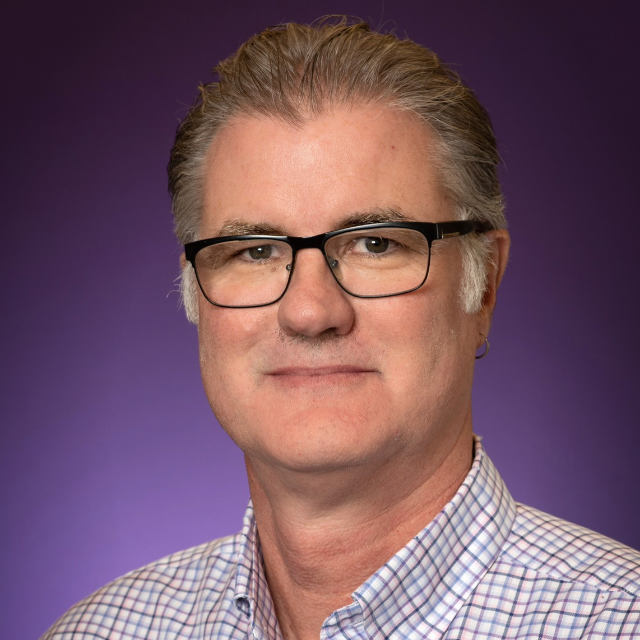
Mike Slattery, director of Texas Christian University’s Institute for Environmental Studies, was tapped to use a research-informed approach to lead a body of 11 voting members and supported by academic partners from TCU, Cornell University and the University of Texas at Arlington.
Slattery recently took time to answer questions about the commission’s approach, the work still to be done and why the outcomes will hopefully “have value well beyond Fort Worth.”
What were the biggest questions the Commission needed to answer?
The central question was relatively straightforward: How can Fort Worth accommodate the rapid growth of data centers while protecting the quality of life of its residents and ensuring that development is environmentally and economically responsible?
Answering that question, however, required us to examine a remarkably complex set of interconnected issues. Data centers are essential infrastructure for our increasingly digital economy, particularly with the extraordinary growth of artificial intelligence. They also require substantial amounts of electricity, generate heat and noise, and, depending on their cooling technology, can consume significant quantities of water. Their physical footprint and proximity to residential neighborhoods raise additional questions about land-use compatibility.
Our task was not to determine whether data centers are inherently good or bad. Rather, it was to understand their impacts, distinguish established scientific findings from areas of uncertainty and identify practical approaches that would allow Fort Worth to capture the economic opportunities while minimizing potential consequences for residents and the environment. Ultimately, we wanted to provide City Council with a scientifically credible foundation for making informed decisions.
What did TCU faculty contribute, and how did they work with other academic partners?
One of the most rewarding aspects of this experience was bringing together faculty expertise across multiple disciplines to address a real-world challenge facing our community.
It was a fascinating exercise because data centers are not simply an engineering issue or an environmental issue. They sit at the intersection of energy systems, water resources, urban planning, environmental science, public health, economics and community development.
Our faculty brought expertise in several of these areas, helping us examine questions involving infrastructure, environmental impacts, land-use compatibility and the implications for surrounding communities. We also drew on expertise beyond TCU, engaging academic specialists and other subject-matter experts whose knowledge complemented the Commission’s work.
We had faculty in environmental sciences, engineering, economics and finance, all collaborating on this project. Dr. Stathis Michaeledes served alongside me on the commission. Dr. Gehendra Kharel helped craft part of the research brief on land use and neighborhood impacts but also worked on the water brief. Dr. Seth Hall in engineering was indispensable in crafting our research document on noise and acoustics. Dr. Bingyang Wei provided context for the power brief and the introduction on what data centers are. Dr. Morgan Kiani helped on the power systems side.
Two economists, Drs. Zack Hawley and Weiwei Liu, were the core of the economic development piece, and Dr. Tom Seng provided broad context from a power and finance perspective.
What made this approach particularly valuable was the emphasis on interdisciplinary synthesis. We weren’t simply collecting individual expert opinions. We were asking how the findings from different disciplines fit together, where they reinforced one another and where important uncertainties remained.
I think that is fundamentally how good academic research works. You develop questions, examine the available evidence, challenge assumptions and refine your conclusions through discussion and critical evaluation.
How did the Commission operate, and what challenges did it need to overcome?
We approached the Commission’s work much like a major interdisciplinary research project. Our charge was set out by City Council to provide an evidence-based, non-advocacy evaluation of data center development. We identified the principal questions that needed to be addressed, organized the work around key areas of inquiry, engaged subject-matter experts and evaluated the scientific and technical literature.
A particularly important part of the process was distinguishing among three things: (1) what we know with reasonable scientific confidence, (2) what remains uncertain or contested and (3) what those findings mean specifically for Fort Worth.
That distinction matters enormously because public policy is often developed under pressure to provide simple answers to complicated questions. But sound decisions require acknowledging both the strength and the limitations of the available evidence.
One challenge was the extraordinary pace of data center technology evolution and the extremely tight timeline within which to work. The Commission was announced on Aug. 11, and I spent two to three weeks assembling the team that would serve on the Commission, as well as the subject-matter experts. We then had, essentially, two months to complete our work.
I think our greatest strength as a Commission was its willingness to examine these issues carefully and develop recommendations grounded in evidence rather than assumptions.
How did community concerns shape the work?
Community concerns were central to our work, particularly those involving noise, water consumption, air quality, lighting and the proximity of large industrial facilities to residential neighborhoods. One important lesson is that impacts that may appear relatively minor in a technical assessment can have significant consequences for people living nearby.
Noise is a good example. Unlike a construction project that generates noise for a limited period, a data center can operate 24 hours a day, seven days a week. Even when sound levels comply with conventional regulatory thresholds, the continuous nature of the noise, its frequency characteristics and nighttime conditions can influence how it is experienced by nearby residents.
These concerns helped reinforce an important principle: Responsible development is not simply about whether a facility can be built. It is also about where it should be built, how it should operate and how its impacts on neighboring communities can be minimized.
What is one finding that needs more explanation than a headline can provide?
I would highlight water use and cooling technology, because this is an area where public discussion often lacks important technical distinctions. We frequently hear that data centers consume enormous quantities of water. Some certainly do, particularly those using evaporative cooling systems. But water consumption is not an unavoidable byproduct of every data center. There are alternative technologies, including non-evaporative, closed-loop cooling systems, that can dramatically reduce on-site water consumption.
In these systems, cooling fluid circulates through a closed network and transfers heat to the outside environment without routinely consuming water through evaporation. The important point is that the choice of cooling technology can fundamentally change a data center’s environmental footprint.
There are trade-offs, of course. Reducing water consumption can increase electricity requirements under certain operating conditions. That is why it is essential to evaluate water and energy performance together rather than focusing on a single metric.
For a city such as Fort Worth, where water availability and long-term resource planning are important considerations, understanding these technological options is critical.
What questions still need further study?
I think several important questions deserve continued attention. One is the long-term relationship between data center growth and regional electricity infrastructure. The projected growth in electricity demand associated with artificial intelligence is extraordinary, and understanding its implications for grid reliability, energy costs and future generation requirements will be essential.
Another is the cumulative environmental impact of multiple data centers within a metropolitan area. Individual facilities can be assessed through conventional permitting and review processes, but the combined effects of numerous facilities on energy infrastructure, water resources, air quality and surrounding communities are more difficult to quantify.
We also need continued research into emerging cooling technologies, operational noise and the environmental performance of increasingly powerful computing systems.
Perhaps most importantly, cities need better mechanisms for monitoring actual facility performance after construction. Predictions made during the planning process should be tested against real-world operating data. The Commission’s work should be viewed as a strong foundation for informed decision-making, not the final word on an industry that is changing so rapidly.
What did this experience show you about the role universities can play in their communities?
For me, this experience reinforced something I have believed throughout my academic career: The value of a university extends well beyond the classroom and the research laboratory. Universities like ours possess an extraordinary concentration of expertise. We have faculty who spend their careers studying complex problems, developing analytical approaches and evaluating evidence. When a community faces a difficult challenge, that intellectual capacity can be an enormously valuable public resource.
What makes universities particularly important is their ability to bring independent, interdisciplinary perspectives to questions that may otherwise become polarized. And we are there to help ensure that policy decisions are informed by the best available science, a clear understanding of uncertainty and a careful evaluation of potential consequences. I am particularly proud of the contributions TCU faculty made to this effort. Their willingness to engage with a complex community challenge reflects the university’s commitment to meaningful scholarship and public service.
Fort Worth is our home. We have a responsibility to contribute to its future. And I think this experience demonstrates something important about TCU’s broader aspirations as a research university: Research excellence is not measured only by the papers we publish or the grants we secure, but also by the difference our work makes in the world around us. That, to me, is one of the most compelling reasons universities exist.
What do you hope other cities can learn from Fort Worth’s approach?
I hope the principal lesson is that cities do not have to choose between technological progress and responsible environmental stewardship. Data centers will be an increasingly important part of our economic and technological future. The question is whether communities’ approach that growth reactively or develop thoughtful policies that anticipate its consequences.
We were given an opportunity to examine these issues through a structured, interdisciplinary process. Of course, not every city will face precisely the same challenges. Local water availability, electricity infrastructure, land-use patterns and community priorities will differ. But the underlying approach is transferable.
My bottom line? Ask the right questions. Follow the evidence. Acknowledge uncertainty. Engage the community. Be transparent. And develop policies that can adapt as technology evolves. If other communities can draw on that approach, I believe the work of this Commission will have value well beyond Fort Worth.