TCU Report States American Airlines' Footprint Could Exceed $70 Billion in North Texas
A new, independent analysis has quantified the impact of American Airlines’ Dallas-Fort Worth hub on its North Texas home base. The report, by faculty and students in the Center for Supply Chain Innovation in the Neeley School of Business at Texas Christian University, determined that American's DFW hub and its directly associated passenger, tenant and cargo activity support an estimated $68.8 billion to $71.1 billion in annual economic output, in addition to other economic indicators that reflect American Airlines’ strength in the region.
What the study found
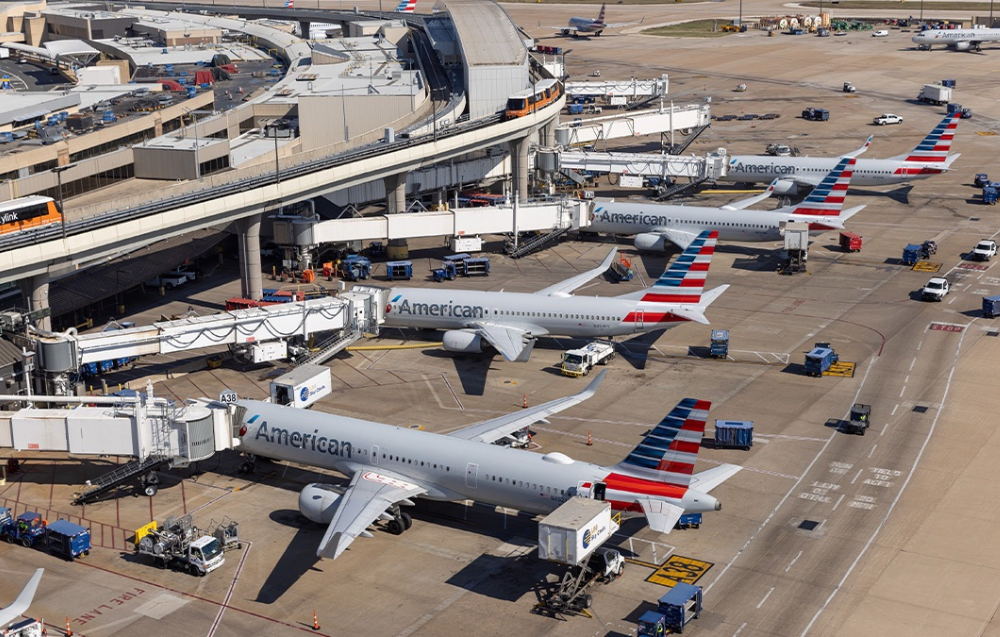
At the center of the analysis is the role of American Airlines’ DFW hub and its role as an anchor economic platform in North Texas.
- The airline employs more than 37,000 team members in the Dallas-Fort Worth region;
- Moves more than 69 million passengers through the Dallas Fort Worth International Airport (DFW) each year; and
- Carries roughly 82% of DFW's commercial passenger traffic.
The study translates that scale into an estimated $68.8 billion to $71.1 billion in annual output, which
- Accounts for $22.5 billion to $23.3 billion in personal income flowing to households; and
- Supports an estimated 345,000 to 357,000 jobs across the North Texas region.
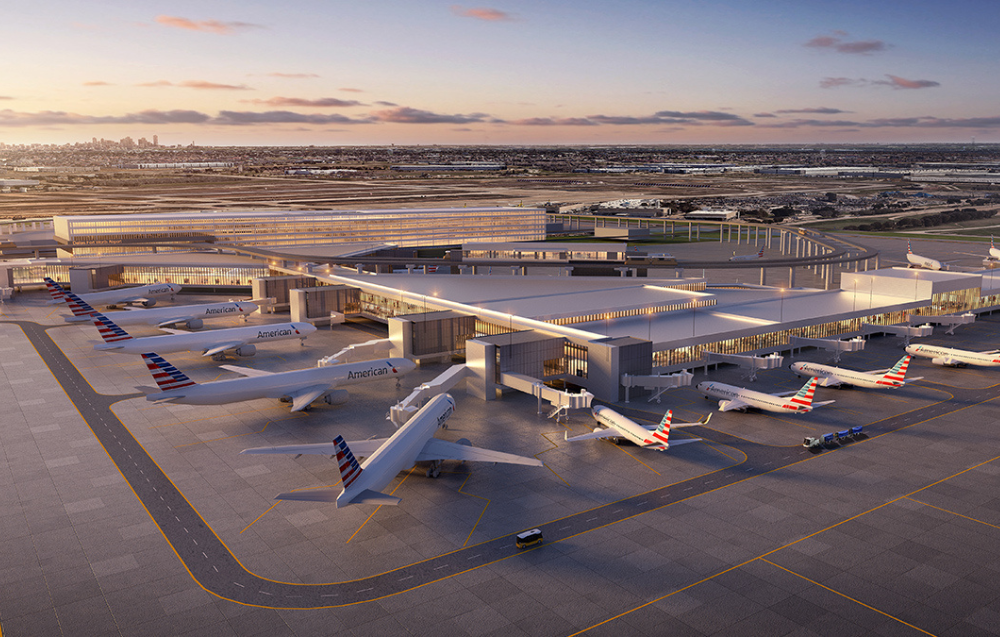
The researchers also looked forward. According to The Perryman Group, the under-construction Terminal F, which American will operate under a use-and-lease agreement extending through 2043, is projected to generate $6.1 billion in regional gross product and nearly 55,000 job-years at maturity. Further, a supplemental scenario examining corporate relocations and expansions in 2025 suggests American's connectivity may plausibly account for an additional $222 million to $645 million in annual output and 1,200 to 3,400 jobs, effects that could compound year after year.
The analysis was carried out through the Center for Supply Chain Innovation at the Neeley School of Business, with Neeley students and faculty drawing on the center’s expertise in logistics, network and operational analysis. The TCU team built its model using existing, validated data sources: The Perryman Group's 2025 DFW Airport economic impact framework, paired with American Airlines-specific operational data to isolate the airline's share of airport activity, in addition to more than a dozen additional independent sources of insight.
"Organizations today are navigating increasingly complex business environments, and they need trusted information to help inform important decisions. One of the center's greatest strengths is applying faculty expertise to real-world business challenges, combining rigorous examination with practical insight to deliver analysis that is relevant,” said Morgan Swink, executive director of the Center for Supply Chain Innovation and the Eunice and James L. West Chair in Supply Chain Management.
Beyond the numbers
The study suggests the hub's consequential value extends beyond the airport perimeter, in the corporate location decisions it influences. A growing body of research links strong air connectivity to headquarters growth, and Dallas-Fort Worth's experience tracks it closely. The region has attracted more than 100 headquarter relocations since 2018, the most of any U.S. metro area, along with major expansions from firms including Toyota, Charles Schwab, Goldman Sachs and Wells Fargo.
For companies weighing where to base executives, launch international divisions or commit long-term capital, the study finds, a dense hub network is not a convenience but a critical element of the decision. That, in turn, strengthens talent attraction, new business formation and the region's competitive edge.
A pipeline for a future aviation workforce
The report is relevant to TCU's expanding investment in aviation education and training. As the university builds new aviation programs through the College of Education, work like this positions TCU faculty and students at the center of one of the nation's most important aviation markets, connecting classroom learning to the real economics of an industry in its own backyard.
“This study reflects what TCU does best, bringing an independent eye to questions that matter to our region,” said TCU Chancellor Daniel W. Pullin. “Fort Worth-based American Airlines is one of North Texas’ defining institutions, and understanding the full scope of its impact helps all of us build on the momentum that has propelled Dallas-Fort Worth forward.
“We are also investing back into DFW’s economy,” Pullin added. “TCU's aviation programs will soon train the next generation of aviation professionals in the shadow of American's global headquarters, and many of our graduates will spend their careers driving this economy and this industry.”
The project reflects a growing collaboration between TCU and regional business leaders, creating new opportunities for experiential learning and industry partnership. As North Texas continues to grow as a global business and aviation hub, TCU is positioning students and faculty to help shape the future through joint initiatives that serve industry and our community.